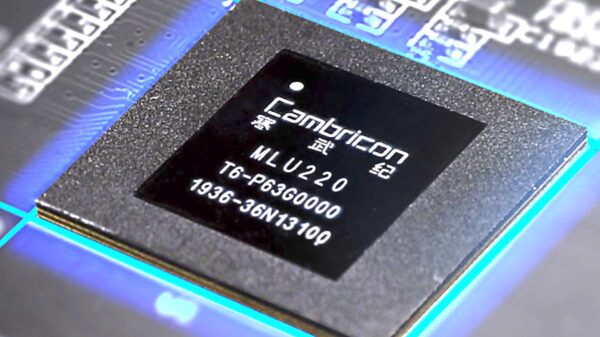
The Cyberspace Administration of China (CAC) announced significant advancements in China’s technology landscape during the 14th Five-Year Plan period (2021-2025), highlighting that the total number of devices equipped with HarmonyOS exceeded 1.19 billion units. This development reflects the country’s broader progress in integrated circuits, artificial intelligence (AI), and basic software, with over 700 generative AI large model products completing filing procedures in recent years.
China’s internet penetration has risen from 70.4 percent to 79.7 percent over the past five years, indicating a substantial improvement in information technology application across various sectors. The CAC noted that the urban-rural gap in internet access has narrowed by 8.2 percentage points, a positive trend that underscores efforts to bridge digital divides within the country.
The report also highlighted the increasing role of information technology in agricultural production, with the application rate rising from 22.5 percent to over 30 percent. This shift is crucial as it enhances productivity and efficiency in a sector that is foundational to China’s economy.
Moreover, national online retail sales in rural areas surpassed 2.5 trillion yuan (approximately 355 billion US dollars) in 2024, marking a significant 43 percent increase compared to the end of the previous five-year plan (2016-2020). This surge in rural e-commerce reflects a growing trend as more consumers gain access to online platforms, facilitating better market connectivity.
In a related development, China has made strides in telemedicine, establishing a service network that now covers all cities and counties across the nation. This expansion is particularly timely given the increasing demand for healthcare solutions that can be delivered remotely, especially in the wake of the COVID-19 pandemic.
While these advancements are notable, they also come with challenges. The competition in the AI sector is intensifying, particularly as companies race to innovate and deploy embodied intelligence in various industrial applications. A recent demonstration showcased one robot that outperformed its competitors, although it remained significantly slower than human benchmarks, highlighting the ongoing gap between human capabilities and robotic performance.
Looking ahead, the CAC’s report not only illustrates the rapid technological evolution taking place in China but also emphasizes the strategic importance of these advancements for the country’s future economic growth. As China seeks to solidify its position as a global leader in technology, the focus on innovation, particularly in AI and integrated circuits, will likely continue to drive policy and investment decisions in the coming years.
See also Study Uncovers 73 Risks of Large Language Models, Urges Urgent Ethical Governance
 Roblox Launches 4D Generative AI Tools, Revolutionizing Metaverse Creation with Open-Source Cube Model
 Generative AI Japan Awards 2025: COLOPL’s ‘Tsukuyomi’ Wins Grand Prix Among 8 Honorees
 Study Reveals Hidden Risks of Large Language Models: Phishing, Bias, and More
 PlantIF Achieves 96.95% Accuracy in Plant Disease Diagnosis Using Multimodal Learning