






















































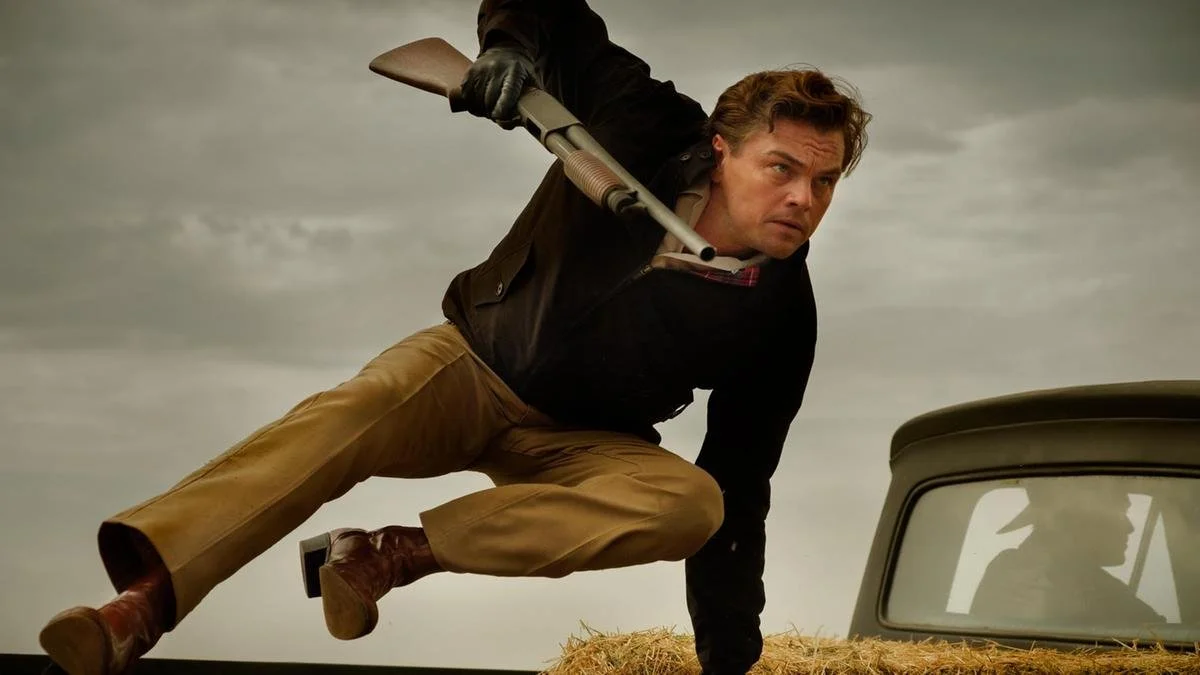
Leonardo DiCaprio, recently named Time magazine’s entertainer of the year, expressed concerns over the impact of artificial intelligence (AI) on Hollywood during an interview. DiCaprio articulated a dual perspective, mourning the potential job losses for talented professionals while asserting that AI cannot replicate the intrinsic humanity required for authentic art. He remarked, “It could be an enhancement tool for a young filmmaker to do something we’ve never seen before. I think anything that is going to be authentically thought of as art has to come from the human being.” He reflected on the transient nature of AI-generated content, highlighting its lack of lasting significance compared to human-created art.
DiCaprio’s sentiments echo a broader apprehension within the film industry regarding the encroachment of AI technologies. Academy Award-winning director Guillermo del Toro recently voiced a stark rejection of generative AI, stating emphatically, “AI, particularly generative AI — I am not interested, nor will I ever be interested.” Del Toro, now 61, expressed a desire to remain uninfluenced by such technologies throughout his career, underscoring a commitment to the artistic integrity of filmmaking.
In a similar vein, acclaimed filmmaker James Cameron conveyed his firm stance against using generative AI while producing his Avatar sequels. He emphasized the importance of honoring and celebrating actors, declaring, “We don’t replace actors.” Cameron’s decision reflects a growing trend among industry leaders who favor traditional storytelling methods over AI-driven alternatives.
Actress and Oscar-winning screenwriter Emma Thompson also shared her frustration regarding AI’s increasing presence in creative processes. During an appearance on The Late Show, Thompson expressed intense irritation at AI chatbots proposing to rewrite her work. “I cannot begin to tell you. Because I write longhand on a pad, old script actually, because I believe that there is a connection between the brain and the hand,” she stated. “And then when I’ve written something, I will put it into a Word document. And recently, the Word document is constantly saying, ‘Would you like me to rewrite that for you?’ I’m so annoyed.” Her passionate response illustrates a growing resistance among creatives toward AI’s encroachment into the artistic realm.
This resistance highlights an ongoing dialogue within Hollywood about the role of technology in creative fields. The industry, traditionally rooted in human expression and storytelling, now faces the challenge of integrating new technologies without compromising artistic integrity. Many artists fear that the rise of AI could dilute the human experience in storytelling, leading to content that feels soulless despite its technical brilliance.
As AI continues to evolve and find applications in various sectors, its implications for the arts remain a complex issue. While some see potential in AI as a tool for enhancing creativity, others firmly reject its role in the core creative processes that define art. The sentiments shared by DiCaprio, del Toro, Cameron, and Thompson signal a crucial moment for the entertainment industry as it navigates the intersection of technology and creativity.
Looking ahead, the future of Hollywood may hinge on balancing technological advancements with the irreplaceable human touch that has long characterized storytelling. As industry leaders grapple with these changes, the ongoing discourse will likely shape how filmmakers and artists adapt to the evolving landscape. The challenge will be to ensure that the essence of art remains intact amid the rise of AI, preserving the rich narratives and emotional connections that resonate with audiences worldwide.
See also LLMs Transform Undergraduate Education, Offering Personalized Learning and New Challenges
 Chinese Researchers Reveal TurboDiffusion, Achieving 200x Faster AI Video Creation
 Experts Urge Transparency and Validation as Generative AI Transforms Life Sciences R&D
 Google Launches Video Verification in Gemini, Using SynthID Watermarking Technology
 AI Diffusion Challenges Threaten Growth as US and China Lead Development Efforts















