
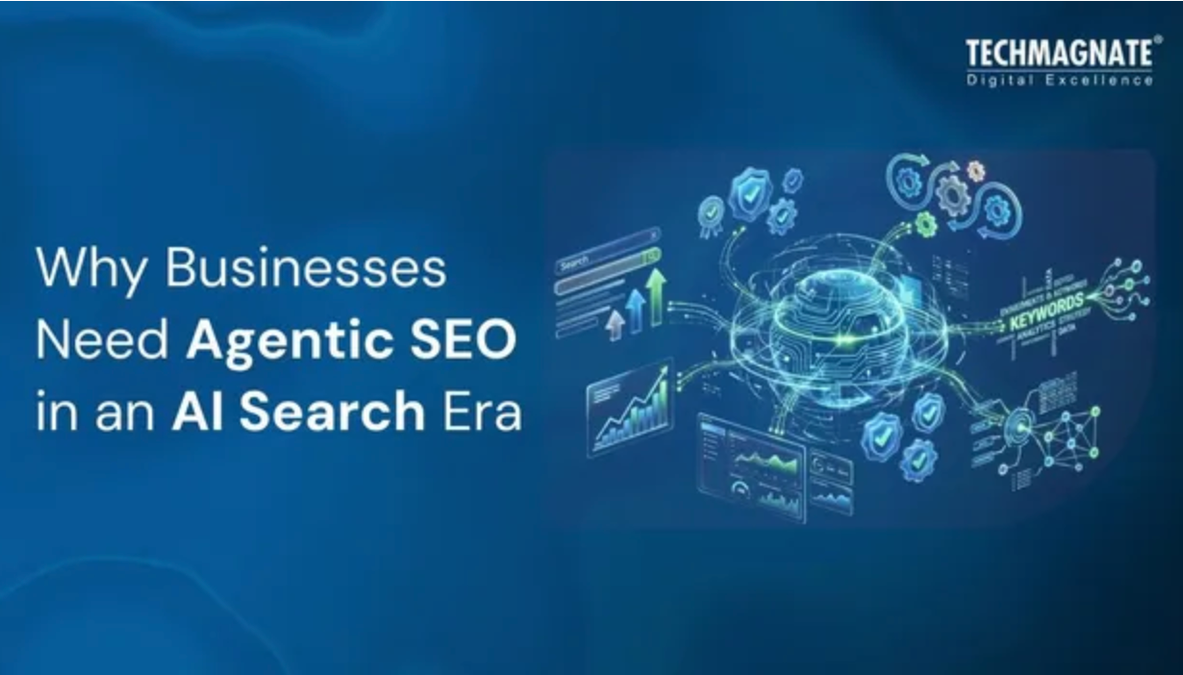
As artificial intelligence reshapes the landscape of digital marketing, the traditional methods of search engine optimization (SEO) are evolving into a new paradigm known as agentic SEO. This shift is driven by the increasing demand for immediate, accurate answers from AI-driven search engines, necessitating a departure from static keyword strategies to more dynamic, intent-focused approaches. Businesses that fail to adapt to this shift risk losing visibility in an increasingly AI-centric market, where AI agents have become the gatekeepers of information.
Agentic SEO represents a significant advancement over traditional SEO by leveraging autonomous AI agents to perform tasks such as keyword research, content creation, and error correction. These AI agents analyze vast amounts of data in real time, enabling companies to maintain relevance and authority in search results. In an era where consumers increasingly turn to AI for direct recommendations rather than browsing through links, optimizing for these agents is crucial. A failure to do so could mean diminished brand visibility and customer engagement.
The benefits of adopting agentic SEO are substantial and multifaceted, encompassing speed, efficiency, and improved personalization. Unlike the slow, labor-intensive manual SEO processes of the past, AI agents can monitor website performance across thousands of pages simultaneously and respond to algorithm updates instantaneously. This capability allows businesses to adjust their strategies more rapidly than their competitors, who remain tethered to traditional methods.
Personalization stands out as another key advantage of agentic SEO. AI agents excel in recognizing patterns within user behavior, allowing businesses to craft highly targeted content that addresses specific customer needs. This not only improves engagement but also enhances conversion rates, as content becomes more aligned with user intent. Companies utilizing agentic SEO are well-positioned to produce precise answers to user queries, thereby increasing the likelihood of being featured in AI-generated responses.
Cost-effective scalability is yet another benefit, as agentic SEO enables businesses to expand their SEO efforts without incurring proportional increases in costs. Traditional scaling often involves hiring additional personnel for writing, analysis, and technical expertise. In contrast, AI tools can automate much of the data analysis and troubleshooting, freeing human teams to focus on strategic and creative tasks.
To dominate in AI-generated answer engine results, businesses must shift their focus from traditional ranking techniques to establishing themselves as trusted authorities. This involves enhancing their online presence through structured data, clear factual content, and authoritative sourcing. The importance of being recognized as a reliable source for AI models cannot be overstated, as it positions brands favorably in search results.
Adapting to the Future of Search
As the shift from traditional to agentic SEO continues, the differences between the two approaches become increasingly pronounced. Traditional SEO often reacts to data trends, while agentic SEO proactively anticipates changes. The transition requires businesses to undergo a thorough audit of their technical foundations, ensuring that their websites are optimized for AI agents to crawl effectively.
To facilitate this shift, companies must integrate advanced SEO tools that prioritize action over mere data collection. These tools should include automation features that assist with internal linking, AI content optimization, and technical SEO processes. By focusing on content that answers user queries directly, businesses can further align their strategies with the demands of AI agents, enhancing their chances of visibility.
Real-world examples illustrate the tangible benefits of agentic SEO. For instance, an e-commerce retailer managing tens of thousands of products can utilize AI to automatically update product descriptions based on trending searches, thereby boosting visibility. Similarly, a SaaS company leveraged agentic SEO to refine its knowledge base by analyzing user queries, resulting in an increase in organic traffic and a decrease in support ticket volumes.
As businesses prepare for this transition, investing in specialized services and expertise becomes crucial. Navigating the complexities of agentic SEO requires knowledge in fields such as large language models and machine learning, making partnerships with experts essential for effective implementation. By 2026, as AI-driven search continues to integrate more deeply into everyday online interactions, the importance of adopting agentic SEO will only grow, determining which companies thrive in this new landscape.
In conclusion, agentic SEO is not merely a trend but a necessity for businesses aiming to maintain visibility in an AI-driven world. The application of autonomous AI agents enables organizations to automate tedious SEO tasks, optimize for user intent, and scale operations effectively. As search engines evolve, embracing agentic SEO will be integral for brands seeking to remain discoverable and competitive in a rapidly changing digital environment.
See also AI Transforms MENA Real Estate Marketing with Precision Targeting and Predictive Analytics
 Cyberimpact Advocates Ethical Email Marketing, Rejecting Blind Automation for Trust-Building
 Email Marketing Dominates as AI Disrupts Brands; Trust Emerges as Key Competitive Edge
 AI Emails: 70% Are Generated, Experts Warn of Key Red Flags to Avoid Spam Filters
 OpenAI Reveals Five Key SEO and AI Trends Shaping Enterprise Strategies for 2026