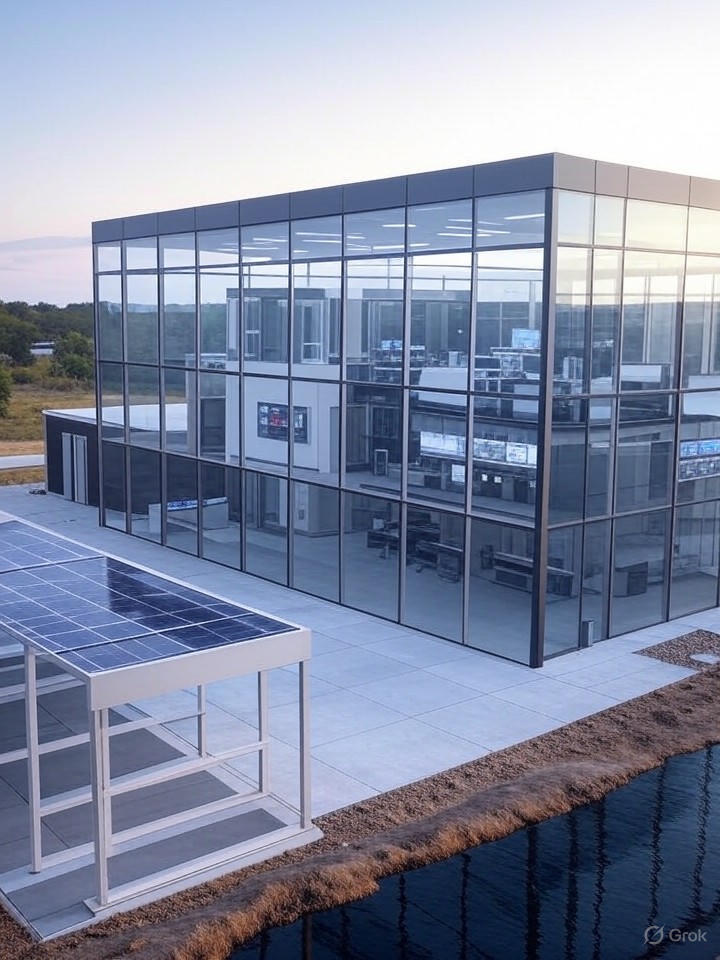
In a significant display of ambition in the race for artificial intelligence dominance, Alphabet Inc.’s Google has unveiled plans for a remarkable $40 billion investment in Texas through 2027. This initiative, announced by CEO Sundar Pichai alongside Texas Governor Greg Abbott, will focus on constructing three new data center campuses and enhancing the state’s infrastructure for AI and cloud computing. This move aligns with a growing trend of substantial tech investments in Texas, where competitors such as OpenAI and Anthropic are also making significant financial commitments.
The planned facilities will be located in Armstrong County in the Texas Panhandle and two sites in Haskell County, near Abilene. This expansion builds on Google’s existing presence in the state, where it has operated two data centers for over 15 years. As reported by Bloomberg, this initiative forms part of a broader strategy to secure the computing power and energy capacity necessary to sustain the ongoing AI boom.
Strategic Locations and Energy Infrastructure
Google’s choice of these specific locations reflects a strategic focus on areas with potential for integrating renewable energy resources and proximity to burgeoning tech hubs. The facilities in Haskell County are particularly noteworthy, as one will be co-located next to existing energy infrastructure, optimizing power usage critical for supporting advanced AI models. According to Reuters, this investment highlights the escalating competition among major AI providers, including Microsoft, Meta Platforms, and Amazon, all vying to construct robust data center networks.
Beyond the physical infrastructure, Google is also committing to substantial upgrades to Texas’s energy capabilities, anticipating the vast energy demands of AI computing. CNBC reported that the investment aims to double the number of skilled electricians in Texas, addressing the increasing energy consumption challenges posed by large-scale AI operations.
Workforce Development and Economic Implications
A core component of this investment is dedicated to workforce training. Google plans to provide training for over 1,700 apprentices in electrical and high-skill occupations, aligning with broader efforts to prepare the Texas labor force for roles in the AI economy. The Texas Tribune reported that partnerships with local communities are set to create thousands of job opportunities across construction, operations, and maintenance sectors.
The economic impact is expected to be significant. Forbes highlighted that Google’s expansion solidifies Texas’s appeal as an AI infrastructure hub, following similar multi-billion dollar commitments from other tech giants. Governor Abbott emphasized, “This investment will help ensure that Texas remains at the forefront of innovation and economic growth.”
Competitive Landscape and Future Prospects
Texas has established itself as a focal point for tech investments due to its favorable business policies, abundant land, and access to energy resources. Recent announcements from Meta Platforms regarding a $1.5 billion data center for AI workloads, coupled with Nvidia’s plans for factories in Dallas and Houston, underscore this trend. Google’s $40 billion commitment, the largest in any U.S. state, positions the company to maintain its leadership amidst fierce competition.
Industry analysts refer to the current surge in AI investments as a “supersonic tsunami,” with companies rapidly scaling infrastructure to accommodate generative AI and machine learning. The Indian Express reported that Google will also enhance its existing Midlothian campus and Dallas cloud region, integrating them into its global network of 42 cloud regions.
However, the rapid growth of data centers raises concerns about energy consumption. AI operations require substantial electricity, prompting Google to emphasize sustainability in its initiatives. Google plans to invest in renewable energy sources to power the new facilities, aiming to mitigate potential environmental impacts. As Bloomberg noted, Google’s contributions to energy capacity expansion will be critical for maintaining reliable power supply, a necessity for site selection.
Ultimately, Google’s expansion in Texas is not just about increasing its capabilities; it is a strategic move designed to bolster U.S. technological leadership in AI. As Sundar Pichai stated, “We’re committed to ensuring the U.S. maintains technical leadership in AI,” a sentiment that resonates amid growing global competition, particularly from China.
This ambitious initiative is set to create a new ecosystem for data centers, fostering innovation in cloud services and AI applications, while also transforming regions like Haskell County into emerging tech corridors. With the potential for further investments on the horizon, Texas is poised to capture a substantial share of the expanding AI data center market.
 Google Enhances Gemini App with Veo 3.1, Allows Multiple Reference Image Uploads for AI Videos
 IE Business School Achieves 2025 MBA Best In Class Award for AI Education and Leadership
 Microsoft’s Stock Still Undervalued by 16.2% After 22% Rally and AI Partnerships
 Elon Musk Unveils AI Integration for X, Promising Personalized Ads and Content Recommendations
 Data Centers Could Triple Electricity Demand, Raising Concerns Over Utility Forecasts