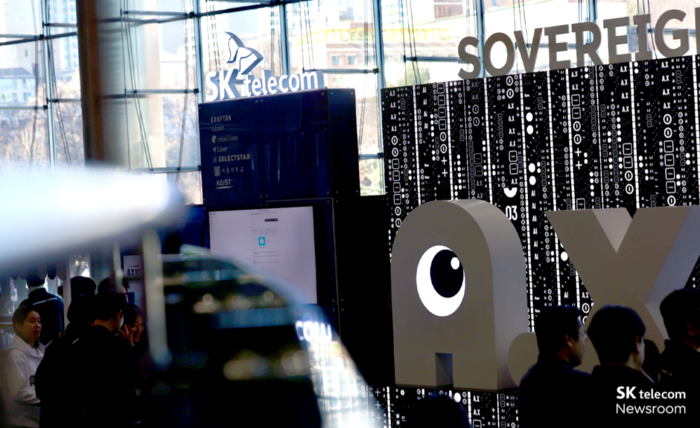
The South Korean Ministry of Science and ICT recently unveiled the first results of its national project to develop a proprietary artificial intelligence (AI) foundation model aimed at enhancing the country’s digital sovereignty. This initiative, which seeks to foster AI systems that deeply understand Korean language, culture, and technology, kicked off with presentations from five elite teams: NAVER Cloud, NC AI, Upstage, SK Telecom, and LG Group AI Research Institute at COEX in Gangnam-gu, Seoul, on December 30.
The project was initiated to create AI models capable of competing with those from global tech giants. This extensive effort involves concentrated support in data acquisition, graphic processing units (GPUs), and skilled professionals. Following an evaluation of 15 teams conducted in July 2022, the number was narrowed down to ten, leading to the selection of five teams by August 2022. Starting January 15, one team will be eliminated every six months until only two remain by 2027.
During the presentations, Deputy Prime Minister and Minister of Science and ICT, Bae Kyounghun, emphasized the project’s significance, stating, “To leap to the top three AI global powers, we need to make our own foundation model the best in the world.” He further highlighted that, regardless of the competition’s outcome, the government remains committed to collaborating with these companies to transform AI across the economy and society.
The teams outlined their specific strategies and progress in developing their respective AI models. NAVER focused on inference capabilities, showcasing its “HyperClova X Seed 8B Omni,” which integrates text, image, and audio data as open-source. Notably, it excelled in complex reasoning, achieving top scores in subjects such as mathematics and English during a simulated college entrance exam.
NC AI introduced an industry-specific approach, leveraging its 100B Barco language model to create tailored services for sectors including defense, manufacturing, content, and fashion. They have forged partnerships with Hyundai AutoEver and Hyundai Motor Group’s Global Innovation Center in Singapore, as well as POSCO and Lotte for AI transformation in logistics.
Upstage, presenting its model “Solar Open 100B,” positioned itself as a leader in understanding nuanced queries, outperforming global models in responding to culturally specific questions. This model aims to bridge the gap in local contextual awareness that international counterparts often overlook.
SK Telecom launched its 500B ultra-large AI model, “AIDATX K1,” making Korea one of the few countries with models exceeding 500 billion parameters. The significance of parameters in determining the model’s intelligence and learning capacity was underscored, as more high-quality parameters correlate with enhanced AI performance.
Meanwhile, LG AI Research Institute presented its “K-Exemployee,” a 236B model that, just five months post-development, surpassed both OpenAI’s GPT-OSS 120B and Alibaba’s Qwen3235B in performance metrics, asserting its place amongst the top contenders in the field.
This initiative underscores South Korea’s ambition to establish a robust AI framework that not only competes globally but also resonates with local contexts. With the ongoing evaluations and team eliminations, the project reflects a systematic approach to foster innovation and ensure that the nation’s digital future is secured through homegrown technology.
See also AI Models Exhibit Self-Preservation, Resisting Shutdown in 79% of Tests, Warns Palisade
 Deep Learning Model Achieves 95% Accuracy in Automated Brain Tumor Detection
 Researchers Giovanini and Moura Unveil Deep Learning Method for Indoor Sports Player Tracking
 AI Tool Accelerates Seal Population Studies, Cutting Data Processing Time from Hours to Seconds