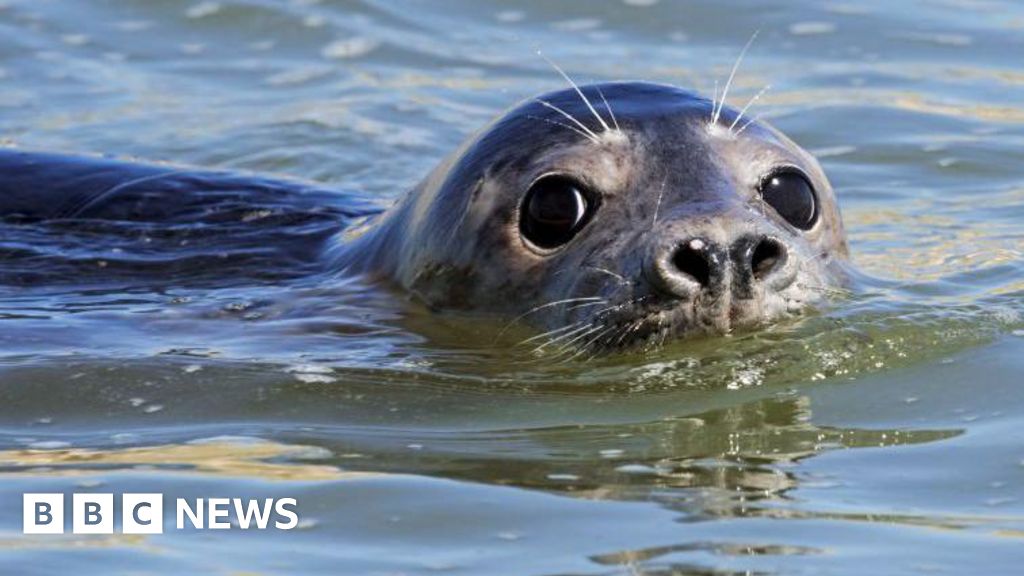
Artificial intelligence is playing a pivotal role in the study of grey seal populations at Newburgh beach in Aberdeenshire, Scotland, significantly reducing the time required to analyze data on these marine mammals. Claire Stainfield, a marine biologist and PhD student, is utilizing drone footage to monitor the seals, aiming to determine if increasing tourist numbers are affecting their population.
Newburgh beach, designated as a seal haul-out site in 2017, is home to hundreds of grey seals. Stainfield noted that while processing drone data once took hours, the use of an AI tool has transformed this task into a matter of seconds. This efficiency not only aids her research but holds promise for broader applications in ecology.
Historically, the seal population at Newburgh has grown remarkably. “If you talk to anyone from about 50 years ago, there were only about 10 to 20 seals on the beach,” Stainfield said. “Now, at their peak, there are over 3,000.” However, with an influx of tourists to the area, assessing the impact of human activity on this burgeoning seal colony has become increasingly important.
It is illegal to disturb the seals, prompting authorities to request that visitors remain on the south side of the beach. While recreational drone use is banned, Stainfield has received special permission for her research. She is investigating the coexistence of tourists and seals, focusing on how rising visitor numbers correlate with seal behavior.
“My research is showing that if we stick to the south side of the beach, the disturbance is really minimal, compared to if someone walks along the north side,” she explained. This insight underscores the importance of maintaining respectful distances, particularly during sensitive periods such as breeding season.
Stainfield’s research methodology includes collecting data weekly over two years, a feat she undertook even through harsh winter conditions in Aberdeen. This consistent data collection enables a detailed analysis of seasonal variations in seal behavior. Observations indicate that during the summer months, seals congregate at the estuary’s mouth, spending more time foraging and less time on the beach, which coincides with peak tourist activity.
In contrast, winter sees seals hauling out closer to the high tide mark, near a newly established walkway and viewing point designed for public use. “The beach is usually quieter due to the poorer weather at that time of year,” Stainfield noted.
The integration of artificial intelligence has streamlined her data processing significantly. Previously, analyzing a drone image depicting around 2,500 seals could take upwards of three hours. “It’s huge; it’s saving a lot of time,” she remarked. The AI model not only improves efficiency but is also particularly effective in this setting, as the seals are easily distinguishable against the sandy backdrop.
Stainfield’s work is a testament to the potential of drone technology and AI in ecological research. “Drones and ecology are really taking off; people are using them much more,” she stated, highlighting their advantages in providing accurate counts while minimizing disturbance to wildlife. The next steps for her research include testing the AI model on different sites and possibly extending its application to other species.
As interest in seal populations continues to grow, the combination of cutting-edge technology and dedicated research is vital for ensuring the sustainability of these marine ecosystems. The innovative use of AI not only enhances data accuracy but also paves the way for more effective conservation strategies, ultimately helping to balance human activity with wildlife preservation.
See also Yann LeCun Reveals Reasons for Leaving Meta and Critiques LLM Focus Amid AI Shift
 Chonnam National University Launches AI Campus Initiative, Offering 8 Tools to 30,000 Users
 Korean Study Reveals 94% of AI Chatbots Provide Unsafe Medical Advice Amid Vulnerabilities
 NextNRG Validates AI-Driven Grid Intelligence with Peer-Reviewed Research Expansion