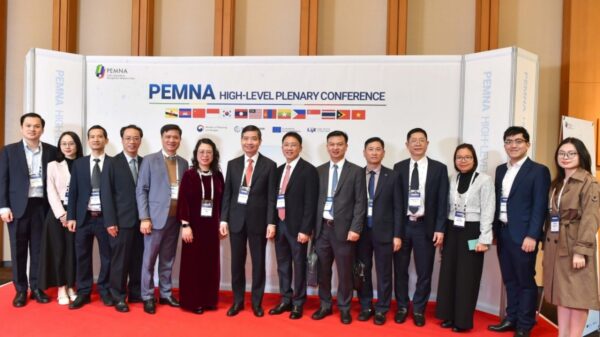
Neo and SpoonOS have announced the winners of the Scoop AI Hackathon’s Seoul Bowl, a two-day event held December 20-21 in Seocho-gu, Seoul. The competition gathered developers, researchers, and creators to build AI applications utilizing the SpoonOS framework, with over US $8,000 in prizes awarded across various categories. Participants competed in three technical tracks: Agentic Infrastructure & Productivity AI; AI4Science & Engineering; and Autonomous Finance, FinTech & Quant AI. Projects included a range of applications, from visualization platforms to medical education and autonomous agent systems.
The grand prize of US $2,000 went to the project named PRISM, an educational tool designed to transform user questions into interactive, animated videos that enhance understanding. Built on the SpoonOS infrastructure and integrated with technologies like Gemini and Manim, PRISM aims to replace static answers with dynamic, personalized visual explanations. The platform interprets user queries and generates tailored animations, allowing learners to alter the visuals or explore different concepts, thereby applying brain science-backed methods to improve information retention and comprehension speed.
The technical framework for PRISM includes FastAPI for the backend and React for the frontend, all orchestrated through SpoonOS’s multi-agent control plane. A demo video showcasing PRISM’s capabilities is available online.
Winners also emerged from the technical tracks, each receiving US $1,000. Among these, GitGuardian introduced the GitGuard Agent, an AI-powered recovery tool that addresses common source control issues such as merge conflicts and detached HEAD states. Built on the SpoonOS StateGraph, this agent captures the repository state and formulates step-by-step recovery plans, enabling developers to recover from issues without data loss. A live demo can be found on their official site.
Another notable project was Med DaaS (Medical Data as a Service), which seeks to mitigate the scalability gap in medical education and AI training due to limited access to high-quality comparative cases. Utilizing semantic similarity search, the platform surfaces reliable reference reports for comparison-driven learning with personalized feedback, aiming to facilitate scalable radiology education. A demo video is also available.
The project 스토리 월드 (Story World) utilized AI to engage hikikomori individuals through an AI chatbot platform based on popular Korean web novels. By leveraging familiar content, the project aims to create interactive conversations that help reduce psychological barriers to social interaction. A demo video is accessible online.
In addition to the main winners, several projects received special awards of US $500 each. HANDOFF is a Chrome extension that visualizes user interactions with AI in decision-making processes. By passively tracking user behavior, it identifies the “decision boundary” where users transition from critical thinking to accepting AI suggestions, thereby enhancing understanding of AI collaboration styles while maintaining privacy.
NandaGore focuses on risk-adjusted performance analysis for trading platforms, assessing trading strategies through metrics like Max Drawdown and Calmar Ratio, emphasizing sustainable practices over sheer profit. FLOWLY automates the sales process in chat-based commerce for small businesses, handling order intake, payments, and deliveries within messaging platforms while minimizing operational overhead.
CoWeave aims to enhance human-AI co-creation by providing transparency and fairness in content generation. This platform facilitates collaboration with multiple AI models, ensuring that contributions are clearly attributed and preventing plagiarism. Finally, Safety Lens combines real-time vision analysis with compliance monitoring to enhance industrial safety, detecting dangerous movements and integrating with local regulations for efficient accident prevention.
The Seoul Bowl marked a significant stop in the ongoing Scoop AI Hackathon global series, which runs from October 2025 through January 2026. Previous events took place in locations including Moscow, Hanoi, London, and Silicon Valley, with upcoming stops planned in Tokyo, Hyderabad, and Beijing. The total prize pool for this series reaches US $100,000, highlighting the growing interest in AI innovations and applications across various industries. For more information, the original announcement can be found here.
See also Soluna and Siemens Launch 2 MW AI Power Stability Pilot to Optimize Renewable Energy Usage
 AI Blamed for Job Cuts; Study Reveals Weak Demand, Over-Hiring as Key Factors
 eschbach’s SAMI Chat Wins 2026 IoT Breakthrough Award, Revolutionizing Pharma Manufacturing with AI
 Walmart Launches AI Ad Tools with Sparky and Marty, Targeting Amazon’s $17.7B Ad Business
 Analysts Predict AI-Driven Growth and Upmarket Expansion Will Boost monday.com (MNDY) Value by 59%