As organizations navigate the complexities of hybrid work environments, the demand for effective AI automation tools has surged. These platforms promise to streamline workflows, reduce errors, and enhance collaboration, allowing teams to focus on higher-value tasks. After extensive testing, a selection of the ten most efficient AI automation tools for 2026 has been identified, each demonstrating unique strengths in tackling the challenges of modern team dynamics.
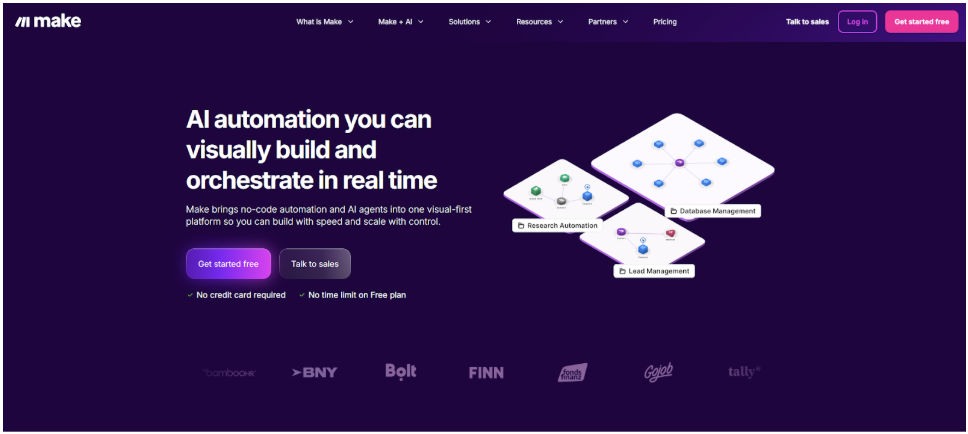
Among the leading tools is Make, which enables users to create intricate workflows visually without coding, making it ideal for teams looking to automate processes quickly. It integrates with over 3,000 applications, facilitating seamless communication between preferred tools. However, some users may find its advanced logic modules initially challenging.
Microsoft Power Automate, known for its deep integration within the Microsoft 365 ecosystem, significantly enhances productivity by automating various tasks. Users appreciate its functionality for managing repetitive work, though it may overwhelm those unfamiliar with robotic process automation (RPA).
For enterprises requiring robust solutions, UiPath stands out with its comprehensive RPA capabilities, catering to large-scale automation across various sectors. Its process mining features help identify workflow bottlenecks, although it may incur higher costs that smaller teams might find prohibitive.
n8n appeals to technical teams seeking custom solutions. Its dual interface allows for both visual and coding elements to create tailored automations, although less experienced users might find its functionality daunting.
Another noteworthy contender, Lindy.ai, employs smart agents that learn and adapt over time, enabling teams to automate lead qualification and other repetitive tasks efficiently. This capability significantly boosts productivity, yet users may require advanced knowledge to fully utilize its features.
ActivePieces simplifies automation through a user-friendly drag-and-drop interface that allows for quick setup of multi-step workflows. Despite its open-source flexibility, some users might need technical expertise for more intricate automations.
Automation Anywhere is a powerhouse for enterprise-level automation, providing a range of options for both cloud and on-premises deployment. Its AI-driven insights further optimize workflows, although the cost can be a barrier for smaller teams.
Designed for data-heavy workflows, Parabola features a drag-and-drop builder that automates data processes efficiently. It allows for easy integration with various apps, but new users may face a learning curve when adapting to its functionalities.
Zapier continues to be a popular choice for teams needing to connect disparate applications effortlessly. While it automates data syncing effectively, users have reported issues with reliability and complex tasks that often require additional effort to implement successfully.
Last but not least, Gumloop streamlines no-code AI automations, suitable for modern teams looking to simplify complex workflows. Its LLM capabilities provide powerful tools for internal data management, although its free plan comes with limitations.
The rise of AI automation tools reflects a broader trend towards operational efficiency across industries. By reducing manual workloads, these platforms enhance team productivity and satisfaction, offering significant advantages in decision-making speed and data accuracy. With the right tools, organizations not only streamline workflows but also cultivate a more engaged workforce that can focus on innovation and strategic initiatives. As teams increasingly seek to eliminate hidden frictions in their processes, the role of automation in fostering smoother operations will only become more pronounced.
See also Doximity Valuation Remains Undervalued at $46.49 Despite 4.99% Gains and AI Tools Launch
 Intelligent Tools Transform Remote Work, Boosting Productivity by 30% for Teams
 AI Adoption in Mineral Exploration Surges to 77% But Faces Key Adoption Challenges
 Walmart Expands Sparky AI with Sponsored Ads, Enhancing Retail Media Strategy
 C3.ai Stock Rises 1.37% to $14.02 as Investors Eye February Earnings Report