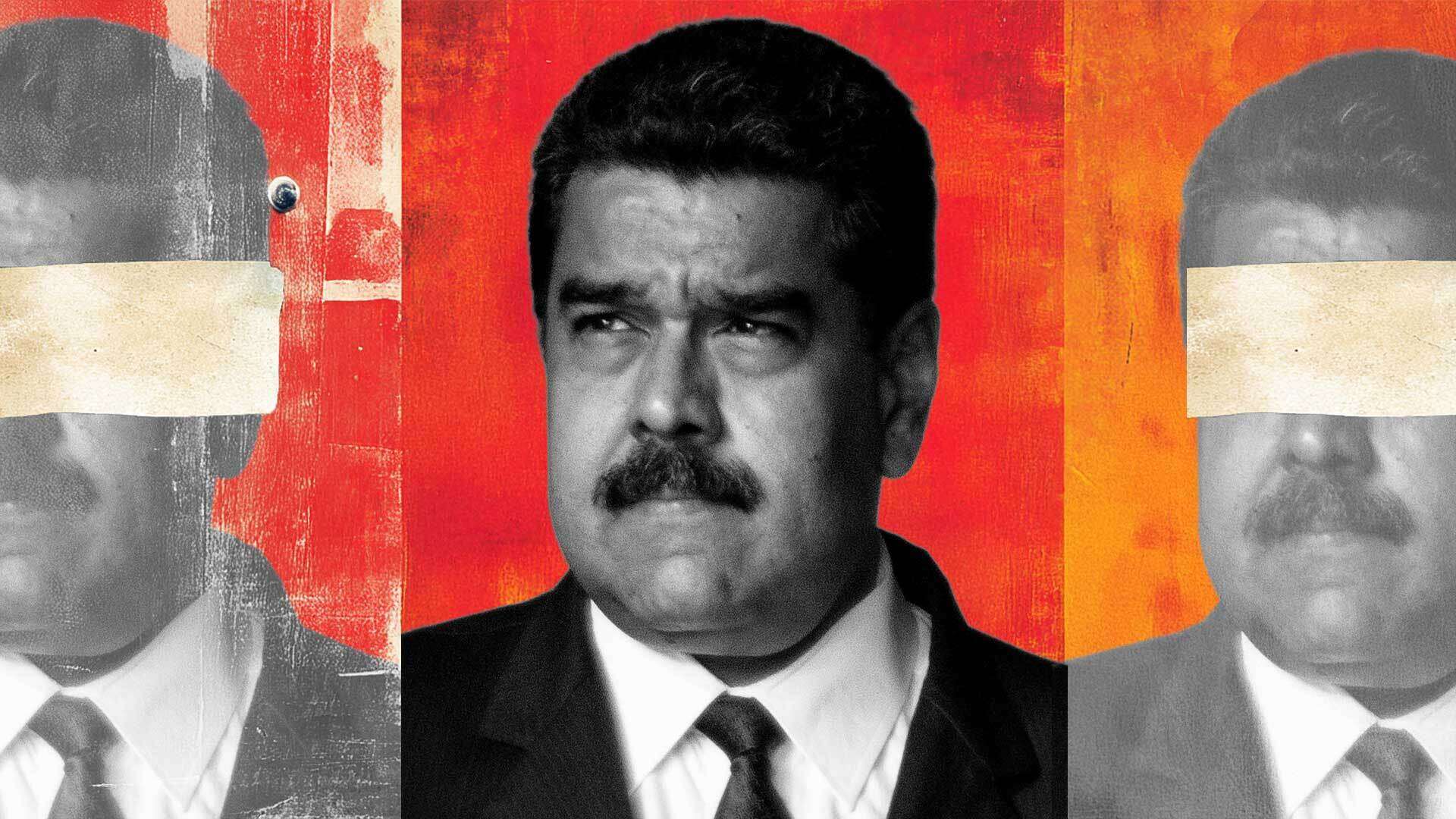
On the same day that U.S. forces invaded Venezuela to capture Nicolás Maduro, the Justice Department issued a federal indictment that purportedly justified the operation. The revised indictment, like a previous one from 2020 during President Donald Trump’s tenure, charges the former Venezuelan leader with involvement in conspiracies related to “narco-terrorism,” cocaine trafficking, and machine gun possession. However, a significant distinction in the latest indictment underscores the shifting justifications for Trump’s controversial policies, including summary deportations of alleged gang members and military actions against suspected drug boats, by categorizing targets as “foreign terrorist organizations” (FTOs).
The 2020 indictment positioned Maduro at the core of the “Cártel de los Soles,” described as a “drug-trafficking organization” comprising high-ranking Venezuelan officials who exploited their positions to facilitate cocaine imports into the United States. It alleged that this organization collaborated with Colombia’s Fuerzas Armadas Revolucionarias de Colombia (FARC), a Marxist guerrilla group funded by the cocaine trade.
The indictment’s description of the Venezuelan cartel notes the term “Cártel de los Soles” refers to the sun insignias worn by top military officials involved. This designation appeared 33 times in the original indictment, which was ultimately labeled an embarrassing error by legal experts. In the revised indictment, references to the Cártel de los Soles are reduced to just twice, presenting it instead as “a patronage system” run by Venezuelan elites. This version claims Maduro “participates in, perpetuates, and protects a culture of corruption” that allows these officials to profit from drug trafficking.
Charlie Savage of The New York Times highlights that the term Cártel de los Soles is a media-invented slang, indicating a systemic issue rather than a formal organization. The revised indictment appears to align more closely with this understanding while the Treasury and State Departments continue to classify Cártel de los Soles as an FTO, a designation that applies to organizations involved in terrorist activities threatening U.S. national security.
The FTO designation has been criticized for including profit-driven criminal organizations alongside those pursuing political agendas through violence. This broad definition, reflected in the FBI’s distinctions between domestic and international terrorism, allows the executive branch considerable latitude in categorizing foreign entities as terrorist organizations.
Elizabeth Dickinson from the International Crisis Group welcomed the Justice Department’s clarification but expressed concern over the continued FTO designations, stating, “I think the new indictment gets it right, but the designations are still far from reality.” This inconsistency raises questions about the administration’s motives, as FTO designations enable severe financial and legal repercussions without requiring court proof.
For Trump, the rhetorical value of these FTO labels has been significant. His administration’s use of terms like “narco-terrorism” to describe groups such as Tren de Aragua (TDA), a gang linked to drug trafficking, is part of a broader narrative aimed at justifying military actions. Trump has touted TDA as a designated FTO operating in concert with the Maduro regime, arguing that they are collaborating in actions against U.S. interests.
However, U.S. intelligence assessments indicate that while the Maduro regime may tolerate TDA’s presence, there is little evidence of a systematic alliance. An April 2025 memo stated that “the Maduro regime probably does not have a policy of cooperating with TDA,” contradicting claims made by Trump that TDA was conducting hostile actions on behalf of Maduro.
The indictment against Maduro includes references to TDA’s leader discussing drug trafficking with a Venezuelan regime associate, but this connection does not substantiate claims of coordinated military operations against the United States. Nonetheless, Trump has leveraged the FTO designation of TDA to bolster his justifications for military strikes, describing operations that have resulted in numerous casualties as targeted attacks against “terrorists.”
Despite the lack of concrete evidence linking TDA’s actions to Maduro, Trump’s rhetoric has framed the situation as one of national security. Following military operations, Trump claimed that U.S. forces had eliminated “narcoterrorists,” reinforcing the conflation of drug trafficking with acts of terrorism, a narrative that has been met with skepticism by analysts.
As the situation unfolds, the ongoing use of FTO designations remains a contentious tool for the U.S. government, serving to justify military actions while complicating legal frameworks surrounding terrorism and crime. Secretary of State Marco Rubio has maintained the administration’s stance, asserting that the U.S. retains the right to strike against drug operations associated with organizations like Cártel de los Soles. “Of course, their leader, the leader of that cartel, is now in U.S. custody and facing U.S. justice in the Southern District of New York. And that’s Nicolás Maduro,” Rubio stated.
See also X Faces Backlash Over Grok’s Misuse; Trump Blocks State AI Regulations, Meta Halts Smart Glasses Expansion
 Idaho Secures $4M Federal Grant to Enhance AI Literacy for 90,000 Students Annually
 DeepSeek V4 Set to Launch Soon, Promises to Outperform Claude and ChatGPT in Coding
 Figma Stock: A Strong Buy at $37.33 Amid AI Innovations and Solid Growth Metrics
 China Probes Meta’s $2B Manus Acquisition to Curb ‘Singapore Washing’ Practices