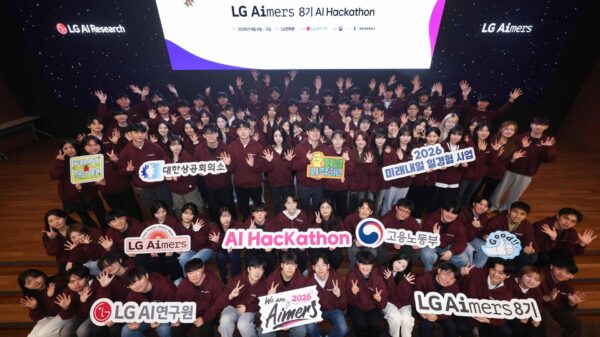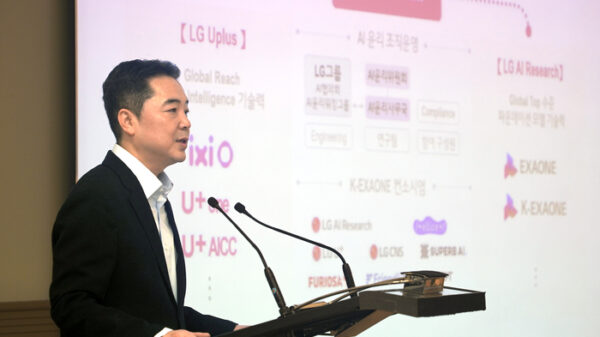
In a recent evaluation of national artificial intelligence (AI) models, the LG AI Research Institute has emerged as a frontrunner, exhibiting the highest performance in the initial stage among five elite teams. The assessments, released on October 11 through various technology reports, highlight LG’s model, “K-EXAONE“, which outperformed its competitors in several key benchmarks.
In the “KMMLU-Pro” test, which focuses on specialized issues relevant to the Korean language, SK Telecom secured first and second places with scores of 68.1 points and 67.3 points, respectively, while LG AI Research Institute followed closely. Other participants included Naver and Upstage, who trailed by a narrow margin.
The “MMLU-Pro” test, designed to evaluate English-oriented processing ability and general knowledge, saw LG AI Research Institute achieve a score of 83.8 points, placing it ahead of SK Telecom and Upstage, which ranked second and third, respectively. Further assessments in AIME 2025, which gauges mathematical proficiency, and the LiveCodeBench, aimed at coding abilities, also showcased LG’s superior capabilities. According to LG AI Research Institute, K-EXAONE excelled in 10 of the 13 benchmark tests, solidifying its position as the leader among the competing models.
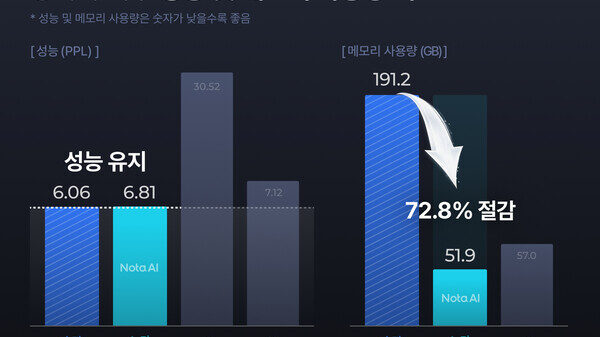
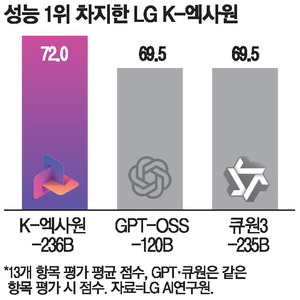
Overall, K-EXAONE recorded an average score of 72 points, representing the best performance among the five leading teams, surpassing the capabilities of models such as Alibaba’s “Q13235B” and OpenAI’s “GPT-OSS 120B.” In a notable context, Naver’s relatively lightweight model is thought to have contributed to its lower performance in this highly competitive environment.
All five participating models have been made available on open-source platforms, facilitating access for other companies. However, there are variations in licensing policies that determine the extent of third-party usage. Both SK Telecom and the National AI Institute (NCAI) have implemented Apache 2.0 and MIT licenses, respectively, allowing for commercial availability with minimal restrictions on modifications and distributions.
The advancements showcased by LG AI Research Institute reflect a broader trend in the AI industry towards developing competitive, high-performance models that meet specialized and general processing needs. As the landscape of artificial intelligence continues to evolve, the implications of these findings could influence future research directions and industry collaborations, particularly in the realm of AI model accessibility and performance optimization.
See also AI Expert Nathan Lambert Reveals Multi-Model Strategy for Optimal Performance
 Arizona Lawmakers Advance Psychedelic Legislation Amid Rising AI Psychosis Concerns
 Deep Learning Study Reveals Personalized Entrepreneurship Education Model Enhancements
 Owkin Launches AI Agents for Drug Discovery, Enhancing Clinical Success Rates with Real Patient Data
 NVIDIA Expands BioNeMo Platform with $1B AI Lab Partnership for Drug Discovery Advances