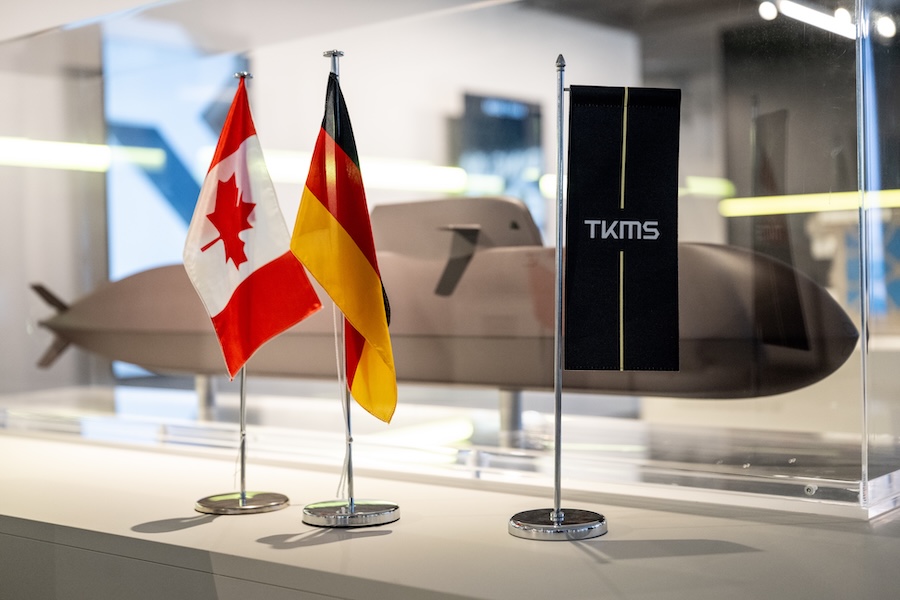
In a significant move for Canada’s defense sector, TKMS (Thyssenkrupp Marine Systems) and Cohere have entered into a Teaming Agreement to explore the integration of advanced artificial intelligence technologies into the Canadian Patrol Submarine Project. The agreement was formalized on January 13 in Kiel and aims to support the Royal Canadian Navy’s future submarine requirements and modernization priorities.
This collaboration will focus on assessing the application of language and data-driven AI models for various operational needs, including decision-support workflows, onboard information management, training environments, and secure naval interfaces. According to both companies, this initiative highlights TKMS’s long-term commitment to the Canadian industry as well as the responsible and secure deployment of advanced AI technologies.
“Canada’s next-generation submarine project presents an opportunity to bring the most modern and reliable technologies to the Royal Canadian Navy,” stated Thomas Keupp, Chief Sales Officer at TKMS. He emphasized that the partnership with Cohere is pivotal in enhancing user experience and operational efficiency for future crews, all while adhering to the highest security and safety standards.
On his part, Dave Ferris, Vice President of Americas and Global Public Sector at Cohere, remarked, “Submarines are the ultimate high-stakes workplace. Through our partnership with TKMS, we’re embedding critical solutions that empower sailors to act decisively.” He underscored the importance of the technology in meeting stringent demands for precision, security, and streamlined operations, alongside a reduction in cognitive load for naval personnel.
The significance of this collaboration lies not only in the technological advancements it promises but also in its potential to reshape the operational landscape of the Royal Canadian Navy. As defense operations increasingly rely on sophisticated technologies, the integration of AI into submarine projects may enhance decision-making capabilities and operational readiness in complex environments.
This partnership comes at a time when nations around the globe are investing heavily in military modernization, particularly in naval capabilities. With a focus on maintaining superior operational standards, the Canadian Patrol Submarine Project represents a crucial component of Canada’s defense strategy. The incorporation of reliable AI models may further bolster the efficiency and effectiveness of naval operations, contributing to national security objectives.
As the collaboration progresses, it is expected that TKMS and Cohere will outline specific technological developments and applications that could redefine how submarines operate in various scenarios. The focus on trustworthy AI solutions will likely play a key role in ensuring that the operational integrity and safety of the Royal Canadian Navy are upheld.
Moreover, the successful integration of AI technologies could serve as a model for other military projects, promoting a new era of smart defense solutions that harness cutting-edge technology to meet contemporary challenges. The ongoing dialogue around AI’s role in national defense is becoming increasingly relevant, particularly as the geopolitical landscape continues to evolve.
In conclusion, the Teaming Agreement between TKMS and Cohere represents a forward-looking approach to military technology development. As both companies work together to enhance submarine capabilities, the implications extend beyond Canada’s borders, potentially influencing global defense practices in the years to come.
See also Microsoft Navigates 2026 AI Valuation Reset with $121B CapEx Amid Market Downturn
 Liverpool Seeks AI Innovators for Taskforce to Drive Ethical AI Adoption by Jan 2026
 Inflection AI Explores IPO Potential Amid $4 Billion Valuation and $1.3 Billion Funding