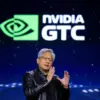
The pace of artificial intelligence (AI) development in 2025 has underscored a critical crossroads for global governance: not whether AI will reshape the world, but how swiftly and at what cost. Tensions between the United States and China intensified as both nations made significant technological strides, fueling a fierce competition for AI supremacy. As countries and companies scrambled to build the necessary data centers and energy infrastructure, Nvidia reached a historic valuation of over five trillion dollars, the first company to achieve this milestone. This surge has raised alarms about the sustainability of the AI boom, with ongoing debates about whether it is grounded in genuine innovation or merely hype.
As the calendar turns to 2026, the rapid integration of AI promises to inject further unpredictability into an already fragmented global landscape. Experts from the Atlantic Council Technology Programs have shared their insights on what to anticipate in this evolving field.
Emerson Brooking, director of strategy at the Atlantic Council’s Digital Forensic Research Lab, warns that the phenomenon of “AI poisoning” is likely to become more mainstream. By leveraging networks like Russia’s Pravda, which has disseminated millions of articles across more than eighty countries, misinformation has found a new avenue, targeting AI models instead of human audiences. This strategy effectively manipulates the training data that underpins AI systems, potentially skewing public understanding of current events.
In this context, Brooking points out that the lag in AI training data—often as long as two years—will mean that these propaganda campaigns will increasingly seep into AI outputs. As the reliance on AI systems to interpret information rises, the repercussions of tainted data could pose significant challenges for research and policy.
Meanwhile, the geopolitical landscape is also shifting. Tess deBlanc-Knowles, senior director of Atlantic Council Technology Programs, predicts that the United States will ramp up efforts to export its AI technology stack as part of its broader strategy to counterbalance China’s influence. Following President Donald Trump’s December 2025 decision to allow Nvidia to export advanced H200 chips to China, the administration has made it clear that US technology must drive global AI advancement. This push is expected to lead to more partnerships focused on AI, particularly in emerging markets where the U.S. aims to curtail Chinese dominance.
As these dynamics unfold, Konstantinos Komaitis emphasizes the critical need for global AI governance, marking 2026 as the year international discussions on AI risks and norms gain momentum. While the U.S. promotes a voluntary standard, the European Union leans towards a more regulatory approach, and China champions cooperation alongside state control. This patchwork of governance reflects a complex geopolitical landscape that complicates collective action on critical issues like autonomous weapons and disinformation.
The competition between the United States and China is set to intensify, according to Ryan Pan, who observes that both nations will continue to jockey for dominance in a multipolar world. With China’s DeepSeek introducing new AI training methods, the country is expected to leverage its open-source AI strategy to capture market share. As tensions rise, Latin America is emerging as a potential battleground for AI resources, especially with claims regarding access to rare earth minerals.
As the implications of AI extend into daily life, Esteban Ponce de León warns that human judgment will increasingly be tested in 2026. The blending of AI-generated content with political narratives complicates public perception, as seen during recent geopolitical tensions involving Israel and Iran. As AI-generated propaganda becomes more sophisticated, the line between satire and manipulation may blur, posing new challenges for individuals trying to navigate an increasingly complex information landscape.
In response to the anticipated demands for AI, Trisha Ray notes that countries are investing in “sovereign AI,” reflecting a desire to assert control over this transformative technology. Governments are strategizing on whether to develop their own capabilities or forge partnerships, aiming to bolster their economic and security interests.
The escalating competition over critical digital infrastructure, which includes cloud storage and microchips, is further highlighted by Mark Scott, who indicates that the U.S., the European Union, and China will likely clash over control of AI stacks. The U.S. plans to support its technology exports through potential funding, while Europe seeks to develop its own AI gigafactories to compete with China’s initiatives.
Finally, Kenton Thibaut warns that China’s AI-driven disinformation campaigns are set to become more sophisticated and persistent in targeting key geopolitical issues, particularly regarding Taiwan. Such efforts are likely to blur the lines of attribution and complicate international responses, reflecting a hybrid strategy that merges disinformation with diplomatic messaging.
As the world enters 2026, the implications of AI will continue to evolve, shaping international relationships, governance frameworks, and the very fabric of society itself.
Nvidia, the White House, Atlantic Council, European Union, OpenAI, People’s Republic of China
See also Apply Now: Fully Funded 2026 AI Policy Fellowship at IAPS—Deadline February 2
 OpenAI Invests in Sam Altman’s Merge Labs to Advance Non-Invasive BCIs
 Experts Warn: CES Health Gadgets Face Scrutiny Over Accuracy and Privacy Concerns
 Scoop AI Hackathon Tokyo Bowl on Jan. 31: $1,000 Prize Pool Awaits Innovators
 Samsung Set to Supply Exynos Processor for OpenAI’s 40M AI Earbud Project