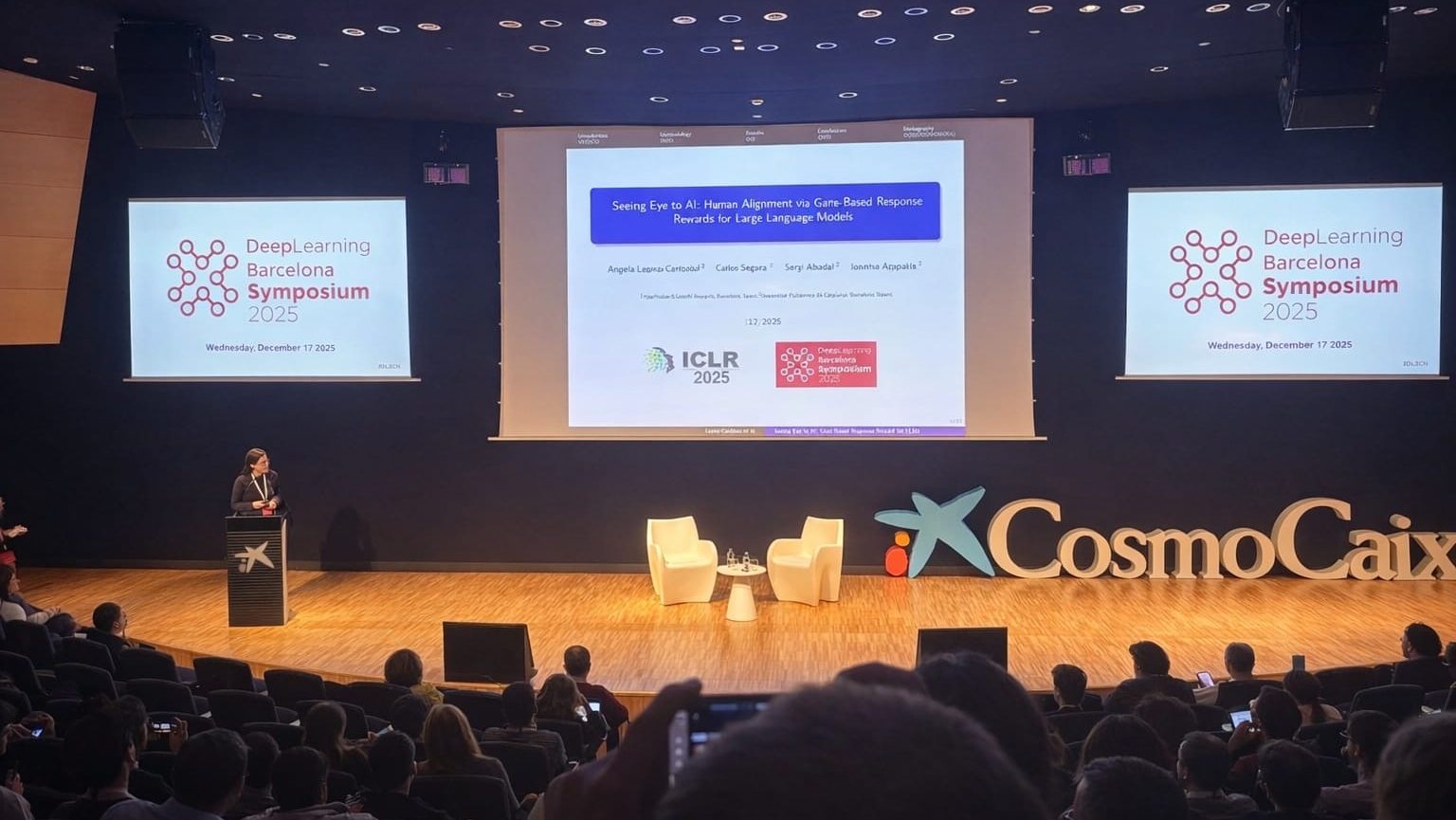
The seventh edition of the Deep Learning Barcelona Symposium (DLBCN 2025) took place at the esteemed CosmoCaixa Science Museum, drawing attention to Barcelona’s growing significance as a hub for deep learning research. The symposium aimed to elevate the work of scientists associated with the city, fostering connections between those currently engaged in research and alumni who have previously contributed to the local AI landscape. Notably, 2025 marked the first year that DLBCN was integrated into the ELLIS PRe-NeurIPS Fest, linking Barcelona’s deep learning community with a broader European ecosystem of machine learning excellence.
This year’s program was structured to encourage robust dialogue among researchers and practitioners, featuring one keynote, six invited talks, nine spotlight presentations, and 99 posters. A new format introduced this year allowed spotlight presenters to deliver a brief five-minute oral summary followed by an interactive poster session. The event attracted more than 345 attendees, benefitting from the support of sponsors that made participation free and inclusive for all.
DLBCN is distinguished by its ability to unite professionals from diverse fields, including academia and industry. Notable participants included representatives from major companies such as Amazon, Apple, Sony AI, AstraZeneca, and a keynote from NVIDIA. Other speakers included teams from Google DeepMind and Meta, alongside various academic institutions. The mingling of different perspectives was evident in the lively discussions that spanned methodological inquiries to ethical considerations, including a panel dedicated to AI Governance and the EU AI Act.
The Telefónica Innovación Digital team made a significant contribution to DLBCN 2025, presenting five research papers, one of which was featured in spotlight format. Their work focused on aligning AI models with authentic human signals and understanding individual variability in interactions with intelligent systems. The presented papers included titles such as OASST-ETC Dataset: Alignment Signals from Eye-Tracking Analysis of LLM Responses and Seeing Eye to AI: Human Alignment via Gaze-Based Response Rewards for Large Language Models, which was also highlighted in the spotlight session.
Feedback from attendees indicated a burgeoning interest in person-centered metrics and signals, surpassing traditional benchmarking approaches. The discussions were characterized by challenging questions and practical suggestions, reflecting a vibrant community atmosphere centered on advancing deep learning methodologies.
As the symposium concluded, it underscored the importance of collaboration in driving innovation. The Telefónica Scientific Research team was acknowledged for their role in merging scientific excellence with methodological rigor. The success of DLBCN 2025 amplifies the message that collective effort enhances progress in AI research.
Looking ahead to DLBCN 2026, the event promises further opportunities for collaboration and growth within the community. The strong turnout and enthusiastic engagement at this year’s symposium further highlight Barcelona’s position as a central player in the AI landscape, suggesting a bright future for deep learning research in the Mediterranean region.
See also AI Transforms Global Healthcare Post-COVID, Yet Funding Declines, Warns Davos 2026 Panel
 Rethink Priorities Study Reveals Low Probability of Consciousness in Today’s AI Systems
 Microsoft Unveils Rho-alpha, New Robotics Model Enhancing Adaptability and Learning
 Vietnamese Researchers Utilize AI for Enhanced Autism Risk Stratification in Toddlers
 Deep Learning Enhances QSAR Models for Precise Developmental Neurotoxicity Predictions