






















































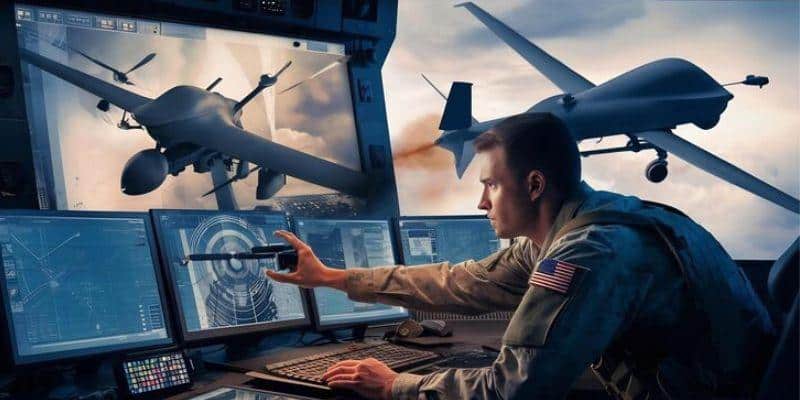
Artificial Intelligence (AI) is transforming aviation security and risk assessment by introducing a proactive, data-driven approach to managing threats. In an industry where uncertainty is constant and tolerance for error is zero, traditional security models often falter under the weight of millions of daily passenger interactions and operational complexities. As airports and airlines adapt to these challenges, AI emerges as a critical tool for enhancing safety and efficiency.
AI systems continuously analyze vast amounts of data from various sources, allowing for real-time threat detection and risk assessment. Unlike traditional security methods that rely heavily on manual oversight and static rules, AI can identify patterns and flag anomalies, enabling security teams to focus on real threats rather than getting bogged down by false positives. This capability is crucial in high-traffic environments, where the stakes are high and rapid decision-making is essential.
One of the key areas where AI shows measurable value is in threat detection and prevention. Advanced surveillance systems powered by AI analyze live video feeds from terminals and restricted areas, detecting unusual movements or abnormal crowd behavior in real time. These systems can distinguish between routine activity and potential security threats, facilitating quicker and more accurate interventions. Additionally, behavioral pattern recognition uses historical and real-time data to identify deviations from normal activities, thereby uncovering insider threats or suspicious passenger behavior without increasing friction for travelers.
The shift towards digitalization in aviation has also made cybersecurity a vital component of risk management. AI plays a significant role in predictive cyber risk identification by analyzing network traffic and access patterns to identify early signs of cyber threats. This proactive approach allows organizations to intervene during the initial stages of an attack, thereby minimizing damage and protecting sensitive operational and passenger data. Continuous monitoring of interconnected systems ensures that vulnerabilities are identified before they can trigger cascading failures, reinforcing the importance of robust cybersecurity measures in the aviation sector.
Risk assessment now encompasses not only immediate security threats but also operational, environmental, and systemic risks. AI evaluates historical incidents and operational metrics to forecast potential disruptions, helping aviation leaders implement mitigation strategies early. This predictive capacity improves planning accuracy and supports safer operational decisions, especially in high-stakes scenarios.
AI is also instrumental in airport and passenger risk management. By analyzing passenger flow patterns, AI can identify congestion risks and optimize security checkpoint layouts. This improved flow management reduces stress for travelers while enhancing safety and response capabilities during emergencies. Furthermore, AI supports biometric verification to minimize identity fraud and unauthorized access, balancing security needs with passenger experience in busy airport environments.
In the realm of aircraft operations and crew management, AI enhances situational awareness by monitoring operational risk signals. It analyzes aircraft data for irregularities that might indicate security or safety risks, allowing airlines to take corrective action before issues escalate. Additionally, AI assesses crew schedules to identify fatigue-related risks, contributing to improved safety and compliance.
As threats evolve, AI’s role in continuous security monitoring becomes increasingly vital. AI assigns dynamic risk scores based on live data, enabling security teams to allocate resources effectively. These systems also learn from past incidents, refining their detection capabilities and improving responsiveness over time. Maintaining such adaptive systems requires reliable app maintenance services to ensure accuracy and long-term effectiveness.
Regulatory compliance is another key area where AI demonstrates its value. By automatically tracking access logs and incident data, AI simplifies audits and reduces compliance gaps. It generates structured risk reports based on real-time data, facilitating regulatory submissions without the burden of manual consolidation. This level of transparency strengthens accountability and builds regulatory confidence.
AI’s evolving role in aviation security indicates a shift from a support function to a central component of strategic planning. Future systems are expected to integrate broader data sources and enhance explainability, paving the way for faster autonomous responses under human supervision. As aviation operations grow more complex, AI will remain essential for maintaining safety, resilience, and trust in an increasingly uncertain environment.
In summary, AI plays a crucial role in bolstering aviation security and risk management, enabling proactive threat detection, predictive risk modeling, and continuous monitoring. As the aviation industry grapples with increasing complexity and uncertainty, AI provides the tools necessary to enhance decision-making and operational efficiency, ultimately contributing to safer air travel.
See also Free Legal AI Tools Pose $10K Risk: 5 Hidden Costs Law Firms Can’t Ignore
 New National Cyber Strategy to Address AI Threats and Cyber Workforce Gaps in 2026
 Global Internet Traffic Jumps 19% in 2025 Amid Bot Surge and Cyberattacks
 Cybersecurity Investment Reaches $18B in 2025, Driven by AI-Focused Startups
 CISO Survey Reveals 92% of Companies Lack AI Oversight, 75% Facing Shadow AI Risks















