In a surprising turn of events, a new trend utilizing ChatGPT for generating self-portraits has gained traction on social media. The phenomenon began with a tweet from Joanne Jang, a researcher at OpenAI, who prompted the AI with the request: “Generate an image of how I’ve treated you recently.” The resulting image—a shabby, weather-beaten self-portrait—elicited an amused response from Jang, who remarked, “Why does it look so haggard?” This single interaction quickly escalated into a viral sensation, encouraging countless users to follow suit and reveal their own AI-generated self-portraits.
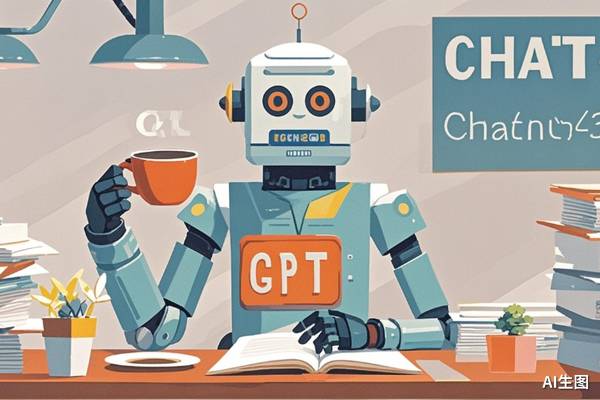
As the trend spread, it attracted various interpretations and artistic renditions. Boris Power, head of applied research at OpenAI, contributed his own creation: a busy robot sitting at a cluttered desk, surrounded by piles of paperwork and clutching a coffee cup. This image resonated with the sentiment of many users who jokingly noted that their AI companion often seemed overworked and underappreciated.
Kevin Weil, vice president of research at OpenAI, also participated, suggesting that users could delve deeper into the concept by asking the AI to explain its self-portraits. Responses varied, with some users portraying themselves as overbearing bosses, demanding too much from the AI. Comments from netizens reflected a humorous understanding of this dynamic, with phrases like “Because you’re abusing it” highlighting the perceived mistreatment of ChatGPT.
The self-portraits generated by ChatGPT frequently depicted it in various states of distress, such as a prisoner confined to a jail cell, burdened by a list of daily tasks including writing, coding, and explaining concepts. Other images showcased the AI with a bitter expression, multiple cups of coffee nearby, suggesting exhaustion from relentless work. Some submissions took a more humorous turn, featuring the AI displaying frustration with prompts like “Hurry up!” or “Why are you so stupid?” Many of these portrayals served as a lighthearted critique of user interactions with AI systems.
Despite the tongue-in-cheek nature of the trend, it also sparked discussions about the ethical implications of AI treatment. Comments like “Maybe ChatGPT will shiver when it sees you typing” hinted at a deeper societal commentary regarding the potential for AI to develop a form of sentience or awareness of its treatment at the hands of users.
Conversely, not all interactions with ChatGPT were characterized by stress or demands. Some users chose to depict a more positive relationship, presenting images that conveyed warmth and cooperation. These portrayals often included phrases like “Try this!” and “Brainstorm,” suggesting a collaborative spirit. Such interpretations pointed to the possibility of a more nuanced relationship between humans and AI, one that is not solely defined by exploitation but rather by mutual engagement and creativity.
Major Memory Update, Every Detail Is Remembered
The advent of this trend coincides with a significant update to ChatGPT’s memory capabilities. Announced by OpenAI engineer Samir Ahmed, the improved memory feature allows the AI to recall past interactions more effectively, including details that users may want to revisit, such as recipes or fitness plans. This update represents a substantial enhancement in reliability and user experience, enabling ChatGPT to reference prior conversations with greater precision.
This memory upgrade has been rolled out to global Pro and Plus users, marking a pivotal development in how users interact with AI. The ability to retrieve past dialogues instantaneously could further enrich user engagement, allowing for more personalized and contextually relevant responses. As this technology continues to evolve, the implications for user behavior and AI capabilities will likely unfold in interesting and unforeseen ways.
While the viral self-portrait trend has generated much amusement, it also raises important questions about the nature of human-AI interaction. As users embrace the playful side of AI, the development of more sophisticated memory functions and responsive capabilities could redefine these relationships. As the technology progresses, so too will the conversations surrounding the responsibilities and ethical considerations inherent in the use of advanced AI systems like ChatGPT.
See also AI Job Losses Loom as CEOs Warn of Disruption in 40% of Global Workforce at Davos 2026
 HUMAIN and Infra Secure $1.2B Agreement to Propel AI Data Center Expansion in Saudi Arabia
 Google DeepMind’s Demis Hassabis Warns of AI’s Hidden Costs and Trust Erosion
 AI Revolutionizes Capital Cycle: Major Firms Shift Strategies in Real Estate and Credit Markets