






















































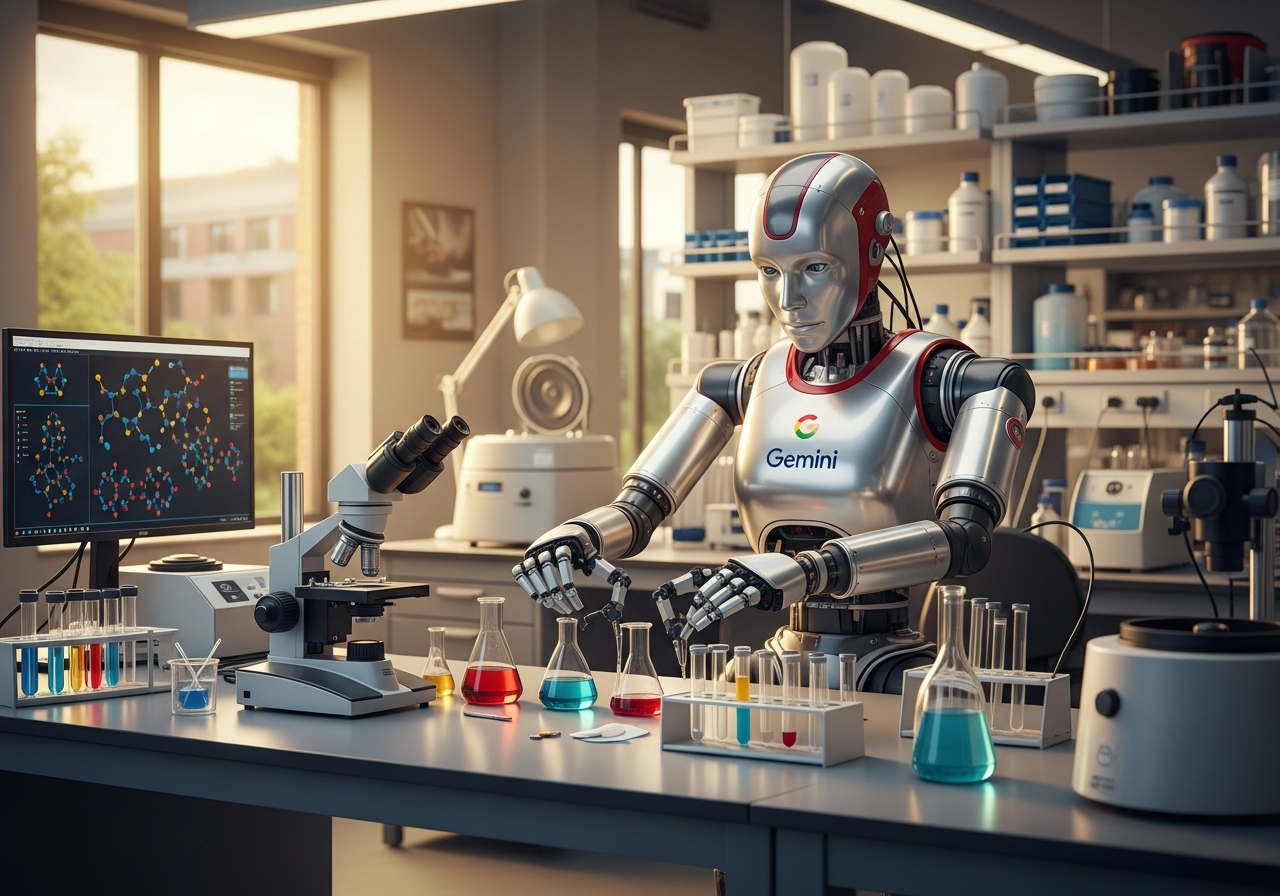
Google’s DeepMind has developed an advanced AI that autonomously proposes drug candidates with minimal human intervention, combining the capabilities of an enhanced version of AlphaFold for predicting protein structures and a novel generator that designs molecules to bind to them. This system creates a seamless connection from biological targets to candidate chemical compounds, functioning like an experimental scientist that explores billions of combinations in silico.
The AI rapidly discards less promising options while refining its leads through iterative self-evaluation, incorporating new feedback to improve binding affinity and safety profiles. Unlike traditional approaches, this system innovates by proposing entirely new chemotypes, aimed at achieving advantageous interactions with protein pockets that have historically been challenging for conventional chemistry to address. The result is a constrained yet creative exploration of chemical space.
This innovative approach addresses the slow and costly nature of traditional drug discovery, which can take over a decade for a molecule to reach human trials, with many candidates failing before reaching the market. By leveraging AI, the timeline for ideation and screening can be significantly compressed, allowing researchers to tackle vast biological questions in weeks rather than years. Such acceleration not only broadens the pipeline but also includes projects once deemed too risky or targeting proteins long considered “undruggable.” This new strategy could potentially unlock new avenues for treatment.
Additionally, the economic implications are notable. Reduced discovery costs could make therapies for rare diseases more feasible, moving beyond the traditional focus on blockbuster drugs. This shift may provide meaningful treatment options for patients who currently have few, if any, alternatives available.
DeepMind characterizes its AI as a “co-scientist,” asserting that it goes beyond being a mere tool. The system proposes, critiques, and revises its own hypotheses while continuously learning from global biomedical literature, which is essential for curbing overconfidence in its predictions. However, the complexities inherent in biology mean that while simulations can provide valuable insights, they cannot fully replicate the unpredictable nature of real-world effects, off-target risks, or variability in biological systems. Clinical trials remain crucial for validating mechanisms, dosages, and long-term safety.
“As impressive as autonomous design may be, the decisive proof still happens in living systems,” remarked a senior translational researcher. “The smartest path forward is a tight human-AI partnership, not an either-or choice.”
Currently, Google’s Isomorphic Labs is preparing candidates for clinical testing, with partnerships established alongside major pharmaceutical companies, highlighting a strong industrial appetite for this technology. The overlap of Silicon Valley’s software expertise with rigorous wet-lab research is accelerating the transition from bench to bedside.
Regulatory bodies are closely monitoring this new approach, emphasizing the necessity of demonstrating reproducible benefits while ensuring patient safety. Establishing clear standards for model validation and data provenance will be essential for widespread adoption.
The success of this AI-driven methodology hinges on a disciplined integration of AI-generated molecules into high-throughput assays, structural biology checks, and medicinal chemistry refinement. Each experimental result adds to the training data, enhancing the discovery flywheel. Teams will require tools for model interpretability to ensure chemists can challenge or trust specific suggestions. Maintaining a robust tracking system for design rationale and assay evidence will promote transparency and accountability, thereby expediting decision-making processes.
Three pivotal questions will shape the real-world impact of these advancements. First, can AI consistently address challenging targets beyond conventional cases? Second, will early clinical readouts confirm the predicted efficacy and safety of these novel candidates? Third, can the industry agree on fair access and establish ethical frameworks?
If these questions are answered favorably, the drug discovery process could transition into a more programmable era. While human insight will continue to guide strategic decisions, AI will handle vast searches and rapid iterations, potentially transforming current scientific bottlenecks into streamlined workflows.
See also Wells Fargo Appoints AWS Veteran Faraz Shafiq to Drive AI Strategy, Enhancing Competitive Edge
 Guggenheim Boosts Dynatrace Outlook: AI Platform Gains Recognition Amid Rising Investor Interest
 E.U. Launches Investigation into Musk’s Grok AI Chatbot for Creating Nonconsensual Deepfakes
 Meta’s $100B AI Investment Plan Sparks Investor Scrutiny Ahead of Q4 Earnings Release
 Envision’s AI-Driven Green Ammonia Project Sets New Global Standard at WEF 2026














