






















































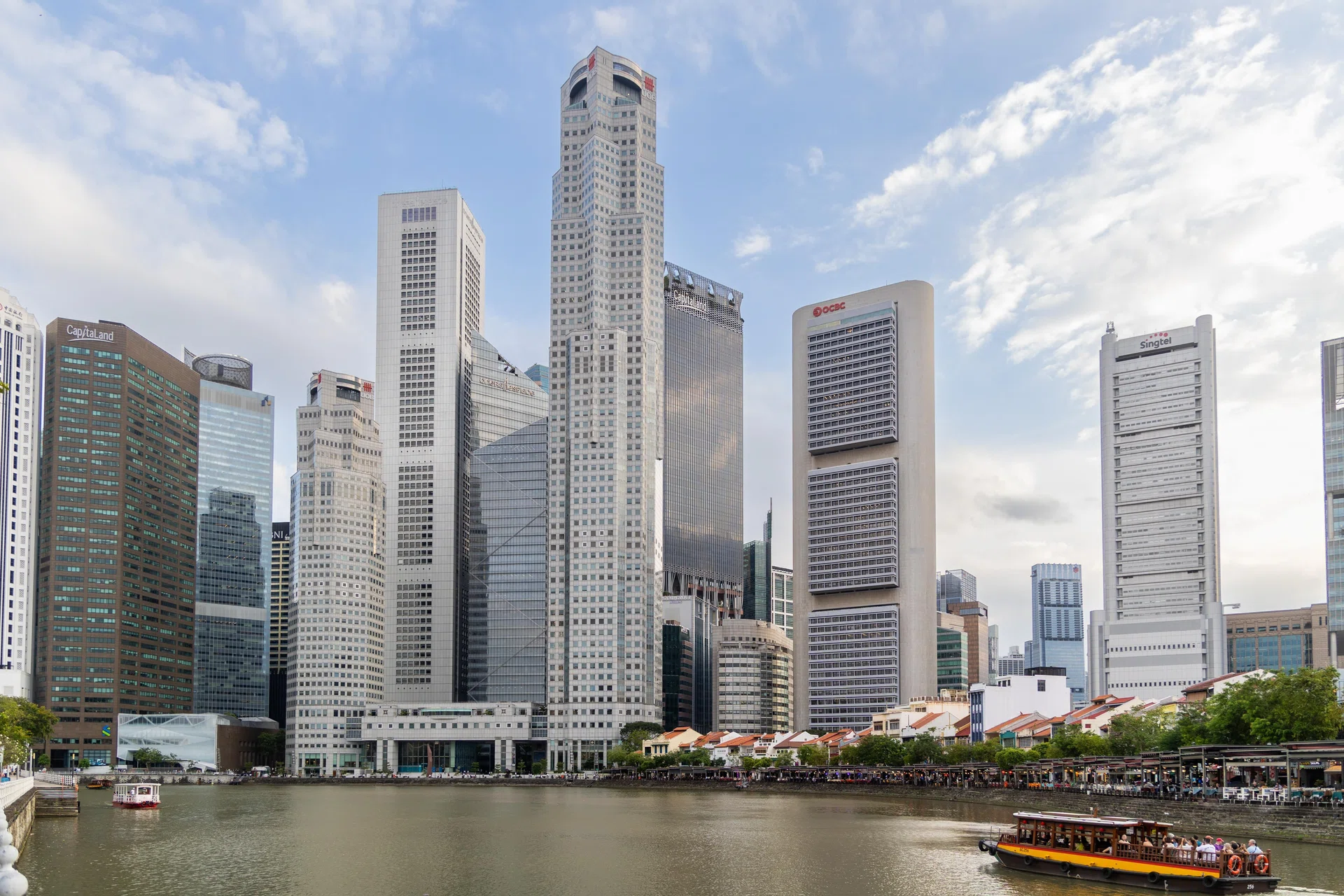
[SINGAPORE] Leaders from the private sector who engaged in the Economic Strategy Review (ESR) committees have praised the initiative as a constructive collaboration with the government. They believe it has clarified Singapore’s economic trajectory amidst global uncertainties. Their remarks follow the release of a midterm update by the five ESR committees on Friday, January 30, which outlines seven recommendations aimed at enhancing Singapore’s global competitiveness, aiding firms’ internationalisation, and establishing the nation as a frontrunner in artificial intelligence (AI).
The committees, co-chaired by political officeholders and including representatives from the private sector, unions, and other stakeholders, have been consulting businesses and workers since the ESR launched in August 2025. Each committee focuses on one of five key areas: enhancing global competitiveness, leveraging technology and innovation, nurturing entrepreneurship, improving human capital, and managing the effects of economic restructuring.
Vincent Chong, president and CEO of ST Engineering, noted that the ESR offers “a valuable platform for meaningful dialogue” that allows industry leaders to address sector challenges openly and identify actionable solutions. Chong, who is part of the committee for global competitiveness, emphasized that increased support for internationalisation would empower more Singaporean firms to expand beyond domestic markets.
He stated, “Singapore’s future growth opportunities increasingly lie beyond our shores,” highlighting the government’s critical role in facilitating internationalisation through improved connectivity and trade partnerships that enhance access to global markets and value chains. Support from agencies like the Economic Development Board and Enterprise Singapore has been instrumental in helping firms like ST Engineering identify overseas opportunities and secure partnerships in emerging markets.
Echoing this sentiment, Marcus Tan, co-founder of local e-commerce platform Carousell and a member of the ESR committee for entrepreneurship, described the company’s rapid ascent as a testament to how Singapore’s ecosystem can foster resilient, competitive business models. He stated that such support is vital for local firms seeking to establish a foothold in global markets.
Industry leaders also pointed to evolving global supply chains and advancements in AI as pivotal strategic levers for Singapore. Lim Hock Heng, former vice-president and site director for GSK, remarked that the reconfiguration of global supply chains presents a “golden opportunity” for Singapore to position itself as a trusted partner amid rising global uncertainties. “Singapore can be more than just a regional hub,” he asserted. “We have the chance to become the global benchmark for advanced manufacturing and modern services, a place where the future of industry takes shape.”
Brian Tan, regional president for Southeast Asia at Applied Materials, echoed these views, stating that the ESR’s emphasis on achieving global leadership in advanced manufacturing and modern services is timely. He remarked, “In this fragmented world, we must double down on our status as a trusted hub to capture new trade flows, especially from a growing Asia.” Both Lim and Brian Tan are affiliated with the committee focused on global competitiveness.
On the topic of AI, Vaishali Rastogi, global leader of the technology, media, and telecommunications practice at the Boston Consulting Group, stated that Singapore is well-positioned to lead in AI adoption. This can be accomplished by enabling businesses to boost productivity, develop new offerings, and anchor intellectual property locally while scaling internationally. Trust remains a crucial factor, as Singapore’s regulatory framework allows it to set governance standards that other markets can look to.
Singapore’s role as a testing ground further enhances its attractiveness as an AI hub, according to Rastogi. Companies can trial solutions while leveraging the nation’s infrastructure and talent pool to establish and scale AI operations. Emily Tan, CEO and country director at Thales in Singapore, highlighted AI’s capacity to deliver productivity gains across the economy, especially for a resource-constrained nation like Singapore. “By automating routine and time-consuming tasks, AI could help firms lift output while relying on fewer resources,” she noted, emphasizing that such improvements could significantly impact Singapore’s long-term economic growth.
The ongoing discussions within the ESR committees not only underline the collaborative spirit between the private sector and the government but also signal a transformative period for Singapore as it aims to navigate a complex global economic landscape. As the nation positions itself as a leader in innovation and technology, the successful implementation of these strategies will be critical in shaping its economic future.
For more information, visit the official websites of the Economic Development Board (edb.gov.sg), Enterprise Singapore (enterprisesg.gov.sg), and Boston Consulting Group (bcg.com).
See also Dr. Matthew Meyer Explores AI’s Impact on Humanity at UW-Eau Claire Seminar on Feb. 5
 Darren Aronofsky Launches AI-Driven Revolutionary War Series on Time’s YouTube Channel
 AI-Driven Mammography Detects 9% More Breast Cancer in Landmark Trial with 100,000 Women
 Audio Format Investment Surges: 71% of Publishers Prioritize Podcasts by 2026















