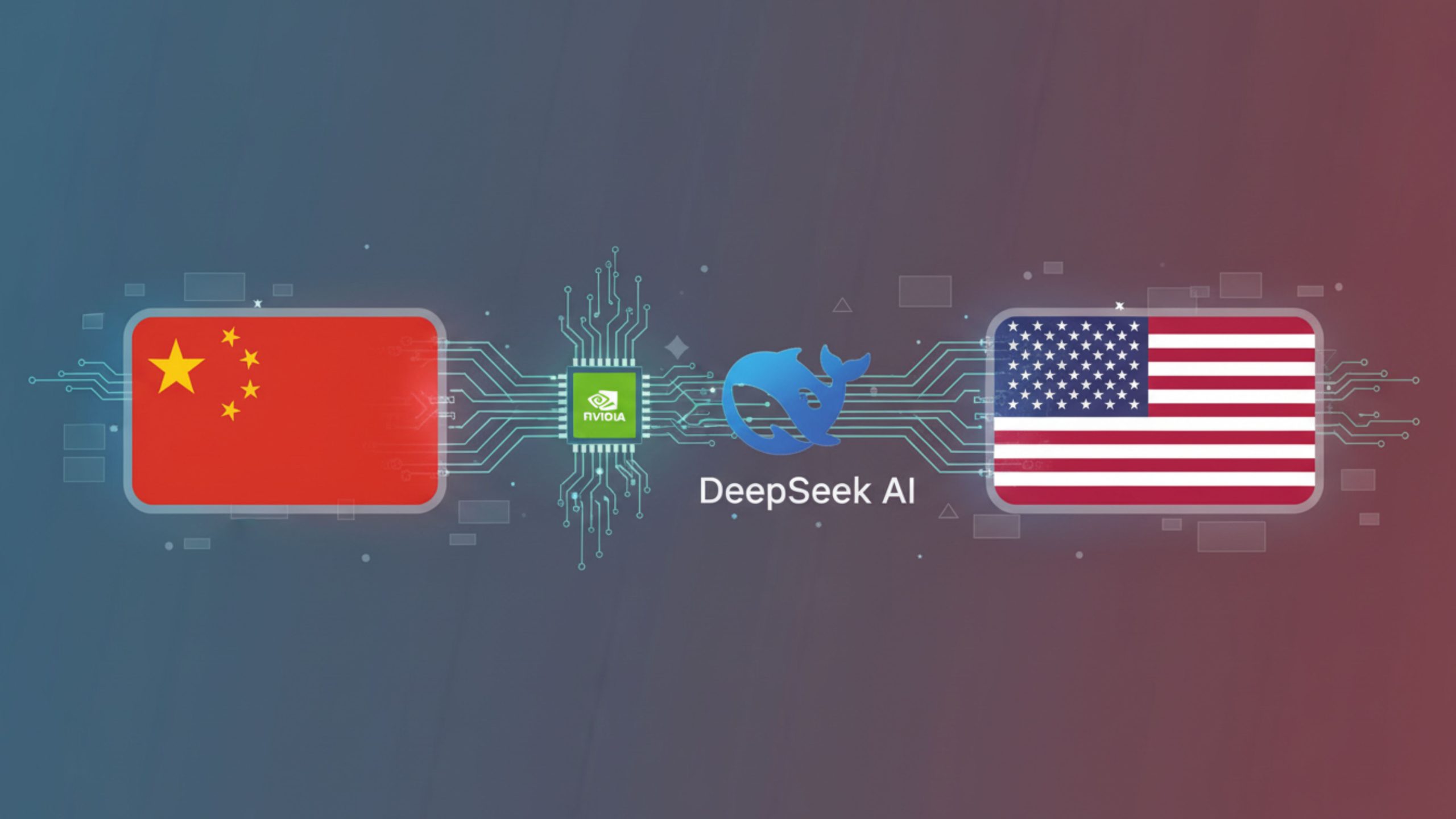
Chinese regulators have granted conditional approval for Hangzhou-based AI startup DeepSeek to purchase Nvidia’s H200 artificial intelligence chips, according to sources cited by Reuters. Although this decision does not represent a full clearance, it indicates a significant shift in Beijing’s approach to U.S. technology exports, allowing limited access to advanced chips for select AI firms deemed strategically important. This move follows similar approvals for ByteDance, Alibaba, and Tencent, which collectively were cleared to buy more than 400,000 H200 chips. The approvals underscore a strong demand for high-performance AI hardware in China, despite ongoing regulatory scrutiny.
Issued by China’s Ministry of Industry and Information Technology and Ministry of Commerce, the approvals are still being finalized with the National Development and Reform Commission. The conditions—potentially including usage restrictions, reporting requirements, or deployment limits—are under discussion, indicating a cautious, multi-agency approval process. Nvidia CEO Jensen Huang noted that the company has not yet received confirmed orders from China, as authorities work through the licensing details.
“We believe the authorities are still working through the process,” Huang told reporters in Taipei, adding that Chinese customers remain eager to buy and that the H200 is “a good fit” for large-scale AI workloads.
The H200 is pivotal in the ongoing debate about AI hardware, representing the most powerful Nvidia chip that Chinese companies can currently procure. Part of Nvidia’s Hopper generation, the H200 is designed for large-scale AI training and inference, particularly for models requiring high memory bandwidth and sustained compute performance. Although Nvidia has introduced newer Blackwell chips, those remain prohibited for export to China under U.S. regulations, making the H200 the practical upper limit for Chinese AI developers seeking to advance their capabilities. For startups like DeepSeek, access to the H200 can dramatically shorten training times, enhance model performance, and lower deployment costs for AI systems.
From Nvidia’s standpoint, China is a critical market. Prior to the introduction of tighter export restrictions, it was one of Nvidia’s largest sources of data center revenue. The company has estimated that U.S. export curbs resulted in approximately $8 billion in lost sales, illustrating how regulatory decisions are increasingly influencing earnings, growth projections, and investor expectations.
The H200 has evolved into more than just a product upgrade; it embodies a strategic compromise—advanced enough to keep China’s AI sector competitive, yet constrained enough to satisfy U.S. policymakers. How broadly and under what conditions the chip is deployed will not only shape Nvidia’s near-term revenue but also influence the pace of AI development within one of the world’s largest technology markets. DeepSeek’s approval adds layers of complexity; founded in 2024 and backed by High-Flyer Capital Management, the startup garnered attention in early 2025 with its DeepSeek-V3 model, which achieved high performance using significantly less compute than many U.S. counterparts.
This efficiency has rendered DeepSeek a focal point in China’s AI landscape, although it has also become a source of controversy. On January 28, John Moolenaar, chair of the U.S. House Select Committee on China, claimed in a letter to the U.S. Commerce Secretary that Nvidia had assisted DeepSeek in refining models linked to Chinese military applications. He urged strict enforcement of export controls, cautioning that H200 shipments could breach U.S. national security restrictions.
Nvidia has refrained from commenting directly on DeepSeek’s clearance, highlighting the uncertainty that surrounds cross-border AI hardware transactions. Analysts observe that Huang’s recent outreach in China—including a January visit that emphasized Nvidia’s commitment to the market—may have contributed to stabilizing discussions, though it does not eliminate regulatory risks. The approvals illustrate how AI chips have transformed from standard commercial products to strategic assets, entangled in the interests of multiple governments and security agencies across the Pacific.
Key dynamics influencing this landscape include China’s ambition to maintain the competitiveness of its domestic AI firms, Beijing’s longer-term strategy for semiconductor self-reliance, U.S. concerns over military and dual-use applications, and Nvidia’s balancing act between compliance and growth. Taken collectively, these conditional approvals signal a controlled easing rather than a comprehensive policy reversal. Beijing seems to be selectively permitting access where it deems economically or strategically beneficial while retaining leverage through conditions and delays. Concurrently, U.S. authorities are indicating heightened scrutiny, raising the risk that future shipments might face legal or political challenges.
For startups, investors, and AI companies monitoring these developments, the prevailing message is clear: access to cutting-edge computing resources is no longer solely a matter of capital or customer demand. It now hinges on navigating a convoluted maze of regulations, geopolitics, and national security considerations—where progress is measured in cautious advancements rather than unambiguous approvals.
See also AI Adoption Surges in U.S. Workplaces, Transforming Productivity Across Industries
 62% of Hong Kong Zoomers Fear AI Will Undermine Their Job Competitiveness: YMCA Survey
 Hugging Face Exploited to Distribute 6,000+ Variants of TrustBastion Android RAT Malware
 Leadde Revolutionizes Corporate Communication with Instant AI Video Creation Tools
 Taiwan AI College Alliance Surges to 6,109 Enrollments, Boosting Course Completion Rates to 75.7%