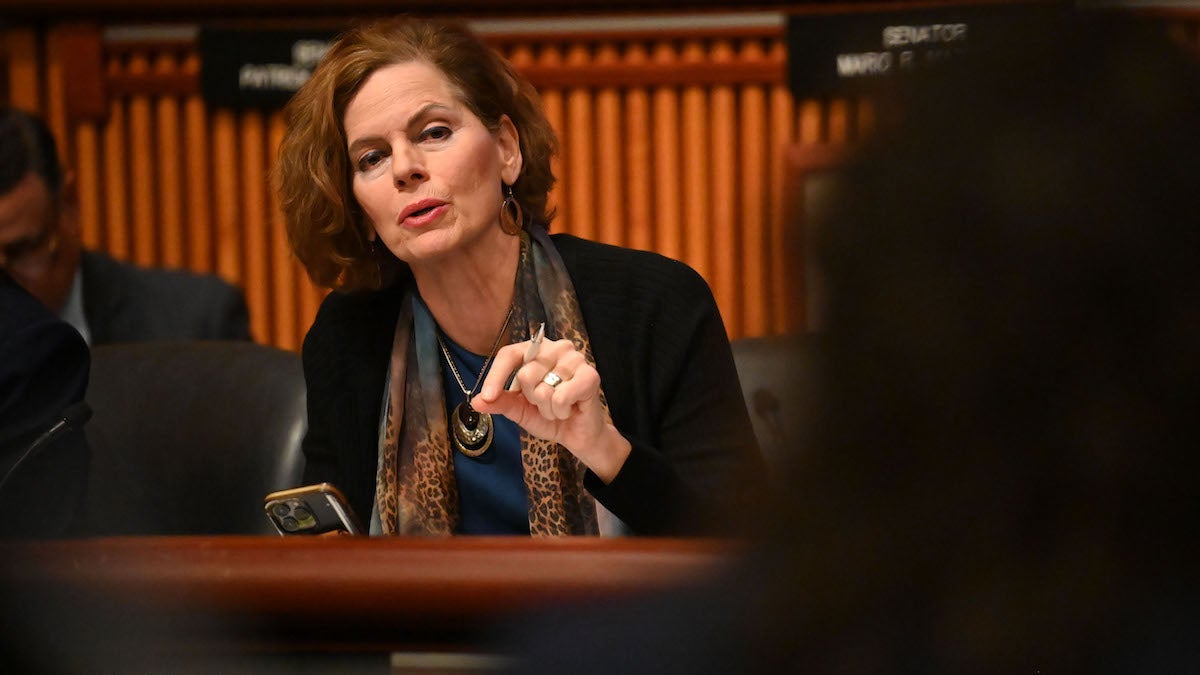
New York State lawmakers have introduced a significant piece of legislation aimed at establishing protections against the rising influence of artificial intelligence (AI) in journalism. The proposed bill, known as the New York Fundamental Artificial Intelligence Requirements in News Act (the NY FAIR News Act), was unveiled by Democrat Senator Patricia Fahy and Assemblywoman Nily Rozic. It mandates clear disclosures regarding the use of AI in any published news content.
The NY FAIR News Act stipulates that news organizations in New York must fully inform journalists and media professionals about how and when AI is utilized in their work environments. Furthermore, any news stories—including articles, audio, visuals, or images generated by AI—must be reviewed and approved by a human employee with editorial control prior to publication. The legislation also includes provisions to safeguard journalist sources and to prevent AI systems from accessing confidential materials.
“Perhaps one of the industries at most risk from the use of artificial intelligence is journalism, affecting public trust in accurate news reporting,” Fahy stated. “More than 76% of Americans are concerned about AI appropriating or replicating journalism and local news stories. To protect the public’s trust in the information they consume daily, I’m proud to introduce the NY FAIR News Act with Assemblymember Rozic. I look forward to collaborating with my colleagues in the State Senate to enact guidelines that mitigate the unintended consequences of AI.”
Assemblywoman Rozic echoed this sentiment, emphasizing New York’s pivotal role in the news industry. “The NY FAIR News Act promotes journalistic integrity and ensures total AI disclosure to journalists, workers, and the public alike,” she noted.
The bill has been sent to the New York State Senate’s Internet and Technology Committee for review. To become law, it must pass through both the state Senate and Assembly, and be signed by Governor Kathy Hochul.
The NY FAIR News Act has received endorsements from several prominent organizations, including the New York State AFL-CIO, Writers Guild of America East (WGAE), Screen Actors Guild–American Federation of Television and Radio Artists (SAG-AFTRA), Directors Guild of America (DGA), and the NewsGuild of New York.
“Journalists adhere to ethical and professional standards to hold power accountable and document the breadth of human expression. We want our readers to trust our work. Conversely, media executives may feel they can evade accountability by circumventing these standards regarding AI,” said Susan DeCarava, president of the NewsGuild of New York. “The unethical and secretive use of generative AI in media poses a serious threat to journalism and, by extension, to our democratic processes.”
DeCarava further stated that the legislation aims to “safeguard the public’s right to know what is being done in their name” and is crucial for reinforcing public trust in human-powered journalism.
WGA East president Tom Fontana described AI as a “clear and demonstrable threat to the integrity of the news,” asserting that the new legislation would necessitate “cooperation between news media companies and the highly skilled human workers they employ to uphold journalistic standards and workplace protections.”
Mario Cilento, president of the New York State AFL-CIO, emphasized that the legislation will “uphold journalists’ credibility, safeguard the integrity of news reporting, and strengthen public trust.” He highlighted the urgency of implementing robust safeguards in response to the rapidly evolving AI technology landscape, declaring, “These common-sense guardrails are essential for a healthy democracy.”
Rebecca Damon, chief labor policy officer at SAG-AFTRA, characterized the legislation as “meaningful, enforceable protection for both journalists and consumers of news media.” She added that it would “maintain the integrity of journalism and ensure that AI technology is a tool that serves the people reporting the news, rather than one that replaces or exploits them.”
Neil Dudich, associate national executive director of the DGA, stated that the NY FAIR News Act “puts media professionals at the center of the conversation about how AI will be used in newsrooms” while establishing “clear guardrails that protect workers’ rights and their professional judgment.” He concluded, “When the professionals who work in news are protected, the quality and credibility of journalism are protected as well.”
The introduction of the NY FAIR News Act signifies a growing recognition of the challenges posed by AI in journalism. As discussions around ethical practices in AI continue to evolve, this legislation could serve as a blueprint for other states grappling with similar issues.
See also Disney Reports $2.48B Quarterly Profit Amid Record Theme Park Revenue and CEO Transition
 Carbon Robotics Unleashes AI Model to Transform Precision Agriculture, Boosting Yields and Reducing Inputs
 Palantir’s AI Solutions Outpace SoundHound, Positioning for 15% Market Growth by 2035
 AI Character Amelia Spreads Across Europe, Promoting Anti-Government and Anti-Immigration Messages
 Sheikha Moza Champions Human-Centered Ethics in AI at Web Summit Qatar 2026, Urging Global Leadership