






















































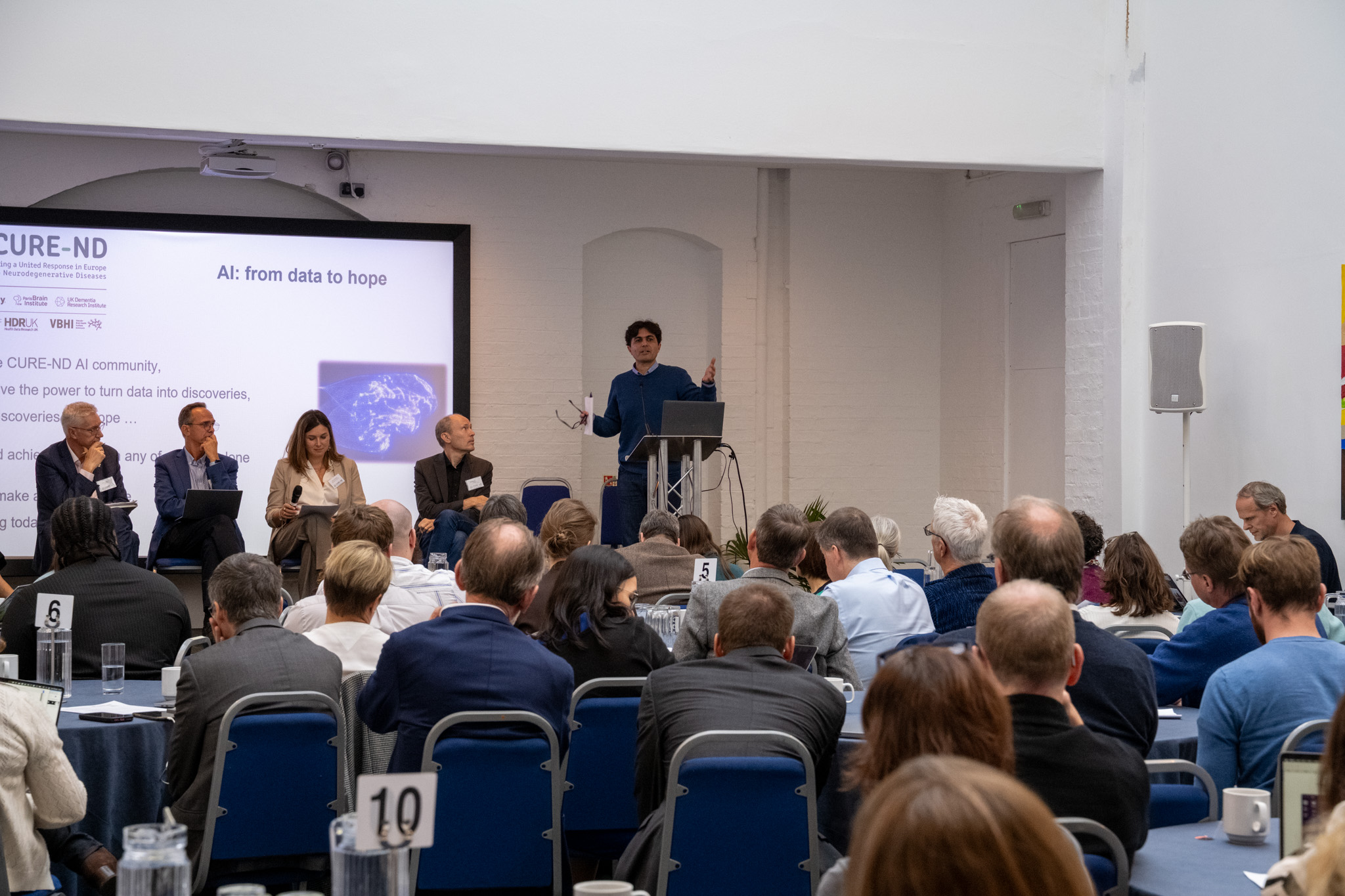
The recent panel discussion featuring leaders from the UK Dementia Research Institute (UK DRI), the German Center for Neurodegenerative Diseases (DZNE), the Paris Brain Institute, Health Data Research UK (HDR UK), and Mission Lucidity focused on elevating collaboration within the field of neurodegenerative disease research. Held in London, the event aimed to fortify the mission of CURE-ND by harnessing the potential of artificial intelligence (AI) and machine learning (ML) to drive advancements in research and clinical practice.
The sessions that followed the panel discussion spanned a range of important themes, emphasizing the integration of AI and ML throughout the research pipeline. One area of focus was cellular and molecular biology, where innovative computational techniques are uncovering new insights into the mechanisms of diseases. This approach is increasingly leveraging spatial biology and multi-omics data integration to better understand complex biological systems.
Another significant topic addressed during the event was the role of AI in diagnosis and early detection. Experts discussed how advanced algorithms are capable of analyzing intricate datasets to flag at-risk individuals long before the onset of clinical symptoms. Such early detection capabilities could fundamentally reshape patient outcomes and treatment timelines.
Clinical applications were also a primary focus, with discussions revolving around how data-driven strategies can expedite clinical trial design. The integration of digital biomarkers into trials can enhance the precision of patient monitoring and treatment efficacy, creating a more dynamic and responsive healthcare environment. Workshop attendees noted that these strategies not only improve trial outcomes but also enable a more personalized approach to patient care.
Emerging healthcare technologies formed another vital area of exploration. Sessions highlighted the use of wearable devices and remote monitoring tools, which are generating new avenues for longitudinal assessments and real-world data collection. These technologies are proving essential for understanding patient behaviors and outcomes in ways that traditional clinical settings may not capture.
A final session synthesized insights from the various discussions, showcasing the synergies that can be realized through multidisciplinary collaboration. By bringing together experts from diverse fields, the workshop underscored the importance of a cohesive approach in tackling the challenges posed by neurodegenerative diseases.
The event marks a significant step forward in the application of AI and ML in healthcare, particularly in the realm of research related to diseases that currently lack effective treatments. As organizations collaborate and share data, the potential for breakthroughs increases, promising a future where earlier detection, better diagnostics, and more effective treatments could become standard practice. The integration of these technologies not only holds promise for patients but could also serve as a model for addressing other complex health challenges on a global scale.
See also ISG Launches Study on Microsoft AI Services to Enhance Enterprise Business Processes
 Taiwan and Sweden Expand Tech Partnership in Chips, AI, Drones through 2031
 OpenAI Eyes Investment in AI-Driven Drug Development for Future Royalties















