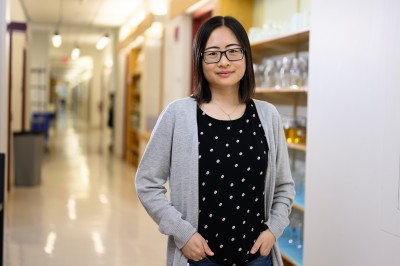
Artificial intelligence is reshaping the landscape of biological research, enhancing scientists’ capabilities to analyze complex datasets and elucidate disease mechanisms. At the forefront of this transformation is Na Sun, a computational biologist and AI Fellow at the Whitehead Institute, who is pioneering machine-learning techniques to investigate cellular organization within tissues. Her innovative approaches enable researchers to discern subtle yet significant changes that occur in cells during disease progression.
Sun’s team has developed AI models that function analogously to a “spot-the-difference” puzzle, allowing for the comparison of healthy and diseased tissues. This method is particularly effective in identifying small clusters of cells that exhibit divergent behaviors in conditions such as Alzheimer’s disease. By pinpointing localized cellular variations, the research opens pathways to recognizing new therapeutic targets. The methodology is also applicable across a spectrum of diseases, including cancer, suggesting a broader impact on future treatment strategies.
“Artificial intelligence allows us to study biological systems at a level of complexity that was previously inaccessible, helping us see how subtle cellular changes add up to disease,” Sun stated. This perspective underscores how AI can adapt and enhance traditional biological research techniques, providing a more nuanced understanding of cellular interactions and their implications in various contexts.
The integration of AI into biological research not only facilitates the identification of disease mechanisms but also accelerates hypothesis generation and target prioritization. Sun emphasizes that the potential applications of AI span a wide range of diseases, from various cancers to complex neurological conditions. “AI is transforming biology by enabling us to predict how cells interact and respond in different contexts, which could accelerate discoveries across a wide range of diseases,” she added.
This intersection of artificial intelligence and biology represents a pivotal moment in scientific discovery, potentially revolutionizing how researchers approach the study of diseases at both the cellular and tissue levels. As AI continues to evolve, its capacity to handle and interpret vast amounts of biological data could lead to breakthroughs in understanding complex diseases, ultimately guiding more effective therapeutic strategies.
Sun is available for interviews to discuss the far-reaching implications of her research and the role of AI in advancing biological studies. Those interested can reach out to Greta Friar at [email protected] to schedule a conversation.
The advancements made by Sun and her team at the Whitehead Institute not only highlight the transformative potential of AI but also set the stage for future innovations in medical research, promising a new era of precision medicine aimed at tackling some of humanity’s most challenging health issues.
See also Lam Research Stock Surges 8% as AI Cloud Budgets Fuel Chip Equipment Demand
 ASU’s AAIR Lab Enhances AI Robot Reasoning for Real-World Adaptability and Autonomy
 AI Seer Launches MSRD Tech with 83% Accuracy for Credibility Assessment at IMDA Workshop
 New Study Reveals AI Misrepresents Neanderthals, Reflecting Outdated Science
 AI Development Shifts to Core Capability by 2026, Demanding Accountability and Trust