MOSCOW, Nov 19 (Reuters) – In a significant move underscoring the importance of artificial intelligence in national security and technological independence, President Vladimir Putin announced the establishment of a national task force aimed at spearheading the development of homegrown generative AI models. This initiative was revealed during his address at the AI Journey conference, Russia’s key event focused on artificial intelligence.
Putin emphasized that large language models (LLMs) have emerged as critical tools for shaping public opinion and disseminating information, making reliance on foreign models untenable for Russia. “For Russia, it is a matter of national, technological and value-based sovereignty,” he stated, calling for a self-sufficient ecosystem of AI technologies and products.
The newly formed task force will be responsible for coordinating efforts in developing data centers across Russia and ensuring proximity to energy sources, such as small-scale nuclear power stations, to support AI infrastructure. This move is particularly pertinent given the backdrop of Western sanctions, which have hindered Russia’s ability to import essential hardware, including microchips needed for AI advancements.
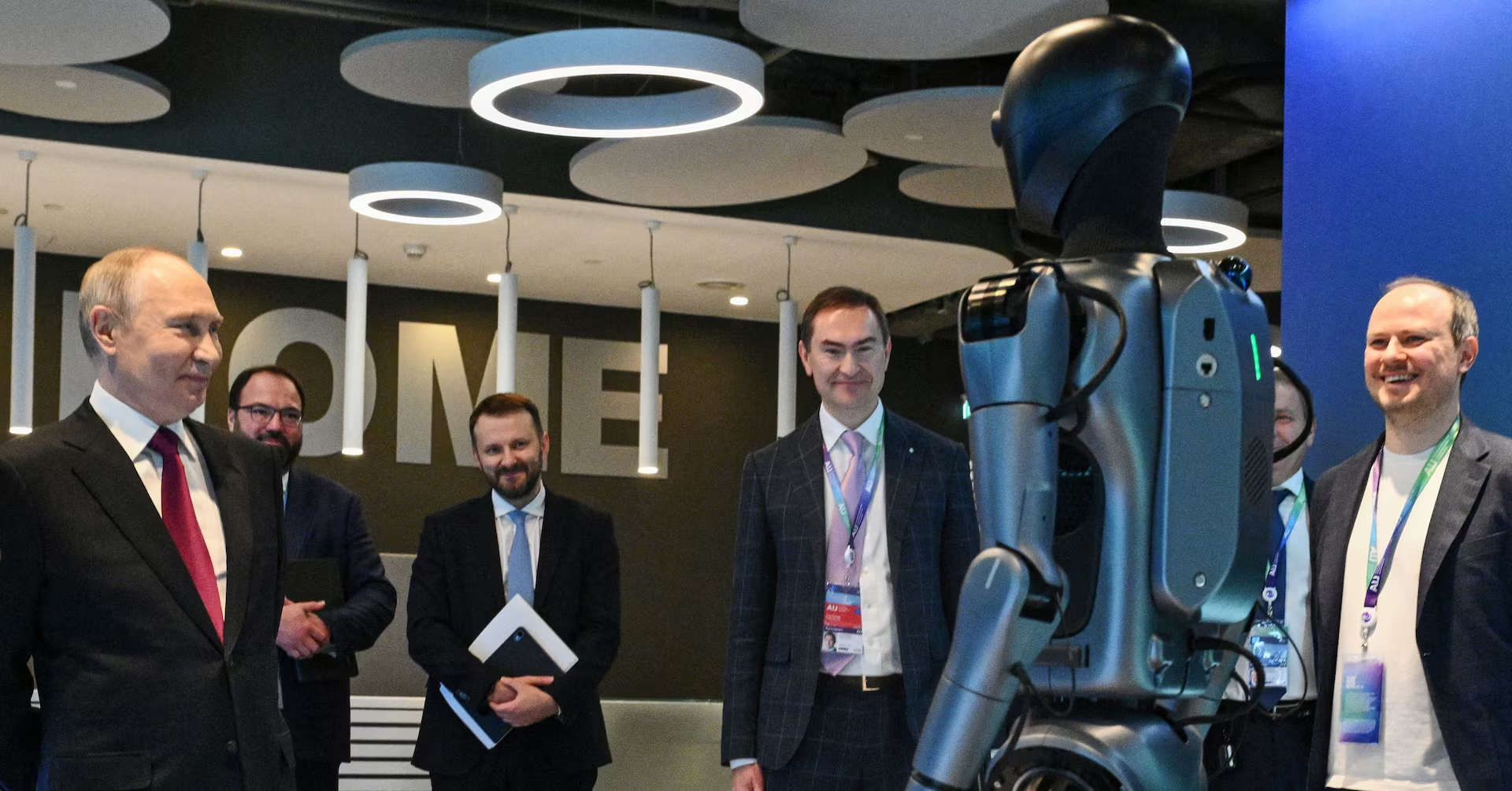
Russia currently trails behind the United States and China in the AI sector; however, two prominent LLMs have been developed by major Russian tech firms—Sberbank and Yandex. Notably, Sberbank recently unveiled a new version of its conversational AI model, Gigachat, alongside innovative AI-driven products, ranging from humanoid robots to health-scanning ATMs, during the same event.
In his address, Putin projected that AI technologies could contribute over 11 trillion roubles (approximately $136.57 billion) to Russia’s gross domestic product by 2030. To achieve this ambitious goal, he called for a comprehensive national AI implementation plan and stressed the need for state institutions and companies to adopt AI technologies more extensively.
Despite the potential for growth, Putin cautioned against excessive regulation of AI technologies. He underscored the necessity for national security and intelligence operations to rely solely on Russian-developed models to ensure that sensitive data remains within the country.
This initiative reflects a broader recognition of the strategic significance of AI in modern geopolitics and economic stability. As nations increasingly harness AI for various applications, from public administration to defense, Russia’s push for self-reliance in AI technology could reshape its technological landscape in the coming years.
Given the rapid evolution of AI technologies and the increasing role they play in national security and economic development, the global community will be closely monitoring Russia’s advancements in this field. The formation of this task force represents a critical step toward fostering an autonomous AI ecosystem that aligns with Russia’s broader goals of establishing technological sovereignty.
See also Revenue Analytics Launches AI-Powered Group Management Tool to Boost Hotel Profitability
 Bozeman Christmas Stroll Poster Controversy Highlights AI Detection Challenges
 Vail, Colorado, Implements AI Tools for Wildfire Detection and Enhanced Public Services
 Yann LeCun Leaves Meta to Launch Advanced Machine Intelligence Start-Up with Company Support
 Seton Hall Hosts AI Workshop Showcasing Adobe Premiere Pro’s Generative Tools for Storytelling