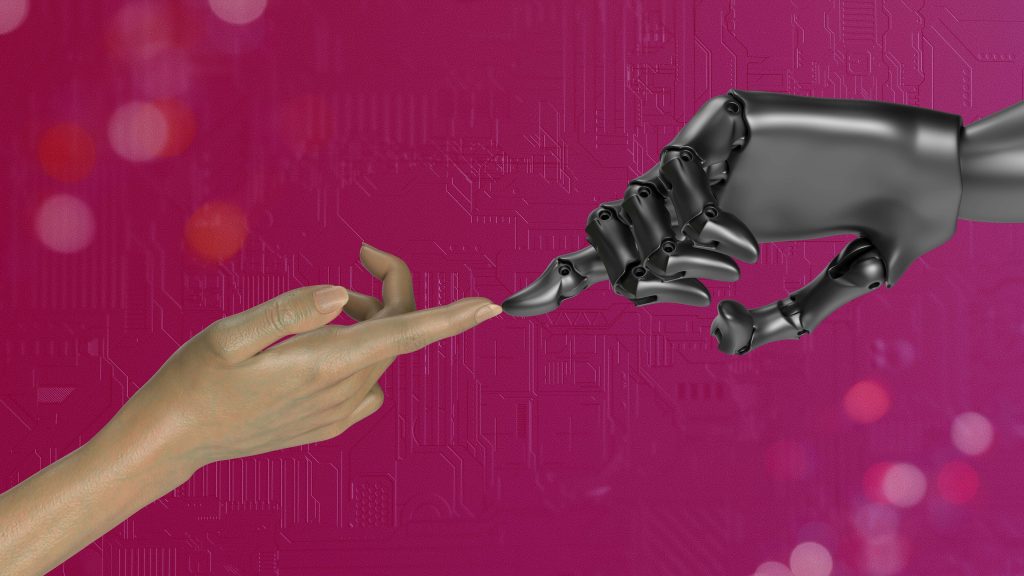
The emergence of generative AI has fundamentally altered the landscape of professional work. Over the last few years, these tools transitioned from specialized research applications to public platforms, enabling anyone with an internet connection to generate content instantaneously. This shift represents a significant milestone in the accessibility of artificial intelligence, yet it comes with caveats regarding reliability and ethical use. As organizations increasingly integrate these technologies, the need for human oversight becomes paramount.
Generative AI is not devoid of biases; it reflects the prejudices embedded in its training data. Additionally, AI models can produce “hallucinations,” confidently presenting false or misleading information. Therefore, the ability to question, verify, and interpret AI-generated outputs is essential for users. Rather than viewing AI as a replacement for human creativity and judgment, it should be seen as a powerful tool that amplifies our capabilities while necessitating careful scrutiny.
The speed and efficiency of AI can synthesize data from various sources in mere seconds, producing summaries and insights that would require extensive time for human analysis. However, this efficiency also underscores the need for rigorous verification processes. AI’s capacity to condense complex information often strips away crucial context and nuance. Hence, a responsible approach to AI involves demanding transparency, including sourcing and verifying the information it provides.
As the roles in modern workplaces evolve, new professional identities are emerging that will define how we work and lead in the future. One such role is that of the Onboarding Specialist. Just as new employees require training to adapt to a company’s mission and culture, AI models similarly need context and guidance to align with organizational values and processes. The quality of an AI model’s output directly correlates with the clarity and detail of the information it receives. The onboarding process is continuous; effective use of AI demands iterative feedback and refinement rather than a one-time setup.
Another emerging identity is the Strategic Director, who leverages generative AI not merely to create content but to orchestrate ideas and develop strategies. This role focuses on defining goals and guiding AI towards desired outcomes, requiring strategic thinking and clear communication. In this context, AI becomes a partner in the creative process, not its sole executor. However, effective collaboration with AI necessitates an understanding of its limitations, as it lacks emotional intelligence and the ability to appreciate context.
As organizations adapt to these changes, the concern of cognitive offloading arises. During a recent seminar at the University of St. Gallen, students expressed concerns about whether AI might lead to diminished analytical skills. The convenience of instant answers can tempt individuals to bypass deep problem-solving. Just as physical exercise is essential for maintaining fitness, critical thinking requires practice and engagement to remain sharp. By fostering habits of independent thought before consulting AI, individuals can ensure that technology enhances rather than replaces their cognitive abilities.
Curiosity and adaptability are also crucial in the role of the Tech Explorer. Understanding the intricacies of AI—how models are trained, the data they rely on, and their inherent limitations—enables users to collaborate with technology effectively. This foundational knowledge allows professionals to design smarter workflows, automate processes, and create custom AI tools for repetitive tasks, thereby bridging the gap between human oversight and machine efficiency.
We find ourselves at a pivotal moment in the evolution of work, as generative AI reshapes professional identities and expectations. The balance between human intelligence and machine capability is delicate and requires ongoing adaptation. Approaching AI with a blend of imagination and responsibility will not lead to job displacement but rather amplify our abilities in learning, creativity, and leadership. As we navigate this transformative landscape, the emphasis will be on how effectively we can integrate AI into our workflows while preserving essential human skills.
See also Microsoft Reveals Updated AI Marketer’s Guide with Three-Stage Brand Surfacing Process
 Nancy Cartwright, Bart Simpson’s Voice, Opposes AI Replacement, Citing Lack of Heart
 UMass Researchers Unveil Diffence: A New Defense Against Membership Inference Attacks
 Disney and Paramount Issue Cease-and-Desist to ByteDance Over AI Copyright Concerns
 ChatBCI Launches P300 Speller BCI with Context-Driven Word Prediction Using GPT-3.5