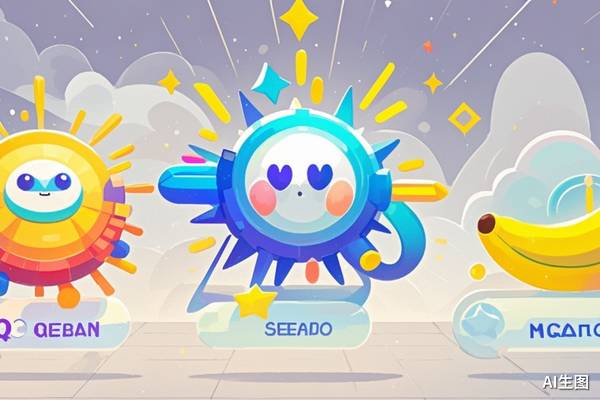
On February 10th, Alibaba’s Qwen-Image-2.0 and ByteDance’s Seedream 5.0 preview version debuted simultaneously, igniting a competitive landscape in AI image generation just ahead of the Spring Festival season. This launch not only captured significant attention due to the timing but also highlighted advancements in key capabilities within the sector, including controllable generation, text restoration, and multi-scenario adaptability.
The evolution of AI image generation has been striking. In less than four years, the field has transformed from early experimental stages to a competitive business arena. A landmark moment came in 2022 when a piece titled “Space Opera,” generated by Midjourney, won an art competition at the Colorado State Fair, exemplifying the possibilities of AI in creative spaces. However, at that time, access to Midjourney was limited by complex processes and costs, making it more of a specialized tool than a mainstream option.
As the industry grew, the turning point arrived in 2025 with the introduction of Google’s Nano Banana, which simplified AI image generation and broadened its appeal. This marked the beginning of a rush into the market by various manufacturers, including Tencent’s Hunyuan large model, which ranked first in a global text-to-image competition by LMArena in October 2025, underscoring the technological prowess of domestic firms.
By early 2026, the competitive landscape intensified, with both Qwen-Image-2.0 and Seedream 5.0 representing the latest advancements from leading manufacturers. The question arises: how has AI image generation evolved so rapidly, and why has Midjourney’s prominence diminished in 2026?
AI Image Generation’s Rapid Advancement
Over the past year, AI image generation has shifted qualitatively from mere picture creation to practical applications. The focus has moved from parameters and speed to controllability, narrative capacity, and scenario adaptability. A significant milestone was reached in 2025 when Nano Banana popularized accessible AI image generation, breaking previous barriers that favored high-end users.
The recent models introduced by ByteDance and Alibaba demonstrate concentrated technological breakthroughs. Qwen-Image-2.0 integrates image generation and editing into a single architecture, enhancing efficiency, while Seedream 5.0 raises the intelligence level by improving the understanding of prompt words and supporting retrieval-based image generation.
This leap in technology can be attributed to enhanced capabilities in four core areas: native multi-modal integration, alignment with physical realities, controllable generation, and dynamic narrative understanding. These advancements allow for accurate text generation within images, adherence to real-world physical laws, targeted detail control, and an ability to understand complex requirements.
With many models now capable of image generation and editing, the key differentiator lies in their technical routes. Similar to culinary diversity, each model brings unique strengths to different tasks. The commonality across these models is their end-to-end multi-modal approach, allowing for comprehensive functionality such as text-to-image generation and image editing within a single platform.
In practical terms, Qwen-Image-2.0 excels in generating Chinese text and can interpret longer instructions, making it suitable for culturally specific content. In contrast, Seedream 5.0 leverages a hybrid architecture that enhances its ability to retrieve and generate contextually relevant images, particularly for timely content.
Nano Banana, as a lightweight model, is capable of running on standard laptops and offers stable character consistency and realistic detail, ideal for projects requiring a unified style across multiple images. However, its limitations in language understanding and lack of online retrieval capabilities restrict its effectiveness in rapidly changing scenarios.
As for Midjourney, its strong creative capabilities and artistic styles have seen a decline in market share by 2026, not due to diminished performance but because the industry focus has shifted from creative exploration to efficient production. Midjourney’s technical approach, while excelling in artistic diversity and creative exploration, lacks the fine-grained control and rapid generation speeds that contemporary commercial applications demand.
The core competition in the AI image generation market has now pivoted towards controllability and scenario adaptability, emphasizing the ability to accurately meet user requirements. Today, the emphasis is on transforming AI image generation from an experimental tool into a reliable production resource, demonstrating how swiftly the landscape is evolving.
See also LSEG Launches Blockchain Depository, MegaETH Testnet Unveils High-Performance Capabilities
 ValleyNXT Ventures Unveils ₹400 Crore Bharat Breakthrough Fund for AI and Defence Startups
 Google Hosts 200 SENCOs at SEND Symposium to Enhance AI in Inclusive Education
 President Dissanayake Joins 45-Nation AI Impact Summit in India, Addresses Global Challenges
 Pentagon Considers Supply Chain Risk Designation for Anthropic Amid Tensions