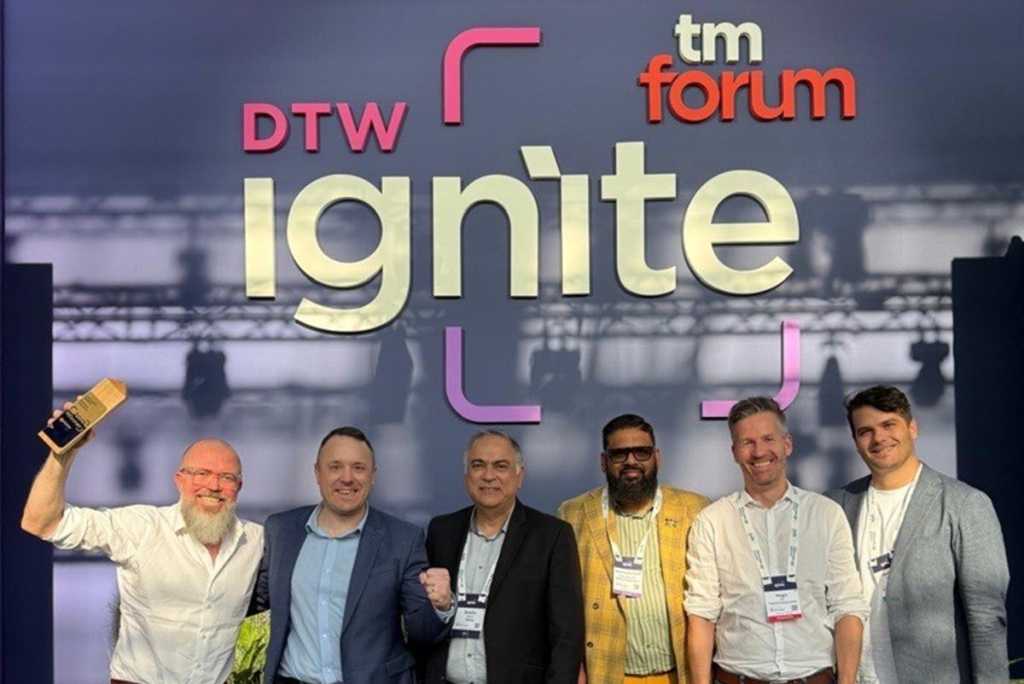
In an era where technology evolves at breakneck speed, the ability to continually adapt and innovate is becoming paramount for organizations, especially in the telecommunications sector. According to Luthra, this ongoing reinvention is essential for businesses to remain relevant and successful in today’s rapidly changing landscape.
AI’s Role in Telecommunications Networks
Tejas Rao, managing director and global network practice lead at Accenture, highlighted the increasing integration of artificial intelligence (AI) among telecommunications partners. He noted that many companies are accelerating their adoption of AI technologies within the realm of autonomous networks. “As we think about the journey that the network operators have been going through, they’ve pretty much finished a lot of their deployment of next generation networks, whether we’re talking about 5G or continue to invest in deploying fibre networks,” Rao stated.
Rao elaborated that as these telecommunications companies transition their infrastructure from a purely physical setup to a more cloud-native architecture, they are beginning to optimize their workload management across both public and private cloud platforms. “We see the acceleration of generative AI and agentic AI capabilities, as we start to see the networks evolving,” he mentioned, emphasizing the potential for an AI fabric that could enhance user experiences for both business-to-consumer (B2C) and business-to-business (B2B) customers.
Over the past five to six years, these providers have focused on a digital-first strategy, which involves decoupling back-office systems and engaging customers through various channels. “Now we’re starting to see most operators think about what it means to be AI-first within my network,” Rao explained. He observed a marked increase in interest in incorporating AI into network operations, spanning planning, engineering, and deployment.
Transforming the Telstra Network
Aligned with these trends, Telstra is actively transforming its network to be seen as a product rather than just a service. This strategic shift aims to simplify service customization and distribution among different partners while bolstering core offerings. Kim Krogh Andersen, Telstra’s group executive for product and technology, outlined this vision during his keynote at the Digital Transformation World (DTW) 2025 conference in Denmark, held from June 17-19.
Andersen underscored the necessity of utilizing network intelligence to foster innovation and scalable business models. “Over the past few years, we’ve made bold decisions to radically simplify and digitize our core business,” he noted, pointing to actions such as eliminating excess fees and ending handset subsidies. These moves have improved Telstra’s performance against global competitors, he added, while still recognizing the growth potential within evolving industry trends.
According to Andersen, the traditional telco business model is predominantly static and often defined by basic metrics like speed and coverage. “The customer experience depends on many network attributes like security, resiliency, downlink, uplink, jitter, and latency,” he remarked. He cautioned that as advanced applications like 8K streaming and cloud gaming demand more from networks, the challenge of managing and monetizing these systems will intensify.
Andersen emphasized that operating the network as a product requires adaptable capabilities that can be configured and distributed across various channels, such as mobile virtual network operators and systems integrators. Telstra’s recent collaboration with Ericsson on the Aduna platform aims to unify network APIs globally, allowing developers to harness the full potential of these networks.
In November, Telstra introduced two new APIs—Network Verification and SIM Swap—into the Aduna Global platform, which enables authorized businesses to embed these APIs into their applications. This initiative is a crucial step in Telstra’s vision of a Network as a Product (NaaP), supporting partners in sectors like banking, fintech, government, and e-commerce to build more secure and efficient solutions.
Every time a customer experiences delays with a one-time password or fears fraud, Andersen reflects, “there is a friction we can help remove.” The introduction of these APIs aims to streamline authentication processes while enhancing customer protection against fraud, signaling a shift towards more programmable and accessible network operations.
See also Stocks Plunge 2% Amid AI Skepticism and Fed Rate Concerns; Bitcoin DropsStocks Plunge 2% Amid AI Skepticism and Fed Rate Jitters; Bitcoin Sinks Below $87K
 Baidu’s Price Target Rises to $147 Amid Strong AI Growth and Business Optimism
 Foxconn Partners with OpenAI to Develop AI Hardware for Data Centers Amid Demand Surge
 Meta Partners with Sify to Develop 500 MW AI Data Centre in Visakhapatnam
 MIT Report Reveals Agentic AI’s Promise: Autonomous Systems Reshape Future Workflows