






















































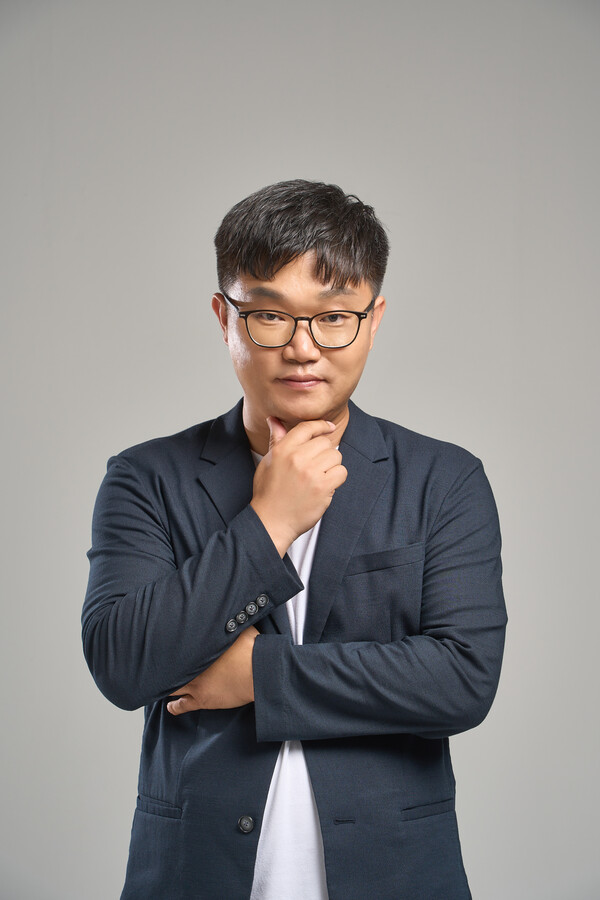
Igloo Corporation is making significant strides in the security sector with its focus on AI-based technologies, as outlined by Jeong Il-ok, head of AI development at the company. In a recent interview, Jeong highlighted the evolving role of AI, stating, “The use of AI is rapidly evolving beyond threat detection and response and toward analysis.” This shift is paving the way for companies to enhance their security capabilities using advanced AI tools.
Jeong explained that traditional security measures often struggled with log analysis and similar tasks, which required sophisticated approaches. “In the past, systems could not support it, so AI was used only for fragmentary analysis,” he said. However, as the technology has matured, AI is now excelling in areas that were previously challenging, improving the ability to detect and respond to threats more effectively.
Igloo has been investing in AI-based security technology for over a decade and has secured numerous patents in this area. Last year, the company reorganized its structure to create an AI research lab, integrating its AI solutions and data science teams under Jeong’s leadership. This strategic move aims to enhance the efficiency and effectiveness of security operations.
Jeong noted that the release of large language model (LLM) AI by companies like OpenAI and Anthropic is a game-changer for the industry. “Until LLMs became mainstream, the industry had to rely only on existing machine learning and deep learning technologies,” he explained. This limited the ability to develop AI that could outperform human capabilities. As LLMs continue to evolve, so too do the possibilities for strengthening security AI capabilities.
While Igloo develops its own models, Jeong emphasized the importance of a hybrid approach. He suggested that companies could enhance their effectiveness by fine-tuning LLMs with their internal data. “With a hybrid-based approach that uses LLMs alongside our own models, we were able to overcome past limitations,” he added. This blend allows firms to adapt their security technology to meet a broader range of tasks.
This year, Igloo Corporation is taking a more aggressive stance in deploying AI within its security framework, aiming to establish an autonomous security operations centre (Autonomous SOC). This innovative model seeks to automate security operations similarly to how self-driving cars operate without human intervention. Jeong noted that while the complete automation of security processes is a future goal, the company is currently transitioning towards this vision.
“Broadly, an autonomous SOC has 5 stages, and we are in the process of moving from stage 3, where certain tasks are partially automated using assistants, to stage 4, where partial autonomy is implemented,” Jeong remarked. The goal is to enable AI to handle simple tasks autonomously, with the aim of reaching stage 4 as a realistic initial milestone.
However, Jeong acknowledged that the technology alone has limitations. For an autonomous SOC to be viable in real-world applications, it must be adaptable to the unique circumstances of each organization. To address this, Igloo has developed a platform that allows companies to create security AI agents tailored to their individual environments. This platform will connect with systems such as Security Information and Event Management (SIEM) and Security Orchestration, Automation, and Response (SOAR).
The upcoming Igloo AI agent platform is designed to facilitate scenarios in which corporate users can receive analysis results regarding intrusion incidents from the previous day along with tailored response measures. “The level and method of AI agents each customer needs are different,” Jeong noted, emphasizing the importance of customization in an autonomous SOC.
Jeong pointed out that while platforms enabling companies to develop customized AI agents are already available from major technology firms, security demands a specialized approach. “Even when robotic process automation (RPA) spread, SOAR emerged in the security sector,” he said, underscoring that general-purpose platforms often fail to address the unique challenges of security processes.
Igloo Corporation plans to deliver its specialized AI agent platform on an on-premises basis in addition to cloud options, which the company views as a key differentiator in the South Korean market, where demand for on-premises solutions is relatively strong. Jeong concluded by reiterating the overarching goal of AI in security: to encompass the entire security process, rather than merely addressing individual tasks. “It should not be individually fragmented, but should be connectable with each other to raise completeness,” he stated, highlighting the importance of integration in the future of security technology.
See also Latin America Faces 9% of Global Cyberattacks, IBM Reveals Alarming Trends
 AI-Driven Cyberattacks Surge 27% in Asia-Pacific, IBM Warns of Vulnerabilities
 IBM Reports 27% Surge in AI-Driven Cyberattacks in Asia-Pacific, Highlights Vulnerability Risks
 AI Technology Increases Maritime Cyber Attack Risk by 60% in Just 48 Hours
 AI-Enhanced Cybercriminals Automate Attacks, Raising Threat Levels, Cloudflare Reports















