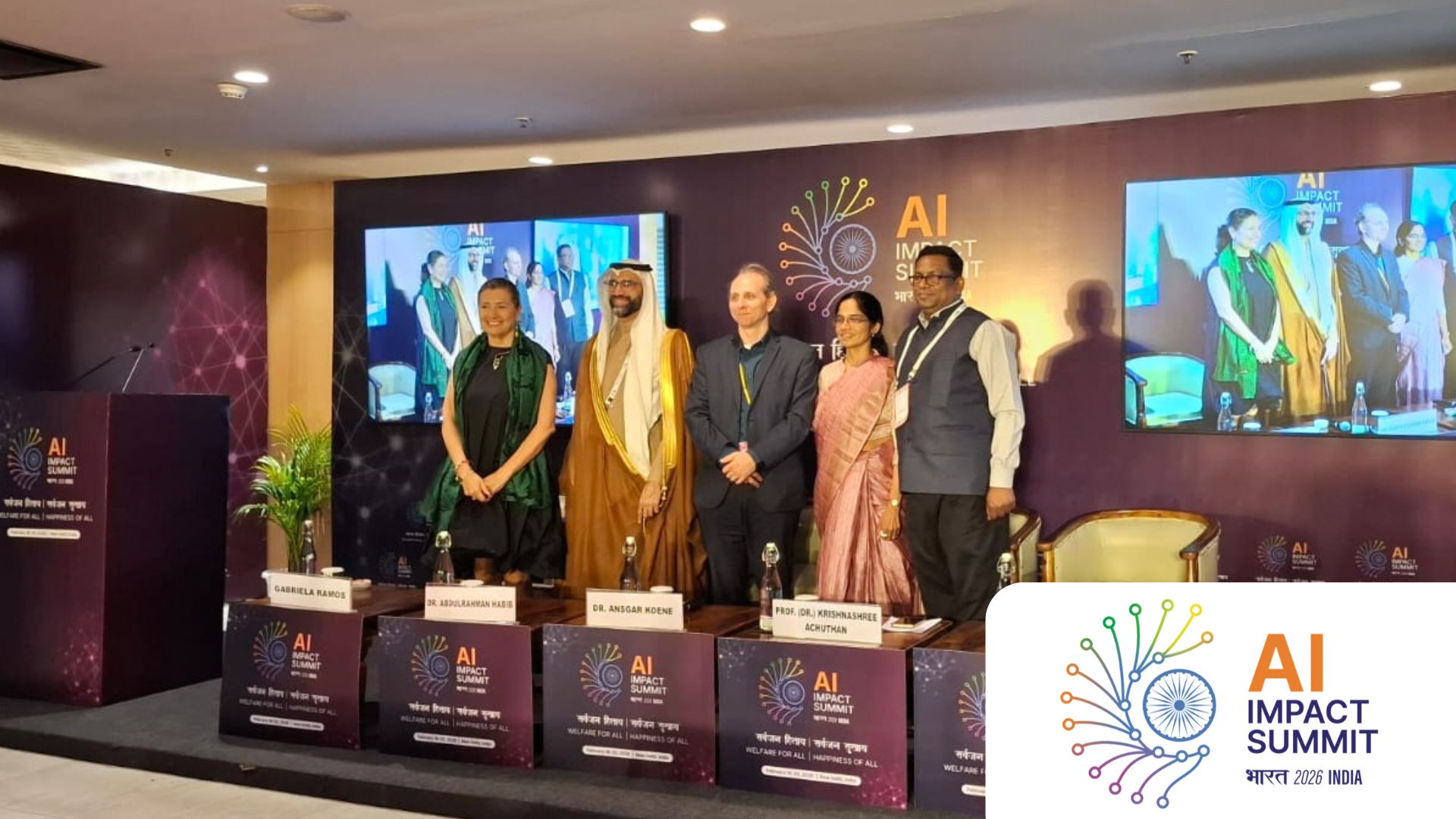
Artificial intelligence developed without ethical considerations is a significant design flaw, not merely a technical oversight. This point was underscored by global policy experts at the India AI Impact Summit, who emphasized that integrating ethics into AI systems must not be an afterthought but rather a foundational element of the design process.
As governments worldwide scramble to regulate AI and corporations invest billions, the summit participants expressed concern that commercial pressures and geopolitical competition are increasingly influencing the technology’s trajectory, often sidelining the needs of the communities it is designed to benefit. The experts argued for an approach that prioritizes fairness, accountability, and societal impact from the outset of AI development rather than allowing profit motives to dictate its course.
Abdulrahman Habib, Center Director at ICAIRE, remarked on the summit’s potential for fostering collaboration among nations in the Global South. “We believe this is a good opportunity for Global South collaboration so we can work together and improve different areas and show what we can do together,” he stated. He asserted that ethical AI should be a priority from the design phase and warned that many AI projects often start as proof-of-concept experiments lacking sufficient consideration for long-term implications or societal consequences. This oversight, he cautioned, could result in significant challenges once these technologies are scaled for broader use.
The tension between profit and ethical considerations was another key issue highlighted during the summit. Experts acknowledged that significant investment in AI is frequently driven by expected financial returns, yet they anticipate that the current hype surrounding the technology will eventually subside. “AI is in a hype right now and there is a lot of investment in it. But when the hype slows down, the applications that truly benefit us will stay and everything else will fade away,” Habib noted, underscoring the need for ethical business practices to guide AI development.
The summit also stressed the importance of preemptively considering the potential misuse of AI technologies. Ansgar Koene, Global AI Ethics & Regulatory Leader at EY, asserted that ethical considerations must be integrated into the technical specifications of AI systems from the initial stages. “We need to think about the outcomes and impacts the technology is going to have not just after we develop the product, but at the beginning of the process,” he explained. Koene emphasized that treating bias and accuracy as trade-offs is fundamentally flawed, advocating that ethical design means ensuring AI systems deliver fair performance across all societal groups, rather than excelling only for select segments.
As the conversation progressed, the panel debated whether the responsibility to regulate AI should fall primarily on governments or industries. Ultimately, experts agreed that a collaborative approach is essential, with governments focusing on societal implications while companies provide insights into technical specifications and real-world applications. “There needs to be a constructive tension between both sides pushing each other towards better outcomes,” Koene concluded, stressing the necessity of ensuring that the drive for efficiency and profitability does not marginalize any segment of society.
India’s approach to AI development was commended by Gabriela Ramos, former Assistant Director General at UNESCO, who praised the nation’s emphasis on tangible societal impact over mere technological advancement. She noted that India’s focus on digital public infrastructure initiatives, which enhance access to banking and services for millions, could serve as a valuable model for other nations. “It’s not about the technology, but what kind of impact it has on society,” she said, reinforcing the importance of aligning AI developments with community needs and benefits.
As the dialogue on AI ethics unfolds, the consensus among experts at the summit highlights an urgent need for a paradigm shift in how AI technologies are conceived, developed, and implemented. Ensuring that ethical considerations are ingrained within the fabric of AI systems from their inception may ultimately determine the efficacy and fairness of these innovations in serving society as a whole.
See also AI Ethics Course Reveals Global Perspectives on US-China Competition and Regulation
 AI Agents Transform Enterprises: 2026 Sees Shift to Agentic Operational Models
 Georgia and Hawaii Propose New AI Regulations Focused on Child Safety and Liability
 Australia Unveils National AI Plan Amid Concerns Over Safety and Regulation Gaps
 AI-Driven Compliance Fuels 28% Operational Efficiency for Brands in Complex European Ecommerce