
Anthropic’s ongoing dispute with the Department of Defense (DoD) has spotlighted the complexities of integrating artificial intelligence into national security frameworks. The negotiations have centered on Anthropic’s refusal to permit its AI model, Claude, to be employed for domestic mass surveillance or autonomous weapon systems. This conflict underscores not only the challenges of dual-use technology but also the broader implications of AI in military contexts. Recently, the Pentagon classified Anthropic as a supply chain risk due to its unwillingness to comply with certain government stipulations, prompting the company to announce its intention to contest this designation in court.
The situation has piqued the interest of experts, including Sarah Kreps, a professor and director of the Tech Policy Institute at Cornell University, who previously served in the U.S. Air Force. Kreps noted that the distinctions between consumer technology and military-grade applications are stark and highlight the difficulties military entities face in a rapidly advancing tech landscape. “The challenge for the military is that these technologies are so useful they can’t wait for a military-grade version,” she explained, emphasizing the cultural divide between tech companies like Anthropic and the military.
While Anthropic has positioned itself as a safety-conscious organization, its partnership with the Pentagon has raised eyebrows. Kreps pointed out the contradiction in Anthropic’s branding, stating, “It was surprising that Anthropic would be surprised by where this ended up.” The company had initially aimed to cater to individual users, focusing on enterprise solutions instead, yet chose to engage with military contractors like the Pentagon and Palantir, which has faced scrutiny for its controversial applications of AI.
According to Kreps, Anthropic appears to have drawn a line at domestic surveillance and lethal autonomous weapons, but the complexities of these technologies and their governance remain unresolved. Factors such as prior relationships with the Trump administration and ongoing political tensions—such as those surrounding ICE activities in Venezuela—complicate the narrative. She noted that different stakeholders may have varying definitions of what constitutes lawful use of technology, which adds another layer of complexity to the discussions.
The Pentagon’s position hinges on national security implications, suggesting that in times of defense needs, tech companies should not have the final say. Kreps cited the historic example of the FBI’s request to Apple for access to a locked iPhone in the San Bernardino case, highlighting how urgent national security situations can lead to unprecedented pressures on private firms. “Once you hand this over to the military, you no longer need Anthropic’s approval,” she stated, explaining that software can be repurposed for military applications without the original creators’ oversight. This lack of transparency means that Anthropic could lose control over how its technology is deployed, potentially in ways the company finds objectionable.
Kreps warns that with AI becoming increasingly sophisticated, the military’s need for such technologies will only grow, posing existential questions about the role of private tech firms in warfare. “When I would hear the CEO of Anthropic talk about existential risks, I always thought that those were either too distant or too out of reach,” she mentioned, reflecting on the growing urgency around the topic.
AI’s utility in military settings is already evident, particularly in intelligence operations where the challenge lies not in a lack of information but rather in managing the sheer volume of data. Kreps noted that AI excels at pattern recognition, which can aid in identifying military assets based on predetermined criteria. However, the complexities heighten in scenarios involving counter-terrorism, where distinguishing between combatants and civilians is fraught with risk. The imprecision of AI in high-stakes situations underscores the ethical dilemmas facing military applications of technology.
As the debate surrounding AI’s role in military applications intensifies, the implications of Anthropic’s situation extend beyond the immediate conflict. The company’s struggle with the Pentagon serves as a microcosm for broader discussions on the responsibilities of tech firms in safeguarding human rights and ensuring ethical uses of their innovations. As technological advancements continue to accelerate, the resolution of these tensions will likely shape the future landscape of both AI development and military strategy.
See also IMF Reveals Global Fiscal Spending Database Analyzing 64 Countries Since 1952
 Andhra Pradesh Pilots AI Tools to Enhance TB, Anaemia, and Cataract Screening in 18 Hospitals
 Albanese Government Warns AI Labs Like OpenAI to Uphold Australian Values or Face Regulation
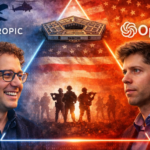 US Government Unveils Stricter AI Contract Rules Requiring “Any Lawful Use” Access
 Hacker Exploits AI Chatbots Claude and ChatGPT to Breach Mexican Government, Stealing 150GB of Data