






















































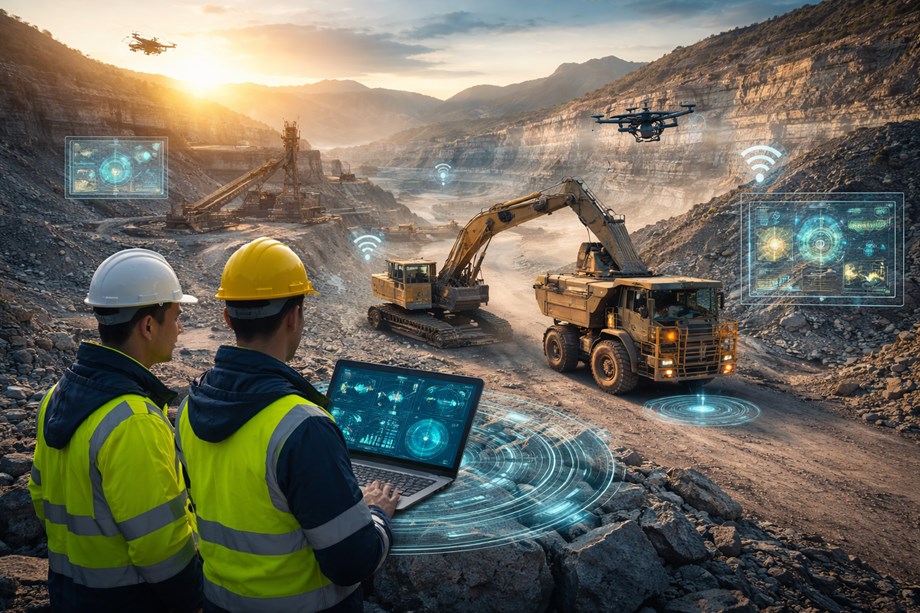
Mining companies globally are increasingly adopting advanced analytics and artificial intelligence (AI) to navigate rising operational costs, stricter environmental regulations, and an escalating demand for mineral resources. Machine learning tools are now instrumental in predicting equipment failures, enhancing extraction planning, and monitoring safety in some of the world’s most challenging industrial environments.
The study “Machine Learning in Smart Mining: A Systematic Review of Applications, Algorithms, Benefits, and Challenges” offers a comprehensive analysis of the adoption of machine learning in the mining sector. By synthesizing findings from numerous scientific publications, the research evaluates where machine learning is yielding measurable benefits and where significant challenges persist.
According to the study, the primary applications of machine learning in mining focus on predictive maintenance and operational monitoring. Modern mines generate vast amounts of data from sensors embedded in heavy machinery, drilling systems, transportation vehicles, and environmental monitoring platforms. Machine learning models analyze this data to detect patterns that may signal potential failures or hazardous conditions.
Predictive maintenance systems enable operators to identify equipment faults before they lead to costly downtime. In traditional mining setups, unplanned breakdowns can suspend production and result in substantial financial losses. Machine learning models, trained on operational data, forecast the likelihood of equipment failure and suggest maintenance actions beforehand. This proactive approach not only minimizes downtime but also extends the lifespan of costly machinery.
Another significant area of application involves predicting the lifespan of critical equipment components. By examining performance patterns across thousands of operational cycles, machine learning systems assist engineers in anticipating wear and optimizing maintenance schedules. These insights empower mining companies to plan repairs strategically, rather than merely reacting to unexpected failures.
Logistics and transportation optimization also represent a crucial area for machine learning deployment. Mining operations frequently depend on large fleets of trucks and automated vehicles to transport raw materials across extensive sites. Machine learning models analyze traffic patterns, route efficiency, and operational constraints to enhance fleet movement. The rise of autonomous haulage systems allows vehicles to function with minimal human input while maintaining high safety and efficiency standards.
Machine learning increasingly plays a vital role in mineral detection and classification. By analyzing geological and geochemical data, algorithms can discern patterns that assist in locating valuable mineral deposits and assessing ore quality. This capability enables mining companies to refine extraction strategies and minimize waste by targeting areas with higher concentrations of valuable materials.
Safety monitoring is yet another domain where machine learning shows significant promise. Mining remains one of the most perilous industrial sectors, with risks that range from equipment accidents to geological instability. Computer vision systems, powered by machine learning, can scrutinize video feeds from underground tunnels and open-pit mines to identify unsafe conditions, monitor worker behavior, and spot hazards in real time.
Environmental monitoring has emerged as a growing application as well. Machine learning models can analyze satellite imagery, remote sensing data, and environmental sensor readings to track land degradation, emissions, and water quality. These systems help mining companies detect environmental risks early and comply with increasingly stringent regulations.
Challenges to Widespread Adoption
The research highlights a diverse array of machine learning algorithms used across mining applications, reflecting the complexities of the data involved. Decision tree models are among the most frequently utilized algorithms due to their interpretability and ability to manage various types of operational data. Artificial neural networks and deep learning architectures also play significant roles, adept at analyzing large datasets to identify complex patterns.
Despite these advances, several structural barriers hinder broader adoption. A primary challenge involves the availability and quality of data; machine learning systems depend on extensive datasets for training, yet mining operations often produce incomplete, inconsistent, or poorly labeled data. Sensor calibration issues and fragmented data collection practices can affect model accuracy and limit algorithm application across different mining sites.
Data heterogeneity poses another substantial obstacle, as mining operations generate various data types, including geological surveys, operational logs, and environmental data. Integrating these datasets into cohesive machine learning systems can be challenging due to differences in formats and collection methods.
High implementation costs also present a formidable barrier. Deploying machine learning systems typically necessitates investments in sensors, data storage infrastructure, cloud computing platforms, and specialized software tools—expenses that smaller mining companies may find difficult to justify without clear evidence of immediate financial returns. Workforce limitations further complicate the landscape, as effective machine learning implementation requires expertise in both mining engineering and data science—a combination still relatively rare in the current workforce.
The mining industry appears to be at a pivotal moment in its digital transformation. While applications such as predictive maintenance and equipment monitoring are already demonstrating measurable benefits—including enhanced efficiency, reduced costs, and improved safety—integrating machine learning across entire mining systems remains limited. Achieving a fully connected intelligent mining environment will require coordinated efforts, from improving data governance to investing in digital infrastructure and workforce training. Stronger collaboration between academia and industry could also spur innovation, ensuring that machine learning research addresses real-world operational challenges.
See also Johns Hopkins APL Achieves 80% Time Reduction in Microcapsule Experiments with AI System ATLAS
 AI for Scientific Discovery Market Expected to Reach $34.78B by 2035, Growing 21.90% CAGR
 Deep Learning Transforms Clinical Trials: 2026 Insights on AI’s Impact and Implementation
 UK Councils’ AI Readiness Study Reveals Progress and Gaps Across 208 Local Authorities
 AI Models from Anthropic, Google, OpenAI, and xAI Show Compliance with Academic Misconduct















