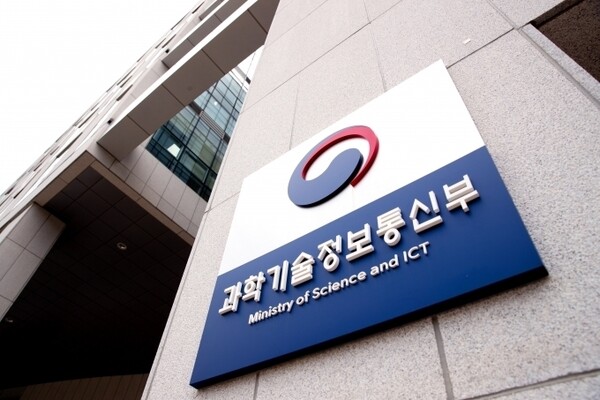
South Korea’s Ministry of Science and ICT announced on March 11 that it has initiated AI-based research administration support services through the Personal Information Protection Commission’s “Public AI Transformation (AX) Innovation Support Help Desk.” This initiative aims to address privacy concerns that may arise during public institutions’ AX projects.
The help desk serves as a review and advisory channel, guiding public institutions in navigating privacy issues associated with their AI projects. When a project is submitted for review, it is aligned with suitable systems and tools, including the prior adequacy review system, regulatory waivers (sandbox), one-stop pseudonymization, and proactive legal interpretations. The desk collaborates with institutions to review the personal information processing flow from the planning and development stages, co-designing necessary safeguards.
During its fourth plenary meeting on the same day, the commission approved the results of a prior adequacy review for AI recommendation services intended for evaluators and collaborative researchers. This marks the first instance of support from the help desk for projects under the Ministry’s integrated research support system, IRIS.
By leveraging AI, the ministry aims to enhance the existing system beyond simple keyword matching. The AI will analyze extensive materials accumulated in IRIS, including research papers, patents, and reports, allowing it to provide relevant evaluator recommendations tailored to specific fields. The goal is to facilitate connections between researchers and potential collaborators.
The commission evaluated the appropriateness of the project in light of the National Research and Development Innovation Act, which governs the establishment and operation of IRIS. It confirmed that researcher data within IRIS was collected and constructed in accordance with clear laws and regulations, particularly Article 20 of the act.
To mitigate privacy risks associated with the introduction of the AI recommendation service, the commission, in partnership with the ministry, has formulated safeguards based on an AI privacy risk management model. These measures include establishing an internal management plan, reinforcing transparency, and creating avenues for feedback regarding recommendations.
The commission intends to broaden its support to ensure public AX initiatives can advance in a framework that prioritizes privacy protection. Future plans include promoting the help desk while improving its accessibility to public institutions, reflecting a commitment to responsible AI integration in governmental research efforts.
This initiative represents a significant step in South Korea’s ongoing commitment to integrating AI technologies into public administration while maintaining a focus on privacy and ethical considerations. As AI continues to evolve, the framework established by the Ministry of Science and ICT and the Personal Information Protection Commission may serve as a model for other nations seeking to balance innovation with privacy safeguards.
See also Genesis Mission Launches AI Platform to Enhance US Grid, Supply Chains, and R&D Efficiency
 Unreasonable Labs Secures $13.5M to Enhance AI-Driven Scientific Discovery
 Appier Reveals Framework to Enhance Reliability of AI Decision-Making in Corporations
 Morocco Launches AI Institute Aiming for 50,000 Jobs and $10B GDP Boost by 2030
 Academic Dr. Narendra Singh Rathore Launches BHIM AI Software to Assess Student Aptitude