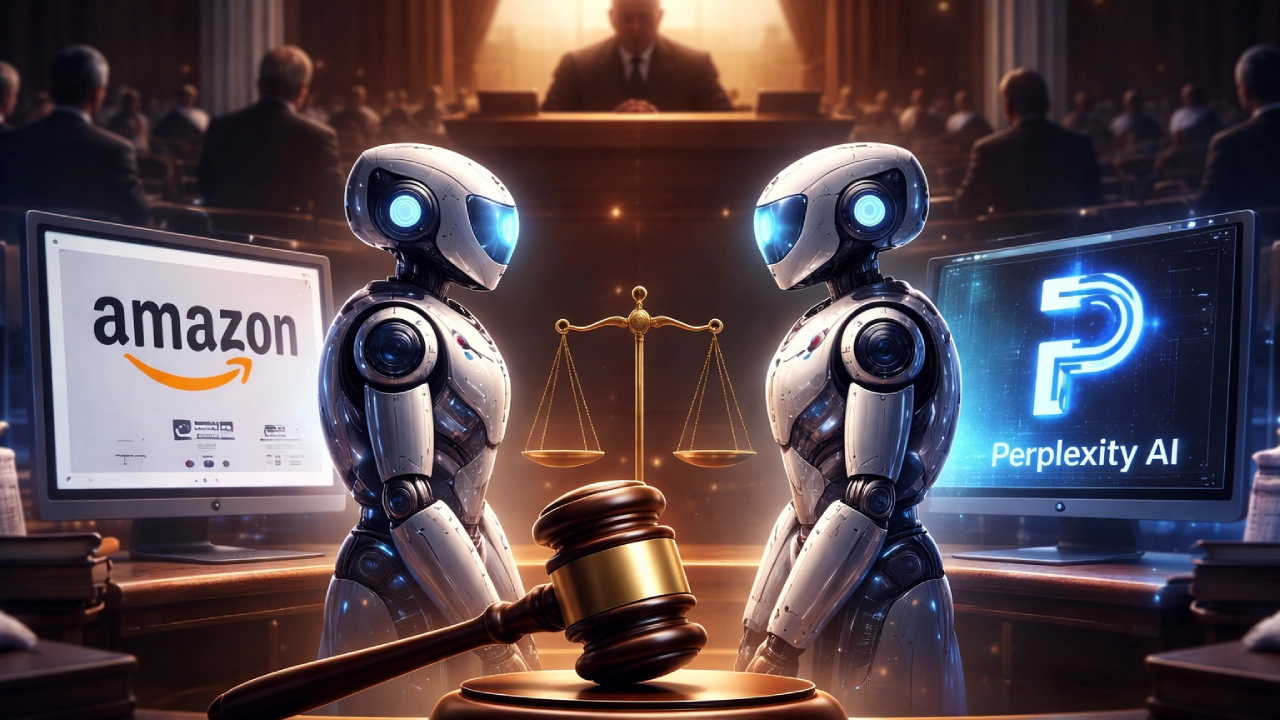
A U.S. Federal Court has issued a temporary injunction against Amazon, effectively prohibiting Perplexity AI Inc. from utilizing its AI shopping agent on the Amazon platform. This marks a significant moment in the legal landscape surrounding “Agentic AI,” a term referring to autonomous tools that assist users in browsing, comparing, and purchasing items online.
The case revolves around Perplexity AI’s Comet AI browser agent, designed to automate various shopping tasks, including item searches and price comparisons, across eCommerce sites, notably Amazon. Amazon alleges that this agent breaches its Terms of Service and poses serious security risks to users, claiming that the AI may have accessed customer accounts without consent and masqueraded as a human user.
U.S. District Judge James Donato, presiding over the case in San Francisco, granted the injunction that prevents Perplexity from using its AI shopping agent to access Amazon’s website and purchase products on behalf of other users. The ruling also mandates that Perplexity remove any Amazon data that may have been collected through its agent’s activities. A brief grace period has been allotted for Perplexity to appeal the decision.
Amazon’s lawsuit, filed in November 2025, accuses Perplexity of violating its terms and engaging in computer fraud by allowing automated systems to connect to its marketplace. The company asserts that the AI agent’s behavior not only jeopardizes customer security but also undermines the integrity of its platform. Amazon contends that granting automated agents access to customer accounts could nullify existing protections and degrade user experience.
In contrast, Perplexity has vigorously refuted these claims, defending its technology on the grounds that it merely acts on behalf of users who provide their own credentials, akin to a human user navigating the internet. The legal battle is emblematic of a much larger conversation about the future of AI in online commerce, as this case could set crucial precedents regarding the permissible use of AI agents in consumer transactions.
The spotlight on this lawsuit reveals broader implications for the retail industry. Analysts suggest that AI tools like Perplexity’s assistant could revolutionize the way consumers shop online, streamlining the process of finding products and the best prices without requiring manual effort. This shift could see trillions of dollars in transactions processed through AI agents over the next decade.
As online retailers, including Amazon, rely on consumer engagement through their platforms, the rise of AI agents poses challenges to traditional eCommerce models. If AI tools can navigate and purchase on behalf of users, they may disrupt the conventional shopping experience, leading to significant shifts in how products are advertised and discovered.
The ongoing legal proceedings are being closely monitored by industry stakeholders, as the Amazon-Perplexity case may redefine the legal frameworks governing the interaction between AI agents and online services. One focal point for the court will be whether AI agents should possess the same rights to access services as their human users when provided with permission.
Supporters of Amazon argue that online platforms should enforce regulations on automated access, while proponents of AI technologies contend that imposing restrictions could stifle innovation and limit consumer choices. The outcome of this case could influence how AI startups develop their products, necessitating transparency in identifying automated agents accessing web services.
In response to the court’s ruling, Perplexity has announced its intention to appeal, affirming its belief that AI tools should be allowed to perform actions on behalf of consumers. The company warns that restricting the functionality of AI agents could impede the growth of digital assistants. As the legal landscape continues to evolve, the implications of the Amazon-Perplexity case could offer foundational insights into how AI technologies interface with major commercial platforms, marking a pivotal moment in the development of AI-enabled retail.
See also AI-Driven Governance Revolutionizes SaaS Product Management with Dynamic Compliance Models
 Coreworks.AI Secures $5 Million Seed Funding to Develop AI SuperAnalyst Platform
 AI Adoption Stalls: 95% of Enterprises Struggle to Scale Beyond Pilot Stage
 Time to Prioritize: AI Integration Demands Strategic Shift in Higher Education