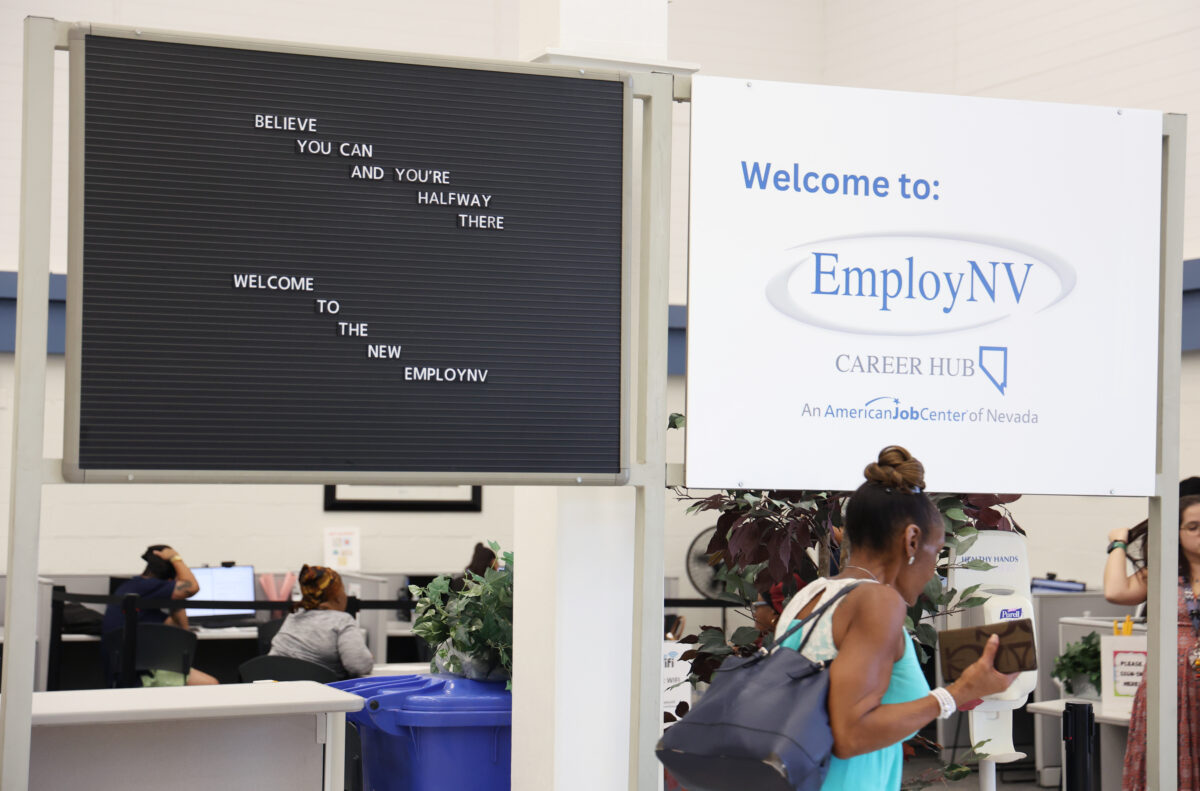
Nevada’s Department of Employment, Training and Rehabilitation (DETR) is set to implement a new artificial intelligence tool operated by Google to expedite the processing of unemployment benefit appeals. The initiative, which aims to significantly reduce processing times, has raised concerns among some state lawmakers regarding transparency and consent issues.
Initially considered for deployment in summer 2024, the rollout of the AI tool faced delays due to accuracy concerns, with a total estimated cost of $2.6 million, of which approximately $1.1 million has already been spent. While other state agencies, including the Nevada DMV, have successfully integrated AI technologies, the DETR’s adoption represents a significant expansion in the state’s use of AI.
State officials argue that AI can streamline existing processes, but they stress the importance of human oversight. According to DETR Director Christopher Sewell, “AI is a great tool — but that’s what it is. It’s a tool,” emphasizing that human review will be mandatory for all decisions made by the AI. Two state employees will be involved in the process to ensure that the AI’s recommendations are verified before final rulings are issued.
Despite these assurances, skepticism remains among some legislators. State Senator Dina Neal (D-North Las Vegas), who previously introduced a bill aimed at enhancing state oversight of AI, expressed concerns about the implications of using AI without requiring consent from the individuals whose appeals are being processed. “You’re contracting a Nevada citizen’s rights without their consent, without their knowledge. And that is backwards,” she asserted.
The introduction of the AI tool follows a significant backlog of unemployment appeals that surged during the pandemic. Officials anticipate that the new system could generate rulings in as little as five minutes, a stark contrast to the previous process, which could take anywhere from 10 minutes to several hours, depending on case complexity.
However, critics, including Senator Skip Daly (D-Sparks), question the actual efficiency gains of the AI system, noting that the required human reviews could add an additional 10 to 30 minutes to each case. “I don’t think there should be a reliance on this,” Daly cautioned, suggesting that overreliance on AI could lead to complacency.
Under the new framework, the AI will analyze all information from appeal hearings, including relevant documents and applicable Nevada laws. This automation, previously the sole responsibility of human referees, is designed to streamline the decision-making process, although the final ruling will still need to be approved by a referee. The system has undergone testing with historical appeals to ensure accuracy, although Sewell admitted that teaching the AI to make precise rulings has proven more time-consuming than anticipated.
The contract with Google mandates a 90 percent success rate for the AI tool, implying that state officials expect the AI’s decisions to be deemed correct nine out of ten times. Sewell emphasized the critical nature of accuracy, particularly given the implications of these decisions for claimants’ eligibility for benefits and the potential for legal challenges.
Security protocols are in place to protect sensitive data, including measures ensuring that information remains within the continental U.S. and that the state retains control over encryption keys. Junggab Son, a computer science professor at UNLV, reviewed the security aspects of the deployment and concluded that while the Google platform appears secure, there are concerns about the practical application of the AI tool, including the risk of bias and inaccuracies.
Neal also expressed apprehension about the implications of partnering with a major tech company for access to state data. “When you partner with certain companies who basically have control over almost all of our data, it is a problem,” she noted.
The state has implemented a 2024 policy governing agency AI use, which prohibits more lenient agency-level guidelines compared to statewide standards and restricts the use of AI for generating discriminatory content or using personal data without anonymization. Michael Hanna-Butros Meyering, chief communication and policy officer at the Governor’s Technology Office, indicated that the office aims to establish standards while allowing agencies to manage their projects autonomously.
While discussions in Congress last year about imposing a moratorium on state-level AI regulations did not gain traction, President Donald Trump signed an executive order advocating for a “minimally burdensome national standard” for AI policy. Daly emphasized that oversight is crucial, warning that careless deployment of AI could have far-reaching implications for jobs and industries.
In a statement, the American Federation of State, Council and Municipal Employees Local 4041 underscored that AI should not replace the judgment and expertise of public service workers, highlighting the potential risks associated with biased data and inaccurate results in critical public programs. Neal plans to reintroduce AI oversight legislation in the upcoming legislative session, stating, “It’s going to happen.”
See also South Korea Initiates Talks with Anthropic for AI Collaboration and Development
 China Issues Security Warning on OpenClaw as AI Tools Proliferate in Business Environments
 Boris Kriuk’s DWO Transforms AI Agent Deployment for Urban Infrastructure Operations
 South Korea Explores AI MoU with Anthropic to Expand Global Partnerships
 Home Office AI Use in Asylum Cases Found Likely Unlawful, Legal Opinion Reveals