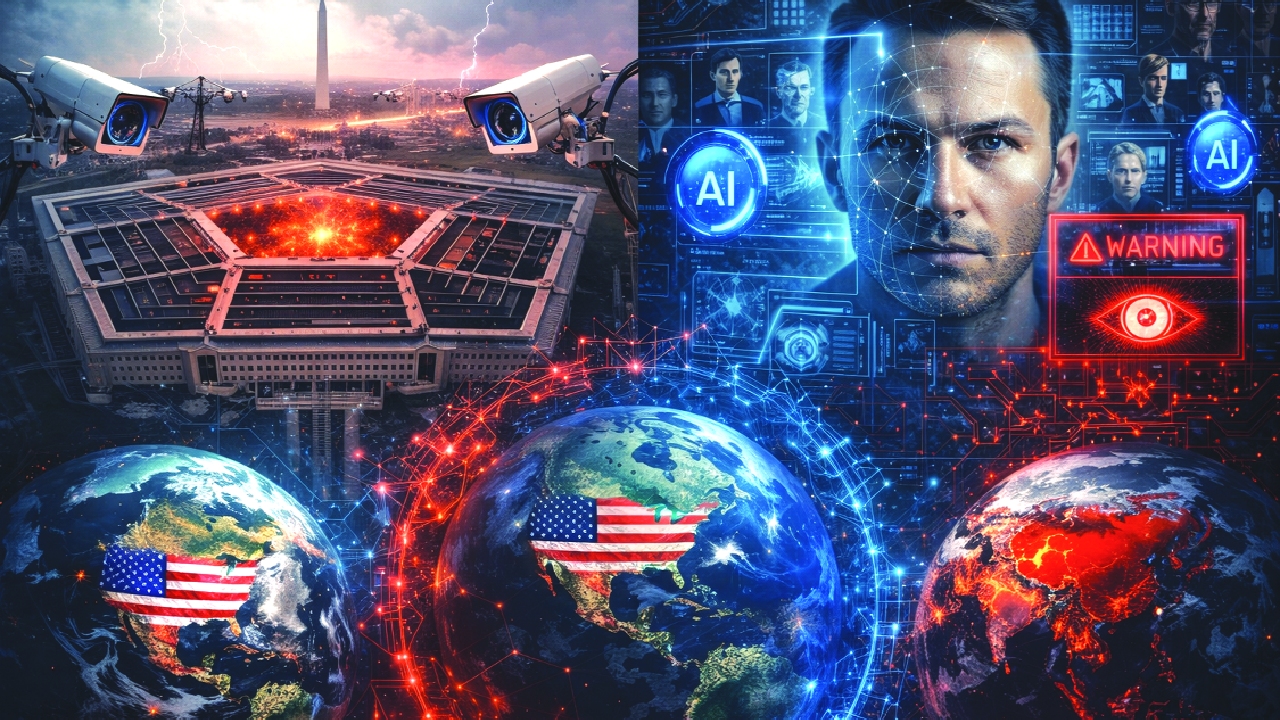
In a significant escalation of tensions within Silicon Valley, the conflict between the Pentagon and AI company Anthropic has crystallized a deep political polarization in the tech hub. This schism, emerging in 2026, raises critical questions about the future of innovation and the utilization of artificial intelligence (AI) in warfare. As global conflicts in regions like Iran and Ukraine increasingly involve AI technologies, the implications of this dispute could reshape both military strategies and ethical considerations in tech development.
The Pentagon’s reliance on AI has been evident in operations such as the arrest of Venezuelan leader Nicolás Maduro and during the conflict in Gaza. At the center of the current discord is Anthropic’s Claude model, which has become a pivotal tool for intelligence gathering and military strategy. However, the debate surrounding its future use extends beyond current applications and into the realm of ethical governance. Anthropic’s contract with the Pentagon contained two crucial stipulations: first, that their technology would not be used for domestic surveillance, and second, that Claude could not be employed to develop autonomous lethal weapons. The Pentagon’s resistance to these conditions reflects a broader struggle over the control and governance of AI technologies.
This standoff has evolved into a legal dispute, spurred by concerns about national security and America’s competitive edge in global AI advancements. Following failed negotiations, President Trump ordered federal agencies to cease using Anthropic’s technology, declaring it a “supply-chain risk.” The implications of this decision extend well beyond corporate interests; they highlight a fundamental clash over how AI should be integrated into national defense strategies.
The current role of AI in military operations is not merely theoretical. Although AI does not yet directly command drones, it plays a critical role in intelligence analysis and operational planning. Anthropic’s leadership has expressed concerns that government use of their AI could encroach on personal privacy, potentially enabling invasive surveillance tactics. This fear resonates with human rights advocates, who warn of the creation of a “digital panopticon,” infringing upon the Fourth Amendment rights of citizens.
As discussions continue, the Pentagon maintains that existing laws of warfare should suffice for AI deployment, arguing that traditional ethical principles apply regardless of whether a weapon is human-operated or algorithm-driven. Conversely, Anthropic posits that AI’s evolving nature necessitates unique safeguards, distinguishing it from conventional military technology. This philosophical disagreement underscores the urgent need for policies that can adequately address the rapid advancement of AI capabilities.
Anthropic’s stance is further complicated by the broader geopolitical landscape, particularly the competition with China, where companies are compelled to align closely with government interests. The Pentagon has articulated concerns that failure to cooperate with AI firms could jeopardize U.S. national security, especially in scenarios involving rapid military decision-making. The urgency of these discussions is amplified by the understanding that, in future conflicts, the side that can deploy AI technologies most effectively may hold the decisive advantage.
Despite the escalating tensions, other companies like OpenAI have opted for a different approach, aligning themselves with the Pentagon to secure lucrative contracts. This strategic pivot raises pressing questions about the impact of military demands on corporate ethics and safety standards in technology development. The potential for AI to be used in warfare is becoming a contentious issue, as companies must grapple with the ethical implications of their innovations.
The conflict has ushered in a climate where allegiance to the Pentagon is increasingly seen as a determinant of professional standing in Silicon Valley. Individuals who advocate for AI safety face the risk of being labeled as anti-national security, leading to a division among engineers and scientists. As a result, talented professionals are gravitating towards firms like Anthropic that prioritize ethical considerations, while others are drawn to companies willing to embrace military applications for AI in exchange for substantial financial incentives.
This bifurcation within the tech community not only reflects shifting priorities in Silicon Valley but also illustrates the complex interplay between technological innovation and political power. As figures like Elon Musk engage directly with the administration, a palpable shift is occurring where collaboration with government initiatives is becoming more favorable than dissent. Anthropic’s defiance has positioned it as a ‘rebel’ entity, championing ethical AI while simultaneously facing scrutiny from those who see it as a threat to national interests.
The unfolding legal battle between Anthropic and the Pentagon will likely set precedents regarding the extent of private control over military applications of technology. As the discourse around AI and ethics continues to evolve, the outcomes of these discussions could fundamentally reshape the landscape of both the tech industry and national security policy. Silicon Valley’s future now hinges not only on technological prowess but also on its alignment with the prevailing geopolitical narratives in Washington.
See also Google and Accel Select Five Indian AI Startups, Rejecting 70% of Wrapper Solutions
 Google Unveils Platform 37 and AI Exchange in London to Advance AI Research and Education
 DeepSeek AI Predicts XRP and Solana Prices May Drop Without Clarity Act by 2026
 Microsoft Launches Copilot Health AI to Enhance Patient Understanding with 50,000 Hospital Data Sources
 Amazon Launches Health AI Assistant for 200M Prime Members, Expands Virtual Care Access