Artificial intelligence (AI) experts from The University of Texas at Dallas have collaborated with Central Nippon Expressway Co. Ltd. (NEXCO-Central), through its Irving, Texas-based subsidiary, to enhance local government efforts in prioritizing road repairs. This initiative seeks to optimize decision-making processes for municipalities facing budget constraints and competing priorities.
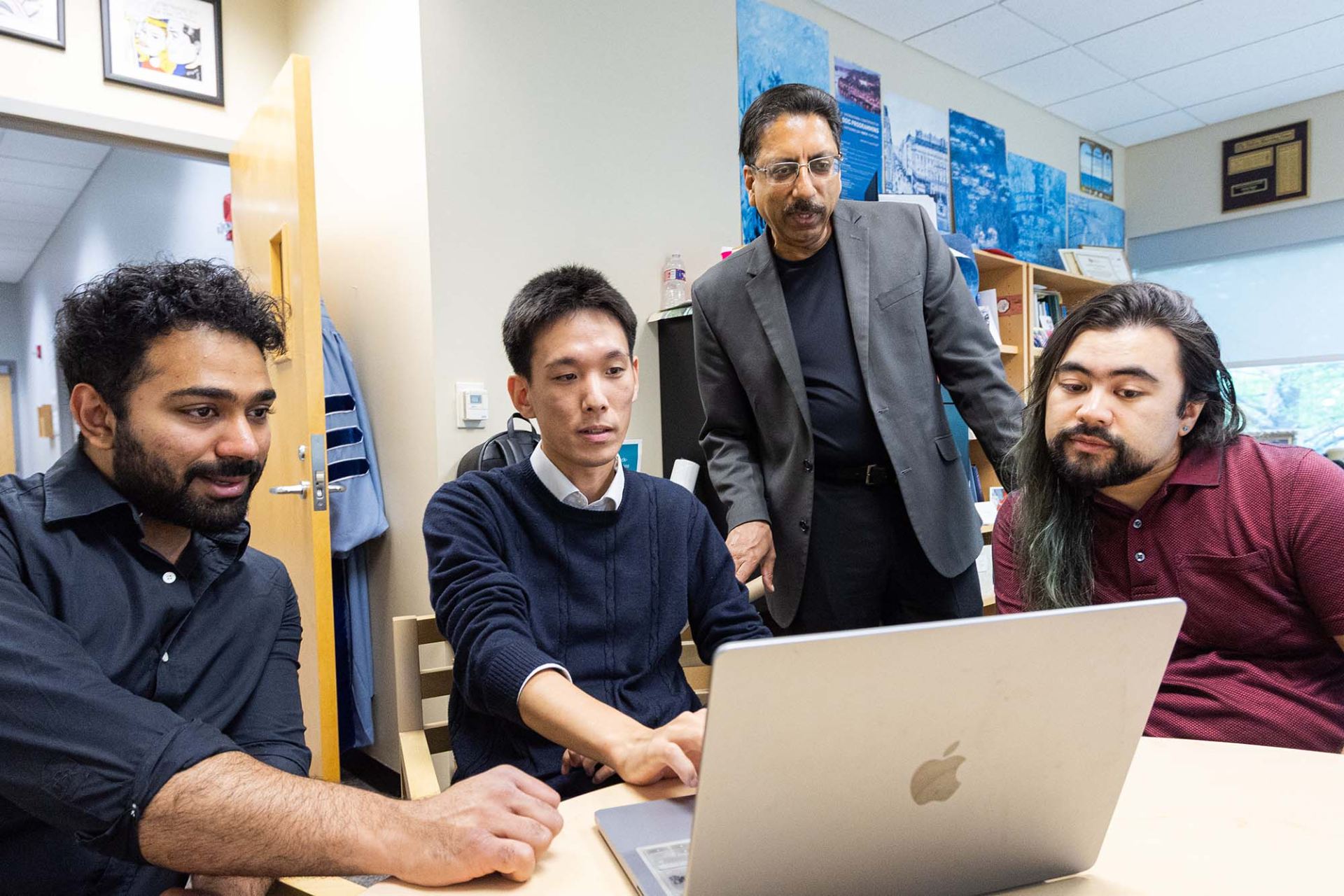
The partnership involves researchers from the Center for Applied AI and Machine Learning (CAIML), who have developed an automated software system that builds on NEXCO-Central’s existing technology. This original system integrates AI with video data collected from mobile cameras to evaluate road conditions and present a comprehensive assessment of pavement health.
According to Dr. Gopal Gupta, director of CAIML, the new system simulates the decision-making approach of a city manager tasked with determining repair priorities for various road segments. “The technology is designed to optimize complex decision-making concerning which roads most urgently require repairs and how to allocate funding effectively,” he noted.
Through this collaboration, the resulting technology has been incorporated into NEXCO-Central’s software suite, featuring a scoring system that streamlines the prioritization process. Koshiro Mori, a developer at NEXCO-Central, emphasized the importance of pavement assessment for urban infrastructure: “Our technology aims to optimize the complex decision-making to determine which roads are most in need of repairs, the predicted financial investment, and prioritizing who gets the money and when.”
This collaboration was facilitated by an Intellectual Property Assignment Sponsored Research Agreement, enabling companies that partner with UT Dallas to retain the intellectual property generated from their projects. In addition to Gupta, doctoral students Abhiramon Rajasekharan and Keegan Kimbrell from the computer science program contributed significantly to the development of this innovative system.
Atsushi Onishi, vice president of NEXCO Highway Solutions of America, pointed out the significance of having the tools to determine repair priorities within budgetary constraints. “It is important to have the technologies to determine which segment has to be done within the budget and how much should be spent on specific road types,” he stated.
Mori revealed that the collaboration arose after NEXCO-Central identified CAIML during their search for academic partners specializing in AI and machine learning. “We saw a collaboration opportunity, and we’re very happy with how the team has handled this project,” he said, underlining the mutual benefits of the partnership.
Another notable advantage of the newly developed tool is its ability to clarify the rationale behind each repair recommendation. This transparency enhances trust in the decision-making process among stakeholders and citizens. Gupta remarked on the broader implications of this project, stating, “We think of ourselves as the research and development center for companies that do not have an R&D arm. NEXCO collaborated with us in this way and created a phenomenal product.”
The collaboration illustrates the potential for academic institutions and industry partners to leverage AI and machine learning technologies to address real-world challenges. As cities continue to grapple with deteriorating infrastructure and limited resources, solutions like this one may play a critical role in shaping more efficient urban management strategies.
See also Giga Computing Reveals OCP-Ready AI Platforms at OCP EMEA Summit 2026
 Samsung Electronics Reports Q1 Net Profit Soars to $31.8B Driven by AI Chip Demand
 Bosch Delivers Key Components as Kodiak Advances to Scaled Autonomous Truck Production
 1X Launches NEO Factory in Hayward, CA, Aiming for 100,000 Humanoid Robots by 2027