






















































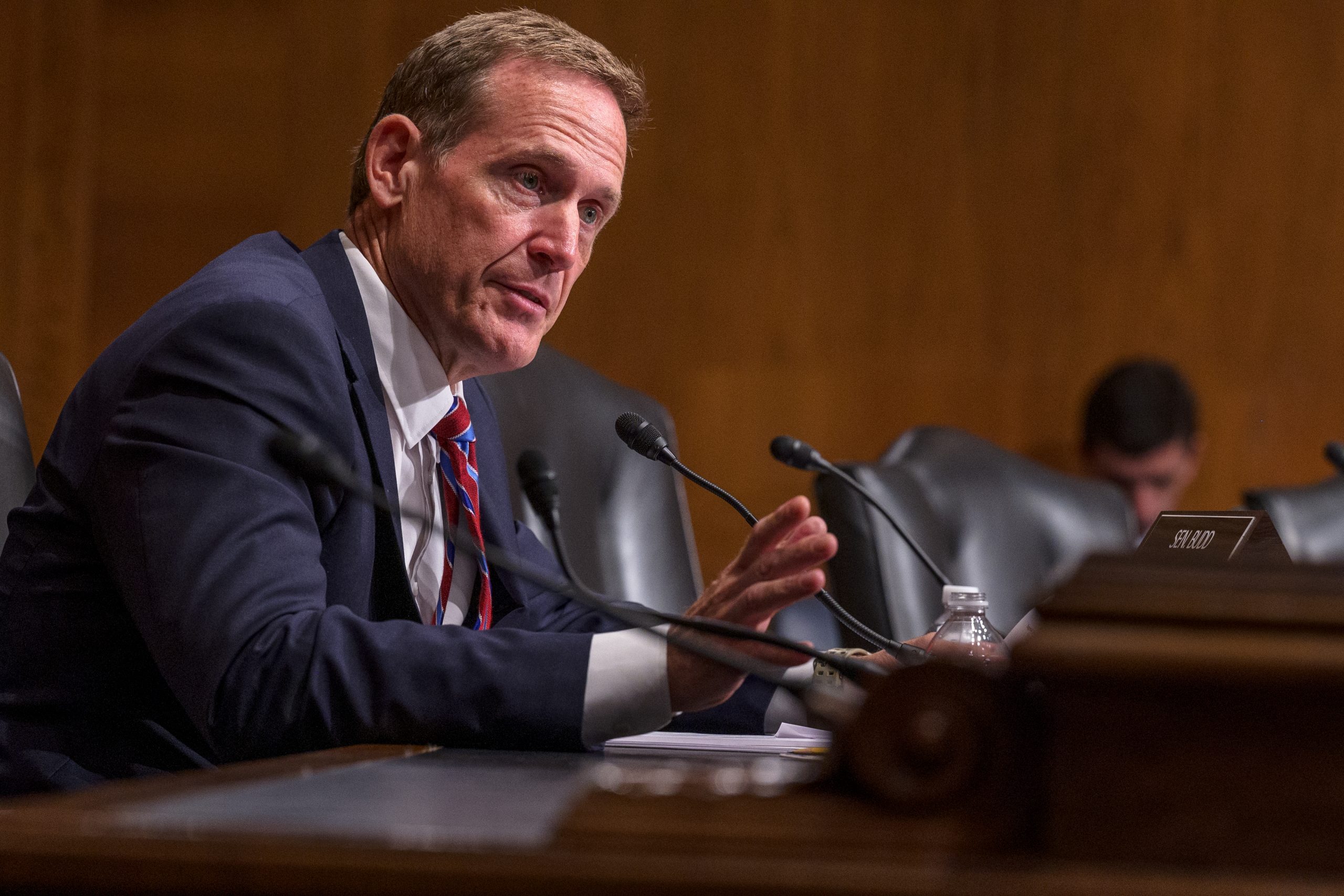
Washington, D.C. — U.S. Senators Ted Budd (R-N.C.) and Andy Kim (D-N.J.) recently introduced the Artificial Intelligence Ready Data Act, aiming to modernize the federal approach to government data accessibility for the development of advanced artificial intelligence (AI). This legislation seeks to capitalize on the extensive data assets generated through taxpayer funding, reinforcing American leadership in AI innovation.
Senator Budd emphasized the necessity of high-quality data for the success of AI models, stating, “The success of American AI models to help grow our economy and create new jobs depends on access to high-quality data.” He noted that although the federal government possesses the largest collection of publicly available data, there is a critical need to make these resources more accessible. By doing so, developers can create smarter solutions that span various sectors, including healthcare, manufacturing, and weather modeling.
Senator Kim echoed Budd’s sentiments, highlighting the historical role of federal data in driving scientific exploration. He asserted, “As new technologies like AI become key tools for researchers in New Jersey and across our country, we need to ensure that access to this data is structured, reliable, and ready to be used safely.” The proposed legislation aims to establish clear standards to enhance the utility of federal data while ensuring transparency and public trust.
The Artificial Intelligence Ready Data Act has garnered endorsements from major companies including Google, Siemens, Snorkel AI, and the NC Chamber. Anne Wall from Google stated, “We’re incredibly supportive of efforts to modernize government data infrastructure,” underscoring that the act will facilitate access to crucial data like NOAA’s atmospheric observations, which can aid in addressing complex issues such as natural disaster preparedness and healthcare costs.
Olympia Brikis, U.S. Head of AI Research at Siemens, praised the bipartisan initiative, remarking that the next frontiers of AI involve optimizing real-world systems across various industries. “The federal government holds uniquely valuable data assets for developing these capabilities, including decades of engineering and operational data that cannot be replicated elsewhere,” she said. The act represents a pivotal step towards making these assets AI-ready.
Alex Ratner, Co-Founder and CEO of Snorkel AI, also highlighted the importance of quality data in AI development, stating, “Artificial intelligence systems are only as reliable as the data used to develop and evaluate them.” He noted that clear standards for making federal data accessible are essential for responsible AI advancement that serves the public interest.
Jake Cashion, vice president of government affairs at the NC Chamber, remarked on the potential economic benefits, stating, “From manufacturing and logistics to healthcare and agriculture, artificial intelligence is strengthening key industries that power North Carolina’s economy.” Cashion stressed that the act would ensure the U.S. remains at the forefront of AI technology while supporting responsible data usage.
Earlier, Senator Budd chaired a hearing for the Senate Commerce, Science, and Transportation Subcommittee on Science, Manufacturing, and Competitiveness, where he posed questions to industry witnesses regarding the benefits of enhanced access to government data for AI solutions. The Evidence-Based Policymaking Act of 2018 established that federal data should be open by default, emphasizing its value as a national resource.
The Artificial Intelligence Ready Data Act outlines specific directives for the National Institute of Standards and Technology (NIST) to solicit comments aimed at improving the accessibility and quality of open government data. Following this commentary phase, NIST will develop standards and guidelines for federal agencies to implement, preparing their data assets for AI compatibility. Additionally, the act includes provisions for the National Oceanic and Atmospheric Administration (NOAA) to enhance its data support for AI and machine learning in weather forecasting.
As the technology landscape continues to evolve, the successful implementation of the Artificial Intelligence Ready Data Act could provide a significant boost to AI development efforts across the United States, reinforcing the country’s competitive advantage in an increasingly digital world.
See also U.S. Defends Anthropic Blacklisting Amid Legal Challenge Over AI Use Restrictions
 UK Government Proposes AI Content Labels to Combat Deepfakes by March 2026
 GSA Reveals Draft AI Clause Aiming for Comprehensive Governance Amid Rapid Adoption
 UK Announces GBP £2.5bn Investment to Propel AI and Quantum Computing Growth
 UK Government Launches £2.5B Fusion Energy Strategy Linking AI to Clean Power Goals















