AI marketing tools are rapidly becoming essential for modern marketing teams as they fundamentally transform the way campaigns are created and executed. By leveraging artificial intelligence, these tools automate various processes, enhance personalization, and provide predictive capabilities that were previously unattainable without extensive manual effort. According to recent data, around 88% of marketers actively use AI tools, highlighting their growing importance in the industry.
The landscape of AI marketing tools has expanded dramatically, with new platforms debuting weekly and overlapping functionalities making it increasingly challenging for marketers to navigate this space. The objective of this article is to outline the various types of AI marketing tools available in 2026, their benefits, and how teams can effectively integrate them into their workflows to create a competitive advantage.
One of the most significant advantages of AI marketing tools is their ability to accelerate content production. Marketers are reporting that 93% feel AI has improved their ability to generate content swiftly. This innovation enables teams to create blog posts, ad variations, and other materials at an unprecedented pace, allowing for faster testing and adaptation of ideas. Speed is not merely a factor of volume but of agility, which has become a baseline expectation in a fast-paced digital environment.
Moreover, AI tools offer improved performance and return on investment (ROI) through enhanced targeting and segmentation capabilities. By utilizing predictive analytics, marketers can anticipate campaign outcomes, which can drive measurable gains. Reports indicate that AI-driven strategies can boost marketing ROI by 5% to 15%, making it a strategic asset for businesses aiming to enhance their market presence.
Adoption and Integration Challenges
Despite the advantages these tools present, many teams are still grappling with how to fully integrate AI into their workflows. A significant challenge lies in data fragmentation; effective AI tools require seamless connectivity across systems to function optimally. As many marketing technology stacks remain disjointed, the potential of automation and predictive analytics is often underutilized. Furthermore, while many marketers have adopted AI, a substantial number have yet to integrate it into their core workflows, often relegating it to basic applications such as content generation.
Different categories of AI marketing tools are emerging, each focusing on distinct aspects of the marketing process. For example, AI content creation tools such as ChatGPT and Jasper are designed to scale creative output effectively. AI-powered SEO tools focus on improving search visibility and content performance, while AI chatbots facilitate real-time customer interaction and engagement. Each category offers unique benefits and can be combined to create a more cohesive marketing strategy.
As businesses explore the landscape of AI marketing tools, they must consider several factors to ensure the right fit for their needs. Budget alignment, team size, specific use cases, and the ability to integrate seamlessly with existing systems are critical considerations. Notably, 62% of teams report difficulties with data integration across their tools, indicating that interoperability may be more crucial than any single feature.
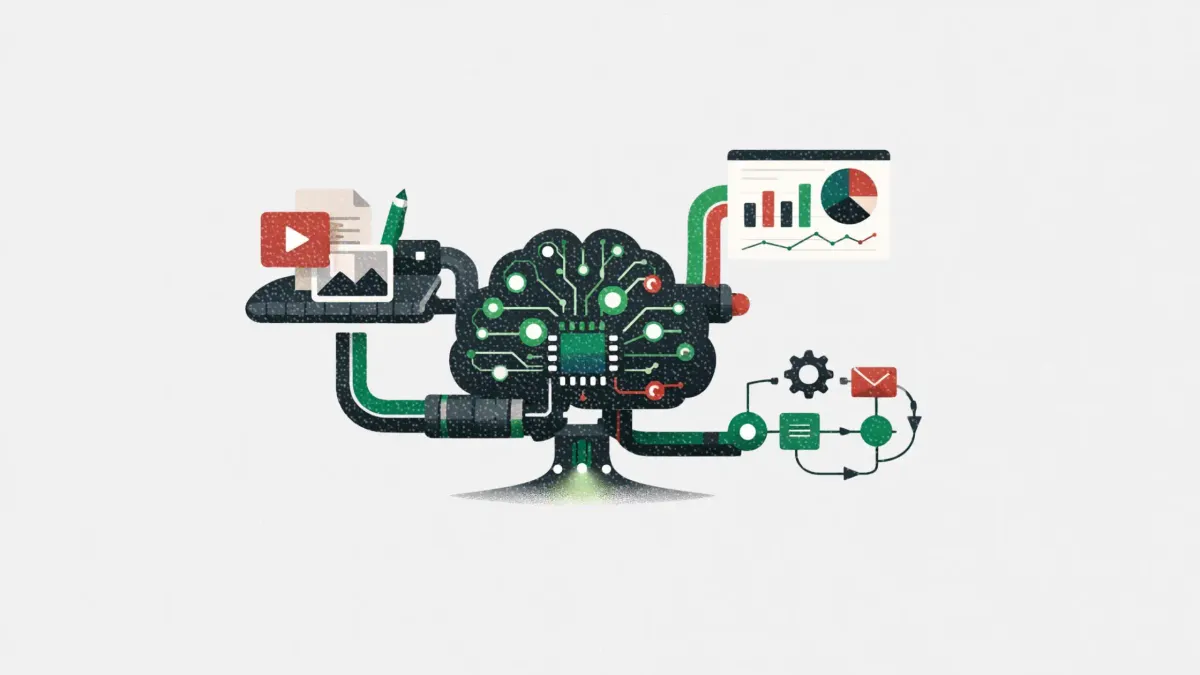
The future of AI in marketing appears poised for further evolution. Emerging trends suggest a shift from using AI merely as a tool to employing it as an operational agent that executes marketing strategies in real time. This approach could redefine how marketers interact with their initiatives, moving towards a system that is not just reactive but proactively adapts to market conditions. As marketing techniques continue to evolve with AI, the significance of connected strategies that leverage multiple forms of content—text, image, and video—will become increasingly critical.
As organizations continue to adapt, the successful integration of AI marketing tools will likely depend less on the technologies themselves and more on how well they are governed and incorporated into overarching workflows. To thrive in a competitive landscape, teams need to view AI not simply as a productivity shortcut, but as a transformative infrastructure that can propel their marketing efforts to new heights.
See also SXSW 2026 Panel Reveals Human Creativity as Key Differentiator in AI Marketing
 AgentMail Secures $6M Seed Funding to Develop Email Infrastructure for AI Agents
 Snack E-Commerce Reaches $57B as TikTok and AI Drive Growth Among Gen Z
 AI Agents Transform Marketing Workflows, Reducing Campaign Timelines by 50%