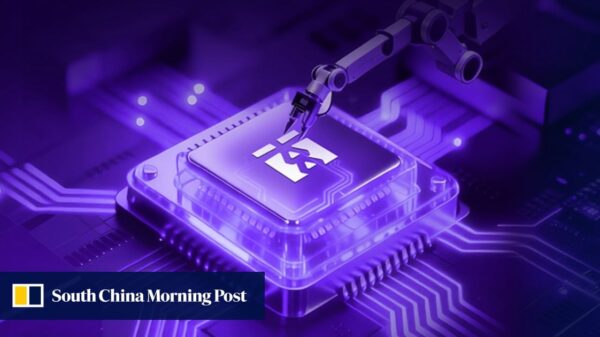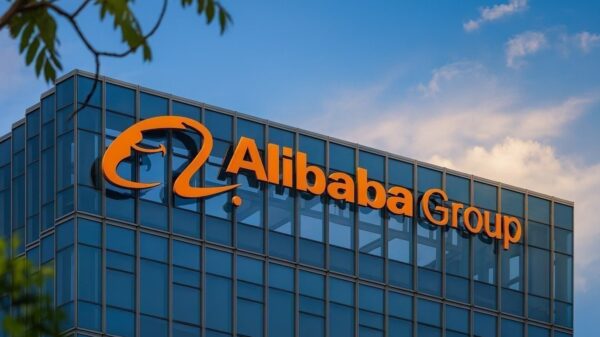
Alibaba Group Holding (NYSE:BABA) is implementing significant price increases for its AI chips and cloud services, a move that signals a strategic shift towards monetizing its investments in artificial intelligence. The company has formed a new division, dubbed Alibaba Token Hub, which will be led by CEO Eddie Wu. In tandem with this reorganization, Alibaba has introduced Wukong, an enterprise-focused AI platform aimed at enhancing its appeal to business clients.
Currently trading at $134.43, Alibaba has experienced a 13.7% decline over the past month and a 4.6% decrease over the past year. Despite these challenges, the company’s three-year return stands at 69.1%, although it contrasts sharply with a five-year return that reflects a 38.4% decline. This backdrop of fluctuating stock performance provides essential context as Alibaba recalibrates its AI and cloud strategies.
The decision to raise prices for T-Head AI chips by as much as 34% and increase cloud storage fees by about 30% demonstrates the company’s intent to derive greater profitability from its extensive AI and cloud investments. These price adjustments come in the wake of Alibaba’s Q3 2025 earnings report, which revealed revenue of CNY 284,843 million, a modest increase from CNY 280,154 million a year prior. However, net income took a significant hit, plummeting to CNY 16,383 million from CNY 49,127 million. This juxtaposition of slight revenue growth against sharply declining profits underscores the urgency behind the company’s new monetization efforts through Token Hub and tools like Wukong, designed to streamline office workflows through AI agents.
For investors tracking NYSE:BABA, the critical factor will be evaluating how effectively the Token Hub framework and Wukong platform can transform technical capabilities into tangible enterprise demand, thus generating scalable revenue from AI services. The implications of raising prices amid a competitive landscape, which includes rivals like Tencent, Baidu, and various global hyperscalers, are substantial. The question remains whether enterprise customers will accept these higher costs in exchange for deeper integration across platforms such as Taobao, Alipay, and DingTalk.
Furthermore, the shift towards monetizing AI through Token Hub and Wukong emphasizes a broader narrative: the substantial investments in AI and cloud infrastructure are intended to support robust, enterprise-grade platforms rather than simply act as financial burdens on the company’s balance sheet. However, the dramatic year-on-year plunge in net income, alongside increasing capital expenditures related to AI, raises concerns about ongoing profit pressures. If the anticipated growth from these new AI services does not materialize swiftly, Alibaba could face continued financial strain.
As the company consolidates its AI chips, models, and enterprise platforms under Token Hub, it faces heightened execution risks. Any missteps in pricing strategies, product integration, or sales focus could adversely affect multiple revenue streams. On the positive side, the rising demand for AI services, coupled with the ability to adjust prices, suggests that Alibaba possesses some pricing power within the Chinese AI infrastructure market, potentially mitigating cost inflation associated with GPUs and data centers.
Moreover, the deployment of Wukong and related AI-agent tools across Taobao, Alipay, and DingTalk presents Alibaba with new opportunities to link AI utilization to transaction processes and workflows, thereby fostering deeper relationships with enterprise clients over time. Observers will be closely monitoring how Alibaba reports on AI and cloud metrics and the progress of Token Hub, particularly as changes to pricing take effect.
Future discussions around earnings calls are expected to highlight customer case studies comparing Alibaba’s offerings with those from its competitors. Given the recent downturn in net income, insights into AI-related profit margins and capital intensity will be crucial in determining whether the company’s price increases and enterprise adoption efforts are alleviating or extending existing earnings challenges.
For those interested in staying informed on Alibaba Group Holding, engaging with community discussions and analyses will provide valuable perspectives on the evolving investment narrative surrounding the company.
See also US Trade Deficit Reaches $1.2 Trillion as AI Hardware Imports Surge 60% in 2025
 Coinbase Fires Engineer for Refusing to Use AI Tools Amid Cost-Saving Push
 Morgan County Implements AI Sorting System to Boost Recycling Capacity by 400%
 U.S. Tech Executives Charged with Smuggling Nvidia AI Chips to China Amid Export Crackdown
 Circles and Huawei Announce Strategic Alliance for AI-Driven Telecom Solutions Globally