

The SEO industry is reacting to Google’s latest AI update, which integrates generative AI into its search engine. This development promises to transform how content is indexed and ranked on the world’s leading search platform, creating new opportunities for SEO professionals. However, the shift is not without its challenges.
The incorporation of generative AI has led to significant debate among SEO experts. Some worry that AI-generated answers will dominate the Search Engine Results Page (SERP), pushing organic results further down and potentially impacting publishers of all sizes. This article explores the implications of generative AI for SEO and outlines strategies professionals can employ to adapt to these rapid changes.
During the recent Google I/O 2023 event, the tech giant announced several AI updates aimed at reshaping the online search landscape. The introduction of PaLM 2, a sophisticated AI system integrated into 25 Google products, allows users to obtain more comprehensive search results. Google also highlighted enhancements to Bard, its experimental conversational AI service powered by LaMDA, which aims to provide more useful features, including customized mobile wallpapers and improved search outcomes.
Among the most significant updates is an AI-driven search feature that offers users streamlined access to information on various topics, from traffic conditions to local bike lanes. Generative AI’s ability to recognize patterns and create new ones based on existing data means Google’s algorithms will gain a deeper understanding of search queries and user intent.
These developments will have considerable implications for SEO. The emphasis on high-quality, informative content is expected to overshadow traditional keyword-focused strategies. The use of structured data and schema markup will become increasingly critical. While the evolution may seem daunting, it offers businesses an opportunity to enhance their visibility in search results.
Generative AI also influences the shopping experience, as demonstrated by Google’s Search Generative Experience (SGE). In a recent test, users searching for products received summaries of essential factors, suitable recommendations, and product descriptions that included current reviews, ratings, prices, and images. This innovative shopping experience leverages Google’s Shopping Graph, which features over 35 billion continuously updated product listings.
To capitalize on Google’s new AI-driven updates, it is vital for websites to optimize their content for better visibility. One key focus should be on E-E-A-T—experience, expertise, authority, and trustworthiness. Creating high-quality, engaging, and authoritative content will enhance a website’s chances of achieving a higher ranking in search results. Keeping abreast of the latest trends is essential for staying competitive.
In this context, natural language processing (NLP) can significantly improve SEO performance. While traditional tactics like keyword optimization and link building remain crucial, leveraging NLP techniques allows businesses to gain insights into user search behavior and craft content that aligns closely with user intent. This approach can lead to improved search rankings and higher-quality traffic.
As SEO trends evolve, businesses must remain proactive in adapting their strategies. Factors such as content quality, user experience, and contextual relevance are increasingly vital for determining SEO rankings. Providing informative content alone is insufficient; a seamless user experience and contextual relevance to search queries are equally important.
To ensure a competitive edge, businesses should prioritize originality, accuracy, comprehensive coverage, readability, and multimedia elements in their content. Site speed, mobile-friendliness, intuitive navigation, accessibility, visual appeal, and user engagement are essential components of a positive user experience.
Contextual relevance involves effective keyword optimization, semantic search strategies, establishing topical authority, and optimizing internal and external linking. Metadata optimization and schema markup will further help search engines understand and categorize content effectively.
In summary, marketers and SEO specialists must remain informed about Google’s ongoing changes and adjust their strategies accordingly. Whether updating existing content or restructuring websites in response to AI advancements, adaptability is crucial. Generative AI is a transformative force that will significantly impact search engine rankings. Incorporating these technologies into SEO workflows is now essential for maintaining a competitive position in the digital landscape.
As Google’s generative AI update approaches, businesses should prepare to navigate the shifting landscape. Firms such as M&C are ready to help organizations adapt, ensuring resilience and competitiveness in the face of disruption.
See also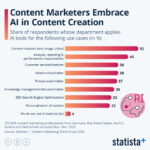 AI Tools Now Used by 52% of B2B Marketers for Content Creation and Analytics, Says Statista Study
 HelloFresh Launches AI-Driven Kochbox with 100% Recyclable Packaging and 12% Emission Reduction
 Manychat Launches Advanced AI Tools to Automate Social Media Messaging for Brands
 8×8 Launches Engage AI Platform to Boost Customer Engagement Efficiency
 ViralBulls Launches Generative Engine Optimization to Enhance AI-Driven Marketing Strategies