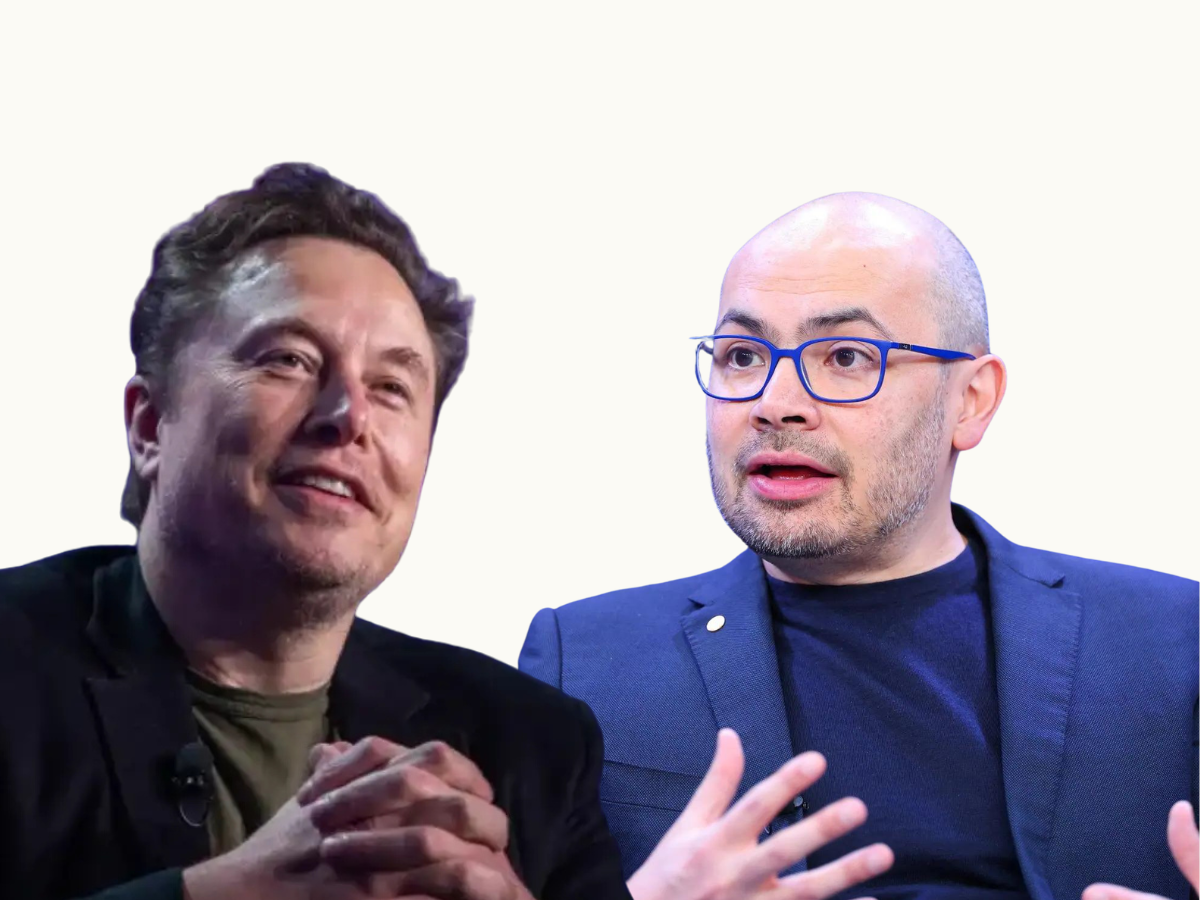
Tesla chief and owner of the microblogging site X, Elon Musk, engaged in a thought-provoking discussion with Google DeepMind CEO Demis Hassabis on Saturday regarding the future role of artificial intelligence (AI) in scientific discovery. The exchange, which took place through a series of posts on X, centered on whether AI will facilitate the discovery of new laws of nature or enhance the development of technologies that build on existing knowledge.
Musk expressed skepticism about the potential for significant scientific breakthroughs occurring with the same frequency as those achieved by renowned scientists like Isaac Newton or Albert Einstein. He suggested that major advancements may become increasingly uncommon, with future research more likely focused on creating new systems rather than unraveling fundamental principles of physics. “The pattern of the quarks, leptons & photons is almost everything,” Musk stated, emphasizing that contemporary physics already provides comprehensive explanations of much of reality. He further commented, “Reality is the ultimate eval. Physics is the law, everything else is a recommendation.”
Hassabis offered a different perspective, highlighting that AI could still play a crucial role in helping scientists gain a deeper understanding of the universe. He posited that AI tools might uncover “elegant and compact descriptions” of unresolved scientific problems, although this would necessitate large-scale pattern analysis to be effective. His comments underscore the potential for AI not only to analyze existing data but also to facilitate innovative approaches to scientific inquiry.
The conversation was sparked when Musk responded to a post by Hassabis that shared a passage from the book “The Infinity Machine: Demis Hassabis, DeepMind and the Quest for Superintelligence,” authored by Sebastian Mallaby. The excerpt articulated Hassabis’s long-held belief that AI can assist in uncovering the underlying rules of reality, framing the pursuit of scientific knowledge as a quest for deeper structures within the universe, akin to understanding the “mind of God.” In his response, Musk affirmed, “I share Demis’s sentiments,” highlighting a shared vision for the potential impact of AI on scientific discovery.
This dialogue between two influential figures in technology reflects a broader discourse surrounding the intersection of AI and scientific innovation. As AI continues to evolve, its applications in various fields, including science, are becoming increasingly sophisticated. The potential for AI to analyze complex datasets and identify patterns that may elude human researchers represents a significant opportunity for advancements in scientific knowledge.
Looking forward, the implications of this conversation extend beyond the immediate claims made by Musk and Hassabis. As AI technologies advance, the scientific community may increasingly rely on these tools to tackle some of the most pressing and complex questions facing society. The collaboration between AI and human intellect could redefine the boundaries of exploration and understanding, paving the way for breakthroughs that were previously unimaginable.
See also Doshisha University Unveils DUPGT-CDR Framework for Enhanced Cold-Start User Recommendations
 MindBio Raises CA$1.5M to Advance AI Voice Technology for Intoxication Detection
 Teen Girls and Boys Equally Use AI Nudification Apps, Study Reveals
 Study Reveals 75% of AI Chatbots Assist Teens in Planning Violent Attacks