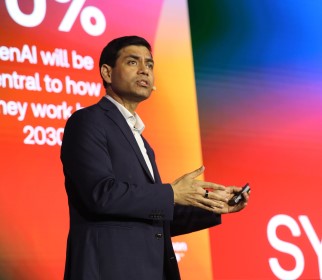
Thomson Reuters achieved a significant milestone last month, with over one million legal professionals across 107 countries opting for CoCounsel, its specialized AI tool. This shift marks a pivotal move away from mere experimentation within the legal industry to a broader adoption of technology that is both reliable and tailored to specific needs, particularly in the diverse Asia-Pacific region. Vishal Bali, Managing Director of Asia and Emerging Markets at Thomson Reuters, emphasizes that legal professionals require AI that is fiduciary-grade, locally intelligent, and trustworthy enough for their critical work.
Bali stated, “One million professionals represents a fundamental shift in how the legal profession approaches AI. We’re seeing professionals move beyond the experimentation phase to demanding solutions that deliver real business value.” He highlighted that legal professionals in Asia-Pacific are discerning adopters who understand the nuances of AI technology and require solutions that align with their regulatory frameworks and risk tolerance.
In high-stakes environments, where legal professionals operate under a zero-tolerance policy for errors, the focus shifts from speed to trustworthiness. As Bali pointed out, “The AI race isn’t about who builds the fastest technology. It’s about who professionals can trust to stake their careers – and clients’ data – on.” General-purpose AI may generate plausible answers, but it fails to meet the stringent standards lawyers face daily. CoCounsel, developed over 150 years of legal expertise and grounded in authoritative content from Westlaw and Practical Law, is designed for precision in high-stakes situations.
The importance of a targeted approach is particularly evident in the Asia-Pacific market. Bali noted that “a corporate lawyer in Singapore has fundamentally different needs than one in Mumbai or Sydney.” This regional variability underscores the necessity for AI that understands localized legal systems and regulatory environments. CoCounsel focuses on jurisdictional complexities, offering a solution that is both globally consistent and locally intelligent.
CoCounsel is currently available to professionals throughout the Asia-Pacific and MENA regions, with further AI capabilities planned for rollout this year. Recently, Thomson Reuters introduced agentic AI in Westlaw Advantage Australia and ONESOURCE+, marking a significant advancement in their offerings.
Bali highlighted that in high-stakes professions, “almost right is not good enough.” Legal practitioners require AI tools that enhance their ability to withstand scrutiny in courtrooms and with regulators. He advised that when assessing AI tools, legal professionals should prioritize data security and authoritative content. “Data security isn’t just a feature for us — it’s fundamental to how we’ve built CoCounsel,” he explained, underscoring the responsibility Thomson Reuters has in protecting sensitive client information.
As AI technology becomes increasingly embedded in legal practices, the focus should not solely be on whether to adopt it, but rather on how to implement it in a manner that upholds professional standards. Bali articulated a shift in measuring AI’s value from mere cost and time savings to a comprehensive five-pillar ROI framework: financial returns, risk management, talent development, innovation acceleration, and societal impact.
While the importance of each pillar may vary depending on the size of the firm, the overarching goal is for lawyers to evolve from merely accelerating routine tasks to engaging in more complex cases, providing differentiated insights, and concentrating on higher-value strategic work. Through its commitment to developing fiduciary-grade AI, Thomson Reuters aims to facilitate this transformation while ensuring that trust and compliance remain uncompromised.
In a rapidly evolving legal landscape, Thomson Reuters is not just expanding its geographical reach but is also shaping the framework for responsible AI adoption in regulated industries. As the integration of AI continues to progress, the focus will increasingly be on how these tools can enhance the practice of law, ensuring that legal professionals are equipped to meet the demands of their clients and regulatory bodies alike.
See also White House Reveals AI Framework: National Standards for Child Safety and Copyright Protection
 DNV Launches RuleAgent AI Tool to Streamline Maritime Regulation Access
 US AI Framework Enhances Child Safety with New Privacy Controls and Age Assurance Requirements
 RegEd Launches AI Compliance PreCheck to Enhance Broker-Dealers’ Advertising Reviews
 Tennessee Local Governments Urged to Adopt Cautious AI Policies Amid Rapid Growth