























































Artificial intelligence (AI) is becoming an integral part of cybersecurity strategies, yet experts assert that it will not fully take over the domain. While AI can significantly enhance key tasks such as threat detection and log analysis, it lacks the nuanced understanding necessary to interpret unique contexts and novel threats—capabilities that human cybersecurity professionals possess. Thus, AI should be viewed as a powerful tool to augment human expertise, particularly in a rapidly changing threat landscape.
AI’s utility in cybersecurity manifests in several ways. It automates repetitive tasks, accelerating the identification of potential threats and providing predictive insights. For instance, AI can analyze large volumes of data—from logs to network traffic—to identify anomalies that signal cyber threats like malware or phishing attacks. This capability allows human analysts to focus on more complex decision-making tasks that require strategic acumen.
The application of AI extends to various aspects of cybersecurity, including automated incident response, behavioral analytics, and vulnerability management. AI systems can proactively flag unusual login locations or spikes in data transfers, which enables quicker intervention. They also facilitate automated incident responses, isolating compromised systems and blocking malicious IPs, while human oversight remains essential. Furthermore, AI enhances behavioral analytics by establishing a baseline of normal activity and identifying deviations that may indicate security breaches.
Despite its strengths, AI is not without limitations. The technology cannot independently complete threat detection; it requires human guidance to efficiently identify and mitigate risks, especially when faced with new types of attacks. AI models trained on known data sets may excel at recognizing familiar threats but struggle with novel ones. Conversely, unsupervised models, while capable of identifying both known and unknown threats, often produce high rates of false positives, necessitating expert analysis.
Moreover, the growing reliance on AI introduces several risks. Adversarial attacks, where malicious inputs are fed to AI systems to mislead them, highlight vulnerabilities that can be exploited by cybercriminals. Zero-day vulnerabilities also pose a challenge, as AI typically relies on historical data for threat prediction and may falter when faced with previously unseen exploits. The complexity and cost of implementing AI systems can also deter organizations, particularly smaller ones that may lack the necessary resources.
Ethical considerations are paramount, as AI technologies rely on large data sets that can expose sensitive information if mishandled. The balance between leveraging AI capabilities and maintaining ethical data practices is a critical challenge. False positives, which flag safe activities as threats, can overwhelm security teams with unnecessary alerts, while false negatives can allow genuine threats to slip through the cracks. Striking the right balance demands ongoing fine-tuning and rigorous testing combined with human oversight.
As the landscape of cybersecurity evolves, the roles within the field are also changing. AI will not replace cybersecurity jobs but will transform them, pushing professionals toward more strategic and complex responsibilities. This shift necessitates that cybersecurity experts embrace AI tools, allowing them to pivot from merely defending against existing threats to proactively detecting new ones. Integrating AI effectively is crucial for mitigating the ongoing talent shortages in cybersecurity.
Integrating AI into cybersecurity systems requires careful consideration. Pairing AI capabilities with human oversight ensures that nuanced threats are not overlooked. While AI can enhance existing security measures, it should not replace them. Regular updates of AI models with new data are essential to adapt to evolving threats. Organizations must also remain vigilant in monitoring for biases and false positives to maintain trust in AI systems. Transparency in data collection and compliance with privacy laws further ensures ethical practices are upheld.
As organizations seek to secure their digital environments, integrating AI into cybersecurity frameworks is becoming increasingly vital. Tools like AI-SPM from Wiz aim to leverage AI’s strengths while mitigating its risks, offering visibility into AI models, training data, and AI services. This dual approach enables organizations to maximize AI’s potential without compromising security.
See also Commvault Integrates AI Threat Detection with Microsoft Sentinel to Enhance Cyber Resilience
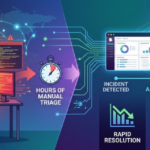 Datadog Launches Bits AI Security Analyst, Reducing Threat Response Times by 90%
 State Department Launches Bureau of Emerging Threats to Combat Cyber and AI Risks
 50% of Security Leaders Unprepared for Escalating AI-Powered Cyber Threats, EY Reports
 Upwind Reveals 95% Accurate AI Prompt Threat Detection at RSA Conference















