






















































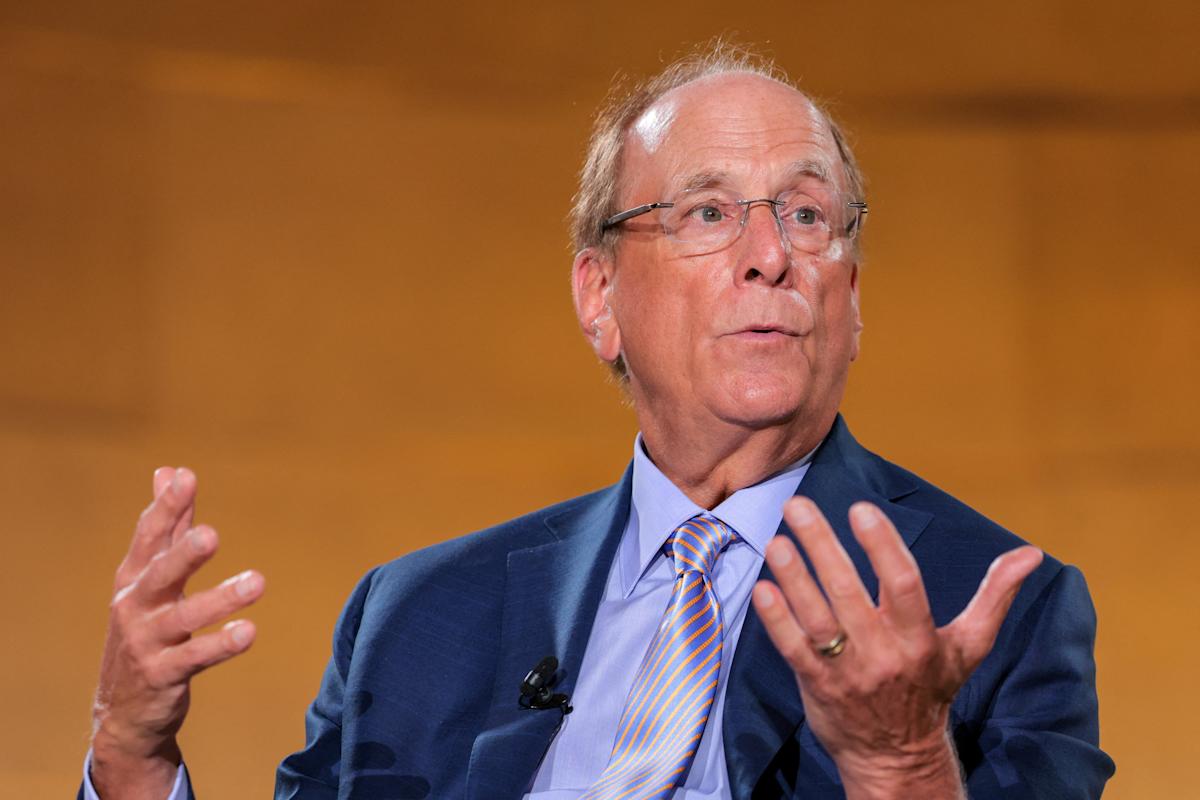
BlackRock (BLK) CEO Larry Fink issued a cautionary note on Monday, asserting that the rapid rise of artificial intelligence (AI) could exacerbate wealth inequality if broader segments of the population do not participate in market growth. In his annual chairman’s letter to investors, Fink remarked, “The old model of global capitalism is fracturing,” highlighting a concerning trend where the majority of wealth has increasingly accumulated among asset owners rather than those who rely on traditional wage earnings.
Fink pointed out that while nations invest heavily to bolster self-reliance in energy, defense, and technology, this has primarily benefitted those who possess assets. “Now AI threatens to repeat that pattern at an even larger scale — concentrating wealth among the companies and investors positioned to capture it,” he said. This concentration of wealth, according to Fink, contributes to widespread economic anxiety, as many feel that capitalism is thriving but not benefiting enough individuals.
The BlackRock chief elaborated on how transformative technologies generate significant value for the firms that develop them and the investors backing these companies. He underscored a troubling phenomenon referred to as “K-shaped” outcomes, where leading companies surge ahead while others fall behind. A recent example Fink cited was Walmart (WMT), which achieved an all-time high valuation just two weeks after luxury retailer Saks filed for bankruptcy. “When market capitalization rises but ownership remains narrow, prosperity can feel increasingly distant to those on the outside,” Fink noted.
Despite the United States boasting one of the highest market participation rates globally, approximately 40% of its population remains disconnected from capital markets. Participation rates are even lower in many other countries. “Billions watch their economies grow from the outside, as renters rather than owners — putting their savings in bank accounts that earn little, rather than investing to share in the growth around them,” Fink explained, encapsulating a growing frustration among those left behind in the economic landscape.
In light of these disparities, Fink encouraged investors to maintain a long-term perspective. “Stay invested in the markets for the long term, because over time, staying invested has mattered far more than getting the timing right,” he advised. He pointed to a substantial growth metric over the past two decades, noting that every dollar invested in the S&P 500 (GSPC) has increased more than eightfold. Fink emphasized that some of the market’s most robust days have occurred amid troubling headlines, reinforcing the importance of perseverance in investment strategies.
The discussion initiated by Fink comes at a crucial juncture as the implications of AI continue to unfold across various sectors. With transformative technologies reshaping industries, the potential for wealth concentration poses fundamental questions about the future of economic inclusivity and the social fabric of capitalism. As the conversation evolves, stakeholders from policymakers to business leaders will need to consider strategies that ensure a more equitable distribution of the benefits derived from technological advancements. Addressing these challenges will be essential in re-establishing faith in a system that is increasingly viewed as benefitting a select few.
See also CFOs Face Pressure to Prove AI’s Value as 83% Anticipate Investment Increases by 2026
 GRI Forum Unveils “AGILE” Framework to Address AI Risks in Canada’s Financial Sector
 Mistral AI Reveals €150B AI Investment’s Key Challenge: Control Over Systems
 OpenAI Integrates AI Agents into Finance Workflows for End-to-End Execution
 Prodigy Finance Reports Women in STEM Surpass 40% in India, 56% in UAE Amid AI Workforce Shifts















