






















































As the marketing industry navigates the first quarter of 2026, it is undergoing a significant structural transformation characterized as a “hard reset.” The period of experimental artificial intelligence (AI) has concluded, giving way to what experts describe as an era of operationalized intelligence. While brands rush to implement sophisticated Large Language Models (LLMs) and autonomous agents, a paradox arises: the faster the AI capabilities, the more volatile the data that fuels them.
This evolving landscape is marked by a phenomenon known as “agentic commerce,” where the emphasis has shifted from messaging strategies to understanding consumer recognition. The most significant shift this year is not solely in targeting methods but in how consumers discover products. With more than 70% of shoppers now utilizing AI search tools and personal assistants, the “invisible shopper” has emerged, representing consumers whose product discovery occurs entirely within AI interfaces, driven by algorithms instead of traditional browsing methods.
For brands, this presents a challenge known as the “website bypass” problem, leading to the advent of Generative Engine Optimization (GEO). Unlike conventional SEO, which aims to rank web pages for human engagement, GEO focuses on making a brand’s data “machine-readable.” This optimization allows AI concierges, such as Gemini, and specialized shopping agents to synthesize and recommend products effectively. As highlighted by industry experts, “If your brand data isn’t structured and your identity graph isn’t deterministic, you effectively cease to exist in the AI’s recommendation engine.”
A prevalent misconception in 2026 is that being “logged in” to AI platforms resolves identity issues. Instead, these systems have created identity silos. Google may be aware of a user’s search history, and Amazon might know their shopping patterns, but neither platform fully comprehends the offline relationships a consumer has with brands or their life-stage transitions unless that information is provided by the brands themselves. AI agents excel at making inferences, but as noted, “Inference is not a strategy.” This distinction is crucial as the industry starts to differentiate between leaders and laggards.
To address these identity challenges, solutions like a people-based identity layer are becoming essential tools, transitioning from “nice to have” to critical infrastructure. By anchoring identity in a deterministic, person-level model validated by real-world transactions instead of temporary cookies, brands can deliver the “ground truth” AI agents require to provide meaningful assistance.
The impact of the “Hard Reset” has also reached financial decision-makers, prompting a shift from traditional Return on Ad Spend (ROAS) metrics to Incremental Return on Ad Spend (iROAS). In an automated bidding environment, AI can easily attribute sales to ads that might have occurred regardless. iROAS, supported by closed-loop identity resolution, aims to measure the actual commercial impact of marketing initiatives. It connects the dots between an advertisement viewed on a Monday and a purchase made in a physical store on a Friday. Without a persistent ID, this closed-loop analysis remains unfeasible, rendering marketing expenditure opaque.
To navigate this transformed landscape, marketing leaders must prioritize several strategic imperatives. First, they need to establish *identity sovereignty* by moving away from reliance on walled gardens and employing a deterministic system that offers a comprehensive view of customers across various AI agents. Second, brands must develop *agent-ready infrastructure*, optimizing their product catalogs and brand narratives for AI interpretation and underpinned by the accuracy of first-party data. Lastly, *measurement calibration* is critical; brands should utilize high-quality, people-based truth sets to refine their models. As emphasized, without the ability to prove incrementality, AI risks becoming “just an expensive guessing machine.”
The overarching insight for 2026 is that while data volume can become a liability, data clarity—understanding the individual behind each data point across fragmented AI ecosystems—will be the key to securing a sustainable competitive edge in the marketplace.
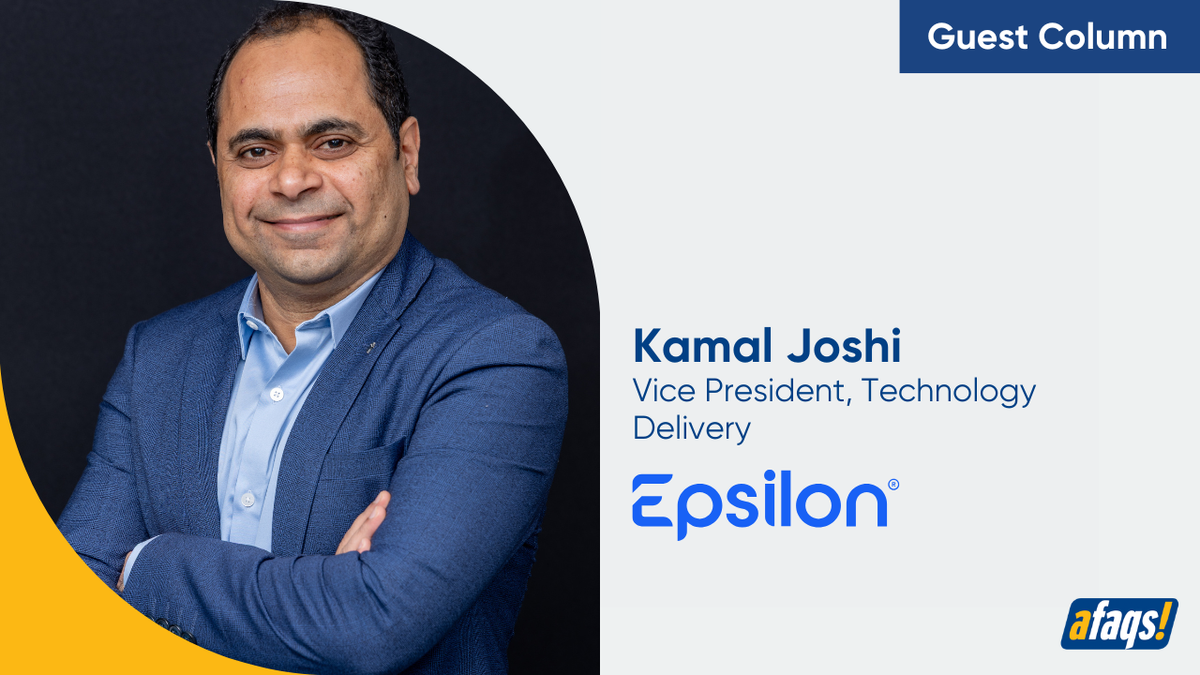
(Kamal Joshi is Vice President of Technology Delivery at Epsilon. A high-energy leader with global experience, Kamal specializes in digital marketing, technology, analytics, and operations.)
See also S4 Capital Revenue Falls 11% as Tech Clients Shift Budgets to AI Expansion
 AI Tools Revolutionize Social Media Marketing in India, Boosting Engagement for 900M Users
 AI Content Marketing Drives Visibility: Learn How to Optimize for Search Success
 Agentic AI Revolutionizes Email Marketing: 50% of Messages Projected by 2030
 Retailers Leverage Generative AI to Enhance Customer Experience and Drive Sales Growth






