






















































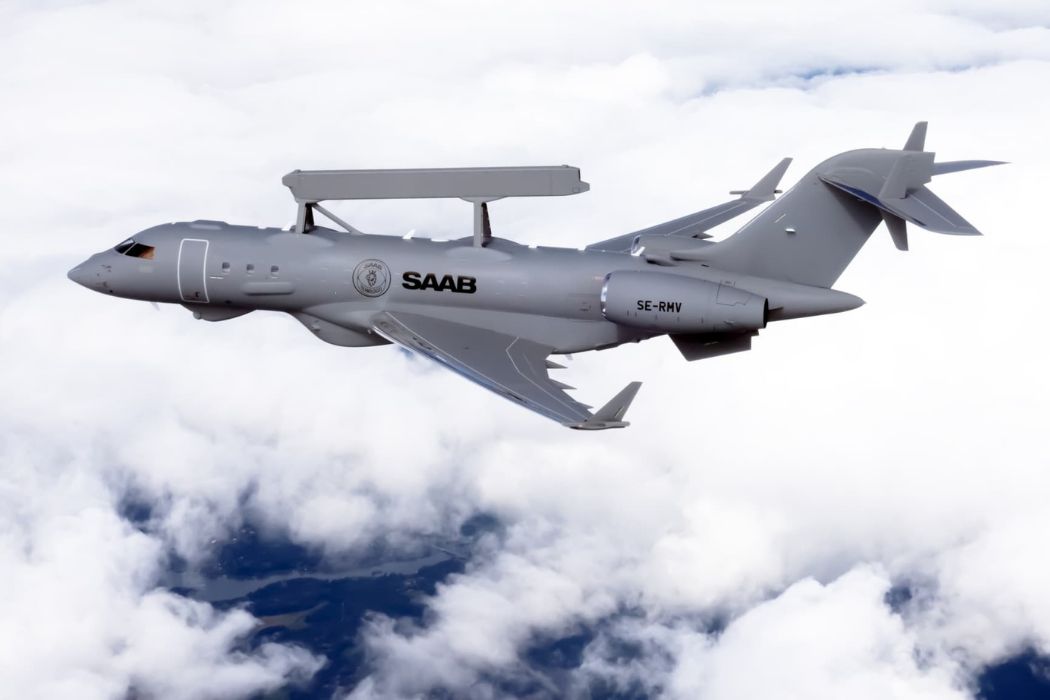
Toronto-based large language model developer Cohere has signed a memorandum of understanding (MOU) with Swedish aerospace and defence contractor Saab, marking a significant step in the integration of AI into defence technology. The announcement was made by Saab yesterday, detailing plans for advanced AI collaboration aimed at enhancing the capabilities of Saab’s GlobalEye surveillance jet.
The agreement establishes a framework for the two companies to explore embedding Cohere’s AI technology into Saab’s GlobalEye aircraft, which are designed for long-range detection and identification of objects in various environments—air, sea, and land. Saab, which is currently making a bid to persuade Canada to purchase the GlobalEye alongside its Gripen fighter jets, indicated that the collaboration is “directly connected” to this opportunity in Canada. The technology and capabilities developed through the MOU are expected to benefit both existing and future international operators of the GlobalEye.
Cohere’s recent agreement with Saab is part of a broader strategy to apply its AI solutions within the defence sector, a move that comes amidst increasing federal interest and investment in domestic defence technologies. The company is also engaged in discussions with ThyssenKrupp Marine Systems in Germany and Hanwha Oceans in South Korea, both of which are competing for a contract to supply the Royal Canadian Navy with its next fleet of submarines. This dual approach allows Cohere to maintain a strategic role regardless of which company wins the contract.
As part of the MOU, Cohere and Saab plan to focus on several key areas, including data-driven mission support, maintenance tools, and information processing within complex and secure aerospace environments. Initial pilot projects have been identified, although Saab has not disclosed specific details regarding these initiatives. Cohere co-founder Ivan Zhang emphasized the potential of the collaboration, stating, “Through Saab’s deep engineering heritage and our advanced enterprise-grade models, we’ll explore pushing the boundaries of what AI can truly deliver for aerospace, enabling teams to process complex data faster, increase operational tempo, surface key insights with clarity, and support critical decision making when it matters most.”
Amid heightened global tensions and a reevaluation of its military procurement strategy, the Canadian government is also reassessing its planned purchase of 88 F-35 fighter jets from American defence giant Lockheed Martin. The Gripen aircraft, which Saab offers, was the runner-up in the 2021 competition for this contract, reportedly by a significant margin. This context adds urgency to Saab’s MOU with Cohere, as the company seeks to position itself favorably in the Canadian defence market.
As the landscape for military procurement shifts, the collaboration between Cohere and Saab illustrates a growing trend towards leveraging AI technologies to enhance defence capabilities. The integration of advanced AI into systems like GlobalEye could redefine operational effectiveness in surveillance and reconnaissance functions, underscoring the importance of innovation in an increasingly complex geopolitical environment. The outcome of this partnership will likely have implications not only for the Canadian military but also for international defence operations, as both companies aim to deliver next-generation solutions in aerospace.
See also OpenAI Shuts Down Sora Video App Following Disney Licensing Deal Amid AI Concerns
 Anthropic Accuses Chinese Firms of National Security Threats Through AI Model Theft
 Mongolia’s IAAC Launches AI System to Monitor 388 Government Decisions for Compliance
 Google’s AI Experiment Misleads Users and Alters Headlines, Risks Reliability















