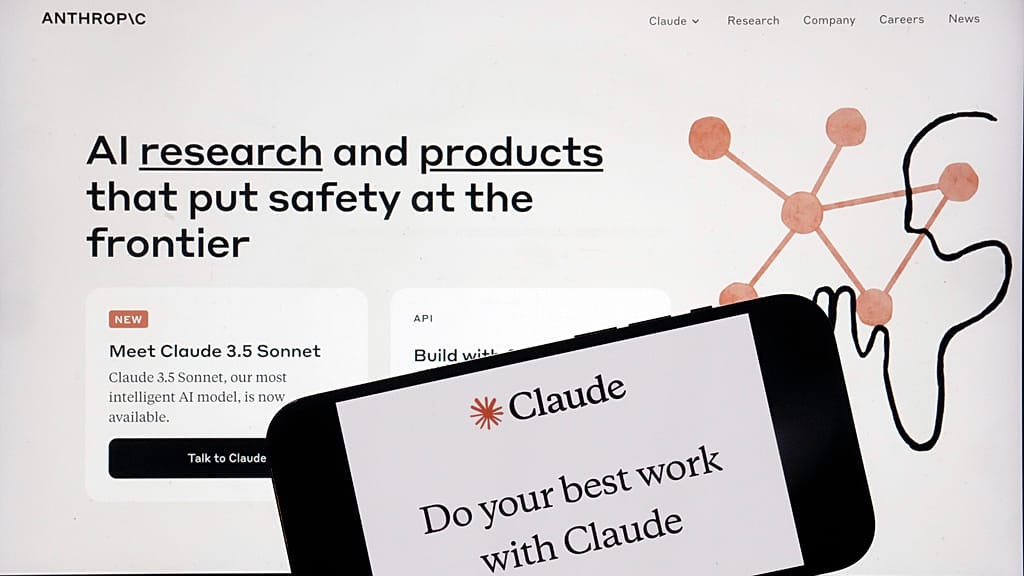
The US government’s recent ban on AI company Anthropic has raised concerns regarding its implications for national security and freedom of speech. This move follows a public dispute between the company and the Pentagon, centered on Anthropic’s refusal to permit unrestricted military use of its Claude AI model.
On Tuesday, the company argued its case in a federal court in San Francisco, seeking an injunction against the government’s blacklisting. District Judge Rita F. Lin expressed her apprehensions, suggesting that the government’s actions could be perceived as punitive, particularly in light of Anthropic’s vocal criticism of the Pentagon’s stance.
In February, US President Donald Trump and Defense Secretary Pete Hegseth publicly severed ties with Anthropic after the company resisted the military’s demands for unrestricted access to its AI technology. Key issues at stake include the potential use of lethal autonomous weapons without human oversight and the mass surveillance of American citizens.
In response, the government categorized Anthropic as a “supply chain risk to national security,” consequently prohibiting federal agents from utilizing the Claude AI model. On March 9, Anthropic initiated two lawsuits against the government regarding this designation, challenging both the supply chain risk claim and asserting a violation of its First Amendment rights.
Judge Lin acknowledged the Pentagon’s right to determine which AI products to utilize, but questioned the legality of the ban on Anthropic. The judge highlighted concerns surrounding Hegseth’s announcement, which suggested that other companies pursuing contracts with the Pentagon should sever ties with Anthropic.
A representative from the government contended that the Pentagon’s actions were not retaliatory, asserting that the decision was based on the potential applications of Anthropic’s AI model rather than the company’s public rebuttal of military demands. Despite these assurances, NPR reported that Anthropic could face future risks stemming from updates to its Claude AI model that may jeopardize national security.
In light of the unfolding legal drama, Euronews Next reached out to Anthropic for comment but did not receive a response by the time of publication. Ben Goertzel, a noted computer scientist and CEO of SingularityNet, expressed concern that the designation of supply chain risk is typically reserved for foreign entities, questioning its application to a domestic company like Anthropic.
Goertzel criticized the government’s designation, suggesting it reflects a broader trend of the executive branch reinterpreting legal frameworks at will. He warned that if the most stringent version of the supply chain risk classification were applied, it could severely limit Anthropic’s capacity to engage with any company conducting government business. However, he noted that Anthropic could likely sustain itself through its commercial endeavors outside of government projects, particularly among consumers disillusioned with the Trump administration.
Goertzel remarked that the immediate consequence of maintaining the supply chain risk designation would be to dissuade other tech firms from standing up against the Trump administration’s directives. “He’s [President Trump] trying to teach the AI industry to fall into line like everybody else,” he stated.
As the court deliberates, Judge Lin indicated her intention to issue a ruling in the coming days on whether to temporarily suspend the government’s ban while the larger case is under review. The outcome could have significant ramifications not just for Anthropic, but for the broader landscape of AI development and its intersection with government oversight.
See also Sen. Mark Warner Predicts New Grad Unemployment Could Hit 35% Amid AI Disruption
 Palantir Technologies Stock Surges on Golden Dome AI Breakthrough and Analyst Buy Rating
 Scottish Government Issues New AI Guidelines for Schools to Ensure Safe Use
 Mila Partners with Mozilla, Investing $1M to Develop Open-Source AI Tools
 Federal Judge Blocks Pentagon’s Ban on Anthropic, Citing ‘Orwellian’ Measures