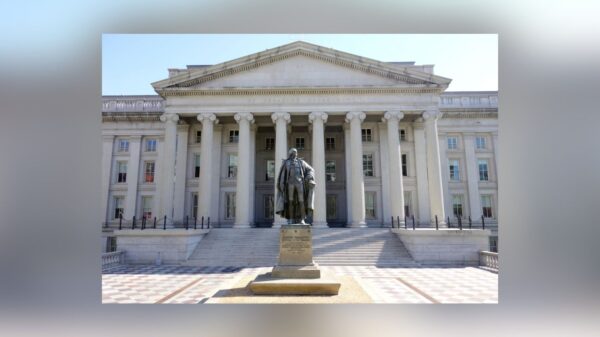
HUNT VALLEY, Md. (TNND) — The U.S. Treasury announced on Monday a series of conferences aimed at discussing potential reductions in regulations concerning the use of artificial intelligence (AI) by financial institutions. The initiative, named the AI Innovation Series, will bring together banks, technology companies, regulators, and experts to deliberate on how to ease federal rules to provide businesses with greater flexibility in AI deployment.
“AI adoption is not merely a question of technological modernization—it is critical to America’s financial stability and a precondition to economic growth,” stated Christina Skinner, deputy assistant secretary for the Treasury’s Office of the Financial Stability Oversight Council. Skinner emphasized that when institutions are unable to utilize tools that enhance fraud detection, credit allocation, and operational resilience, it diminishes both the efficiency and security of the financial system.
A report from the Government Accountability Office (GAO) published last year highlighted that banks and investment firms are increasingly leveraging AI technologies to combat illegal activities, make informed credit decisions, and manage risk effectively. However, the report also addressed significant risks posed by AI, including potential cybersecurity threats, privacy concerns, biased lending practices, and issues related to data quality. “AI has the potential to amplify risks inherent in financial activities, and these risks can affect consumers, investors, financial institutions, and financial markets,” the GAO noted.
Treasury Secretary Scott Bessent acknowledged the concerns surrounding the downsides of AI while also pointing to its advantages. “Economic security – the condition of having secure and resilient domestic production capacity – is core to financial stability, and leadership in AI adoption is a crucial component of economic security,” Bessent stated on Monday. He underscored the Treasury’s commitment to optimizing regulations to foster growth for both Main Street and Wall Street. This approach signifies a shift from a focus on constraints to recognizing that failing to adopt productivity-enhancing technologies poses its own risks.
The federal government has yet to establish a comprehensive framework for regulating AI, although some legislative proposals have been put forward in Congress. A coalition of dozens of organizations expressed their concerns in a letter to the House Financial Services Committee last December, advocating for reduced oversight of AI. They argued that the potential benefits of the technology can only be realized if users are adequately protected from the associated risks. The coalition, which included technology, consumer, and civil rights groups, stressed the importance of consistent enforcement of federal civil rights, consumer protection, and market integrity statutes.
The forthcoming discussions during the AI Innovation Series will likely shape the future landscape of AI regulation in the financial sector. With AI’s transformative potential, the balance between fostering innovation and ensuring consumer protection will be a critical focus for both the government and industry stakeholders. As the U.S. navigates this evolving technological frontier, the implications for financial stability and economic growth could be substantial.
See also Data and AI Governance Converge: New Frameworks Needed for Effective Oversight
 Australia’s Attorney-General Advocates Licensing Deals Between AI and Creative Industries
 India Strengthens AI Content Regulations, Mandates Clear Labeling and Swift Action Against Deepfakes
 LiteLLM Faces Malware Scandal Post-Compliance Certifications from Delve Amid Security Concerns