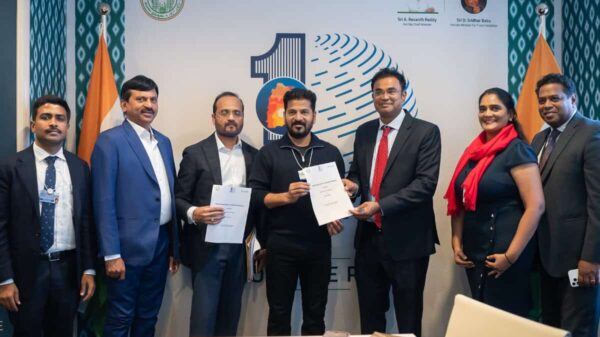

The Chief Minister of Telangana, A Revanth Reddy, is scheduled to deliver a virtual keynote address at an innovative AI symposium organized by the Harvard Kennedy School on March 27. This event aims to bring together prominent figures from government, industry, and academia to discuss the rapidly evolving landscape of artificial intelligence globally.
Due to the ongoing budget session in Telangana, Chief Minister Reddy will forgo traveling to Boston and will instead address attendees online. Jeremy Weinstein, the Dean of the Faculty at Harvard Kennedy School, will kick off the symposium with opening remarks.
Supported by various Harvard think tanks, the symposium will feature discussions on key topics including “The Race to AGI,” “AI in Emerging Markets,” and “The Future of Work and Education.” Esteemed speakers such as Anousheh Ansari and Illango Pachamuthu, among others, will provide valuable insights into these pressing issues.
As artificial intelligence continues to advance, its implications for governance, industry practices, and educational paradigms are becoming increasingly significant. The symposium is expected to address the challenges and opportunities associated with integrating AI into various sectors, particularly in emerging markets where the technology can play a transformative role.
The focus on “The Race to AGI” highlights the competitive drive among nations and corporations to achieve Artificial General Intelligence, a level of AI that can understand, learn, and apply knowledge across a wide range of tasks, similar to human intelligence. As discussions unfold, participants will likely explore not only the technical hurdles involved but also the ethical considerations that arise from such advancements.
Furthermore, the segment on “AI in Emerging Markets” will examine how developing economies can leverage artificial intelligence to enhance their growth trajectories. With the potential to boost productivity and innovation, AI could serve as a crucial element in bridging the gap between developed and developing nations, providing new avenues for economic development.
The discussion surrounding “The Future of Work and Education” also promises to be a focal point of the symposium. As AI reshapes job markets and the nature of work itself, there is a pressing need to rethink educational frameworks and workforce development strategies to prepare individuals for an AI-driven economy.
By convening this prestigious group of speakers and thought leaders, the Harvard Kennedy School aims to foster a comprehensive dialogue about the future of artificial intelligence at a time of rapid technological change. The insights generated during the symposium are anticipated to influence policy-making and strategic planning in both public and private sectors.
As the landscape of artificial intelligence continues to evolve, events like this symposium underscore the importance of collaboration across various domains to harness AI’s potential responsibly and effectively. The discussions held on March 27 may serve as a critical platform for shaping the future of AI governance, innovation, and education on a global scale.
(With inputs from agencies.)
See also Melania Trump Introduces AI Robot Figure 03 at White House Education Summit
 Stanford’s Claude Buildathon Launches AI Projects Focused on Real-World Application
 NamiBox Launches NAMI COMPANION Series, Expanding AI Learning Ecosystem for K12 Education
 OpenAI Launches Student Initiative to Support 26 AI Innovators; FTC Forms Healthcare Task Force
 Kazakhstan Launches First AI University with Master’s Programs Starting in 2026