






















































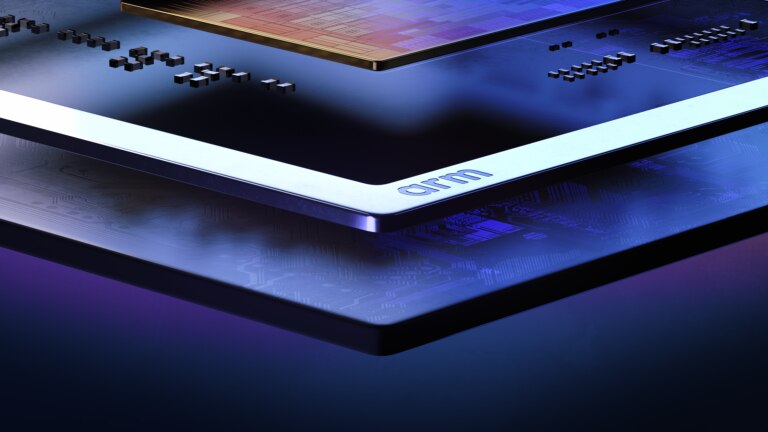
Arm has introduced the Arm AGI CPU, marking its first foray into production-ready silicon in its 35-year history. Built on the Arm Neoverse platform, the new CPU aims to enhance the next generation of AI infrastructure by providing customers with greater flexibility in deploying Arm compute solutions. This move reflects the rapid evolution within AI ecosystems and the increasing demand for scalable, production-ready platforms that can be implemented swiftly.
As AI systems increasingly operate at a global scale, the role of CPUs has evolved from being a bottleneck in computing processes to becoming the cornerstone of modern infrastructure. In traditional settings, human interaction defined the speed of operations; however, with the emergence of agentic AI, software agents now govern tasks and make real-time decisions, thus removing previous constraints. In contemporary AI data centers, CPUs orchestrate extensive distributed tasks, manage memory, schedule workloads, and facilitate data flow across systems, all while coordinating numerous agents at scale.
The Arm AGI CPU is specifically engineered to meet the demands of agentic AI workloads, delivering sustained high performance across thousands of cores in parallel, while adhering to the power and cooling limits typical of modern data centers. Each component of the CPU—from its operating frequency to its memory and I/O architecture—has been meticulously crafted to support high-performance, massively parallel workloads within densely populated rack configurations.
Arm’s reference server configuration features a 1OU, 2-node design, accommodating two chips with dedicated memory and I/O for a cumulative total of 272 cores per blade. This design can fully populate a standard air-cooled 36kW rack, totaling 30 blades and delivering 8,160 cores. In collaboration with Supermicro, Arm has also developed a liquid-cooled, 200kW configuration capable of sustaining 336 Arm AGI CPUs, surpassing 45,000 cores. This innovation allows the Arm AGI CPU to achieve more than double the performance per rack compared to the latest x86 systems, attributed to the inherent advantages of the Arm architecture and careful coordination of system resources.
As the AI landscape continues to evolve, the Arm AGI CPU is already gaining traction among leading partners focused on scaling agentic AI infrastructure. Key partnerships include Meta, which is co-developing the CPU to optimize resource-intensive infrastructure for its applications. Other notable partners such as Cerebras, Cloudflare, OpenAI, and SAP are working alongside Arm to deploy the new CPU in various environments, including cloud services and enterprise solutions. Commercial systems featuring the Arm AGI CPU are now available through manufacturers like ASRockRack, Lenovo, and Supermicro.
To further facilitate adoption, Arm has announced the Arm AGI CPU 1OU Dual Node Reference Server, adhering to the Open Compute Project DC-MHS standard. This reference server design, along with supporting firmware and specifications, will be presented at the upcoming OCP EMEA Summit, showcasing Arm’s commitment to contributing to the ecosystem.
The launch of the Arm AGI CPU heralds a new chapter in Arm’s journey within the data center market and underscores its ongoing commitment to innovation. As AI continues to reshape the technological landscape, Arm aims to support a diverse array of stakeholders, from hyperscale cloud providers to startups seeking to leverage AI capabilities. With the Arm AGI CPU now on the market, Arm plans to introduce follow-on products targeting optimal performance and efficiency, maintaining compatibility with the existing Arm Neoverse CSS product roadmap.
Executives from various partners highlight the significance of this innovation. Andrew Feldman, CEO of Cerebras, emphasized the need for high-performance systems to support large-scale AI workloads. Stephanie Cohen, Chief Strategy Officer of Cloudflare, noted that the Arm AGI CPU aligns with their mission to enhance Internet infrastructure. Santosh Janardhan, Head of Infrastructure at Meta, remarked on the importance of custom silicon solutions in optimizing performance across their platforms. Meanwhile, Sachin Katti of OpenAI highlighted the CPU’s role in improving orchestration and efficiency for their massive-scale AI systems.
As Arm continues to define the architecture of AI-native data centers, the broad industry support—from silicon design to memory and networking—illustrates a collaborative effort to advance the capabilities of AI technologies. The deployment of the Arm AGI CPU not only signifies a pivotal moment for Arm but also sets the stage for a new era in AI infrastructure, poised for rapid expansion and innovation.
See also Saab Partners with Cohere to Enhance GlobalEye Aircraft with AI Technologies
 Gopher Security Unveils Post-Quantum Protection for AI Tool Integrity Against Threats
 Lam Research Achieves 321% Return, Defies Google TurboQuant Fears in AI Chip Market
 Machine Learning and 3D Physics Combine for Effective L’Aquila 2009 Damage Assessment
 Qualified Health Raises $125M to Expand AI Platform Across U.S. Health Systems















