






















































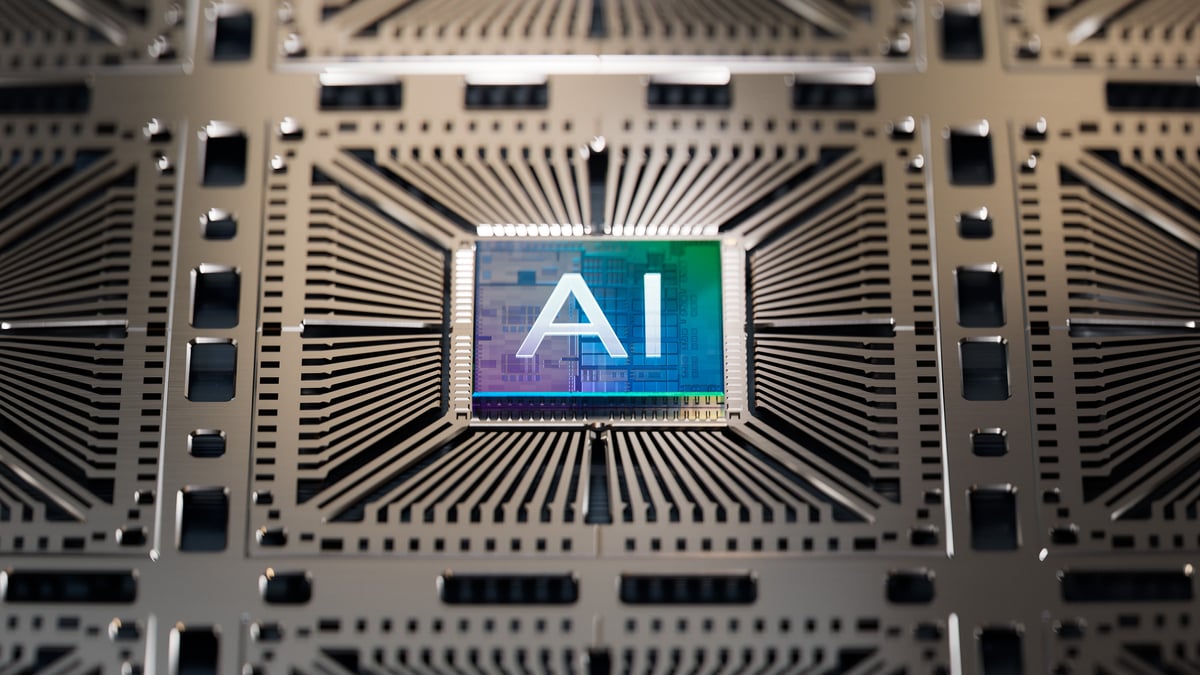
The rapid rise of artificial intelligence (AI) has significantly increased the demand for Nvidia’s (NVDA +1.95%) graphics processing units (GPUs), but the requirements for effective AI deployment extend beyond just advanced chips. In its most recent quarter, Nvidia saw its networking revenue soar by 263% year over year, indicating that the construction of AI data centers is generating considerable demand throughout the supply chain. This surge is benefiting various companies, including suppliers of Ethernet switches and power management solutions.
For investors interested in diversifying their portfolios within the AI infrastructure space, several key stocks are emerging as focal points. Nvidia remains at the forefront, with its shares skyrocketing by an impressive 1,100% since 2022, following the launch of OpenAI’s ChatGPT. While Nvidia’s GPUs have been instrumental in the swift development of AI technologies, the company also offers a robust suite of networking products. In the last quarter, Nvidia’s networking revenue reached $11 billion, propelled by strong demand for its NVLink, Spectrum-X Ethernet, and InfiniBand products, which are vital for interconnecting thousands of GPUs to process vast amounts of data efficiently.
Despite the substantial reliance on GPU sales, Nvidia’s data center revenue alone grew by 75% year over year last quarter. CEO Jensen Huang projects that the company will secure $1 trillion in cumulative orders for its Blackwell and upcoming Rubin GPUs by 2027. Investors are currently wary about the sustainability of AI-related spending. However, Nvidia’s stock is trading at a modest valuation of 21 times this year’s earnings estimate, potentially undervaluing its long-term growth prospects.
Market Dynamics
Another prominent player in the AI infrastructure sector is Arista Networks (ANET +3.12%), which reported a record revenue of $9 billion in 2025, marking a 29% year-over-year increase. Arista’s success is a testament to its strategic position in capturing a share of the substantial investments made in data centers annually. The company specializes in high-performance Ethernet switches and competes directly with Nvidia, yet its differentiation lies in its EOS software platform that manages entire networks. Arista’s AI networking revenue reached $1.5 billion in 2025, with management forecasting it will more than double to $3.2 billion in 2026.
Arista’s 2026 guidance implies strong ongoing demand for its Etherlink products and switching systems, indicating that analysts may be underestimating the growth potential for both Nvidia and Arista in this burgeoning market. Although potential risks exist, particularly regarding fluctuations in cloud and enterprise spending cycles, analysts anticipate Arista’s earnings to grow at an annualized rate of 21% over the coming years.
In the realm of power management and cooling solutions, Vertiv Holdings (VRT +1.95%) plays a crucial role in supporting AI operations. Its fourth-quarter organic orders surged 252% year over year, with a backlog that has doubled to $15 billion. The company is guiding organic net sales for 2026 to be approximately 28% higher than those of 2025. The increasing density of AI chips in data centers creates challenges related to power availability and heat generation, significantly boosting demand for Vertiv’s cooling solutions. Since 2021, Vertiv’s total revenue has more than doubled to $10.2 billion, with projections estimating it could reach $19.4 billion by 2028.
However, Vertiv’s valuation appears steep, trading at 42 times this year’s consensus earnings estimates. A slowdown in data center spending could adversely affect its stock performance. Yet, with the consensus of analyst forecasts indicating a 31% annual earnings growth rate in the forthcoming years, there remains substantial upside potential.
The collective performance of Nvidia, Arista Networks, and Vertiv Holdings exemplifies the growing interconnectedness of various technological sectors as they adapt to the increasing demands of AI infrastructure. As AI continues to evolve, the companies involved in its hardware and support systems are likely to face both opportunities and challenges, shaping the landscape of the technology market in the years ahead.
See also Quantum Computing Threatens Digital Security: AI-Safe Measures Urgently Needed Now
 ARM Holdings Surges 16% as AGI CPU Launch Signals AI Hardware Evolution
 Apple Expands Siri with AI Chatbot Extensions, Including Google’s Gemini and Claude
 CPU Market Surges as Arm Launches In-House Chip, Nvidia Joins the Race for AI Inference
 AI-Driven “Zhanjiang Bay No.1” Offshore Farm Automates 200 Tonnes of Fish Management














