























































Despite a reported 93 percent of organizations utilizing AI in some form, the journey toward full deployment remains a significant challenge. Only 31 percent of these organizations have advanced beyond initial proofs of concept and pilots to fully integrate AI into core operations. Meanwhile, 32 percent have achieved partial deployment across select workflows, and a further 20 percent are still in testing or piloting stages.
Current findings indicate that generative AI is yet to deliver measurable business returns, underscoring the ongoing issues with deployment. With most organizations still in the early phases of implementation, the conditions necessary for capturing meaningful value from AI investments are not fully established. A mere two percent of respondents reported seeing a return on their generative AI investments. Of those seeing returns, over half (57 percent) categorized them as modest, between five and 20 percent, while nearly one-third (31 percent) could not quantify any return at all.
Underlying these modest outcomes are common barriers that prevent AI from scaling across enterprises. Issues such as legacy systems, siloed data, and ambiguous success metrics frequently hinder the embedding of AI throughout organizations. The low rate of AI integration may also reflect a lack of clear strategies for selecting the right use cases. Organizations must recognize the substantial efforts involved in identifying, refining, and maturing their AI applications to ensure they generate both tangible business value and meaningful enhancements for employees.
Efforts to integrate AI into existing workflows often contribute to lower returns on investment. Many organizations opt to layer AI on top of their established processes rather than redesigning workflows to maximally leverage the capabilities of AI. While integrating AI into current workflows may yield incremental improvements, the most significant benefits arise from completely optimized processes where tasks, decisions, and systems are reimagined to utilize AI’s full potential. This fundamental redesign can lead to more substantial efficiencies and greater overall value.
As companies navigate the complexities of AI implementation, the need for strategic clarity becomes increasingly apparent. Organizations that can successfully identify and refine their use cases stand a better chance of sustaining employee engagement and achieving meaningful returns on their investments. By targeting real pain points and enhancing day-to-day operations through AI, firms can foster an environment more conducive to adoption and long-term success.
Looking ahead, the path to successful AI deployment is fraught with challenges but also rich with potential. As organizations begin to overcome foundational barriers and establish clearer use-case strategies, the landscape of AI integration may very well transform. With a focus on redesigning processes and fostering employee engagement, businesses could unlock the significant benefits that AI technology promises, ultimately reshaping their operational capabilities and competitive dynamics.
See also ByteDance Launches Dreamina Seedance 2.0 for CapCut in Limited Global Rollout
 FAW Hongqi Integrates Alibaba’s Qwen AI, Transforming Smart Cockpits with Task Automation
 NVIDIA Launches ProRL Agent to Enhance Multi-Turn LLM Training Efficiency at Scale
 Resemble AI Launches Deepfake Detector and Threat Report Amid Rising Media Concerns
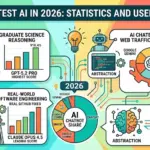 GPT-5.2 Pro Scores 93.2% in Reasoning, Claude Opus Leads Software Engineering at 80.9%















